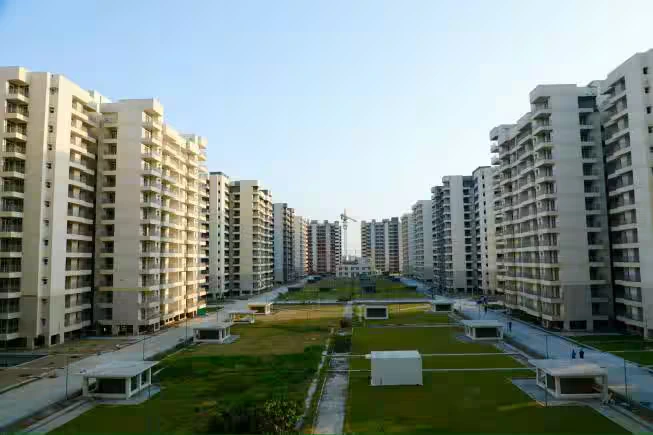
In a renewed push to widen access to low-cost urban housing, the Delhi Development Authority has released nearly 2,000 additional ready-to-move units in North Delhi’s Narela, targeting households priced out of the capital’s formal property market. The move underscores the growing urgency to bridge Delhi’s affordability gap while activating underutilised housing inventory in peripheral zones.
The newly released units fall under the Narela affordable housing segment, where compact apartments of roughly 50 square metres are being offered at prices around ₹18–19 lakh after a substantial price reduction. Officials indicate that the homes are part of an ongoing first-come, first-served allocation system, signalling a shift away from lottery-based allotments toward quicker occupancy and reduced vacancy in state-built housing.For prospective buyers, the entry price may appear accessible, but the overall cost structure extends beyond the base price. Additional outlays such as maintenance deposits, utility connections, and service charges remain critical considerations, particularly for lower-income households already navigating tight financial margins. Urban housing experts note that while subsidised pricing improves access, long-term affordability depends equally on recurring costs and connectivity to employment hubs.
Narela’s location, on the northern edge of Delhi, has historically faced challenges around mobility and social infrastructure. However, planners suggest that incremental improvements in transport networks and public amenities could gradually enhance liveability. The success of the Narela affordable housing push will therefore hinge not only on pricing but also on how effectively infrastructure keeps pace with residential growth. From a policy perspective, the expanded supply reflects a broader recalibration in Delhi’s housing strategy prioritising inventory liquidation, inclusive ownership, and faster urban integration. Industry observers point out that such schemes can help formalise housing demand that would otherwise spill into informal settlements, contributing to more planned and serviceable urban expansion.
At the same time, the initiative raises questions around spatial equity. While central and well-connected areas continue to command premium values, large-scale affordable housing remains concentrated in peripheral districts. Urban planners argue that long-term solutions must balance affordability with proximity to jobs, education, and healthcare, ensuring that lower-income residents are not pushed to the margins of the city. As bookings open, the uptake of these units will offer a real-time indicator of demand elasticity in Delhi’s entry-level housing segment. The trajectory of Narela affordable housing could also inform future policy decisions on pricing, infrastructure investment, and the role of public agencies in shaping inclusive, climate-resilient urban growth.