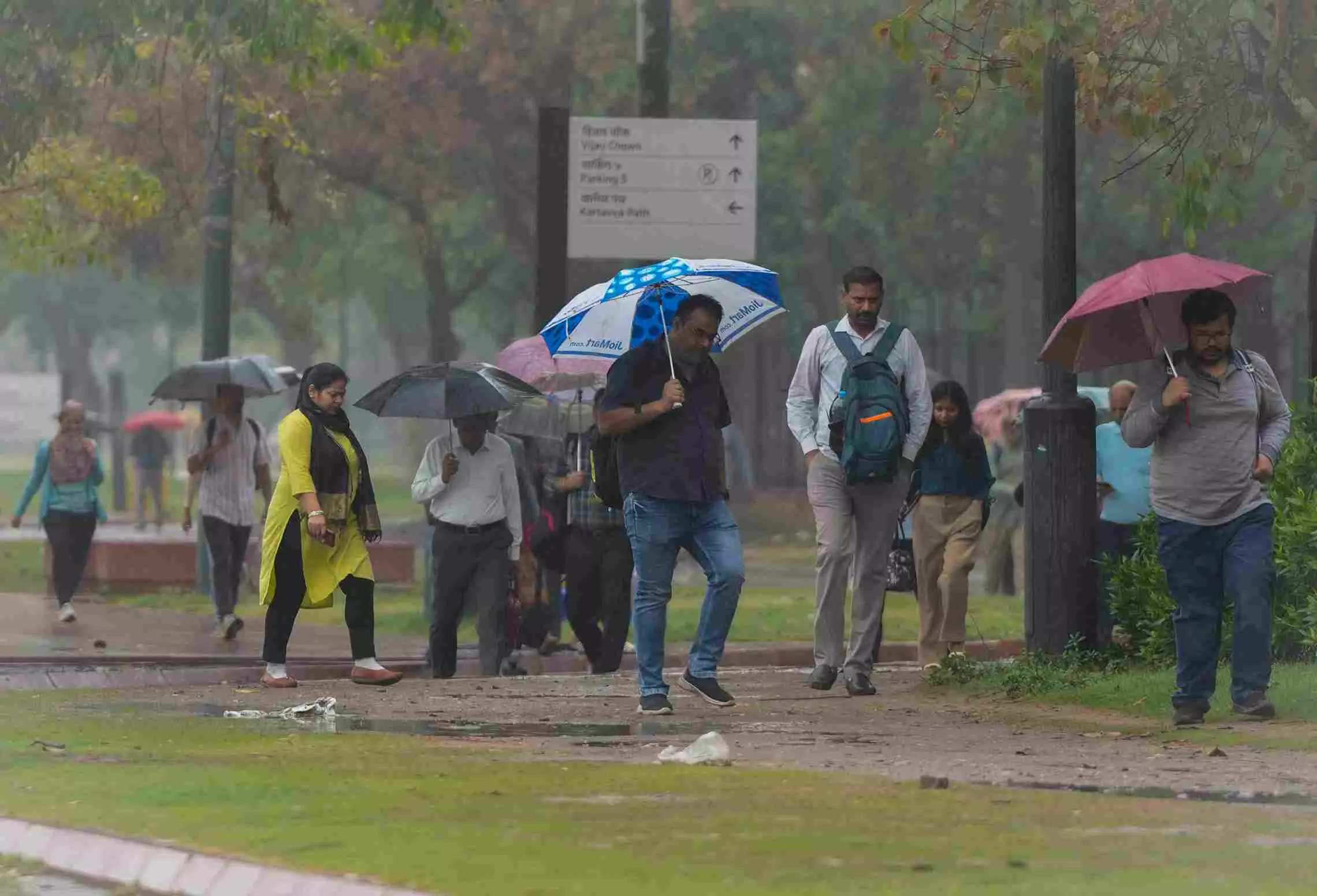
A fresh spell of unsettled weather is expected to sweep across Delhi, with forecasts indicating rain, gusty winds and intermittent dust activity—marking a continuation of an unusually dynamic March for the capital. The evolving Delhi weather pattern is drawing attention not only for its immediate impact on daily life but also for its broader implications for urban resilience and infrastructure preparedness. Meteorological assessments suggest that multiple western disturbances—weather systems originating beyond the Indian subcontinent—have remained active over northern India through much of the month. Unlike typical pre-summer conditions, which are largely dry, these systems have triggered recurring rainfall events and fluctuating wind patterns across the region.
For a dense urban environment like Delhi, such variability in Delhi weather creates both short-term relief and operational challenges. While light rain and increased wind speeds can temporarily suppress particulate pollution levels, they also contribute to localised disruptions, including dust storms, reduced visibility and strain on civic systems such as drainage and road maintenance. Temperature trends remain relatively stable for now, with daytime highs hovering in the low-to-mid 30 degrees Celsius range. However, forecasts indicate that a more noticeable cooling phase may emerge towards the end of the month as rainfall activity intensifies across northern and central India. Urban climate experts note that such fluctuations are becoming more frequent, reflecting shifting seasonal patterns linked to broader climate variability. From an infrastructure standpoint, the changing Delhi weather underscores the importance of climate-responsive planning. High wind speeds and dust mobilisation often expose vulnerabilities in construction management, road surfaces and urban greenery. Similarly, even light rainfall can highlight gaps in stormwater systems, particularly in areas where drainage networks are ageing or inadequate.
Air quality remains a parallel concern. Despite temporary improvements due to atmospheric dispersion, pollution levels continue to stay within the ‘moderate’ range, indicating persistent baseline emissions. Experts argue that while weather conditions can influence short-term air quality, long-term improvements depend on structural interventions such as cleaner transport systems, dust control measures and emission reductions. The interplay between weather and air quality also has economic implications. Construction timelines, logistics operations and outdoor workforce productivity can all be affected by erratic conditions. For the real estate sector, particularly, unpredictable weather patterns may necessitate revised project scheduling and greater emphasis on climate-resilient design practices. Urban planners increasingly emphasise the need for integrated climate strategies that account for both extreme heat and unseasonal rainfall events. This includes strengthening early warning systems, improving coordination between meteorological agencies and city authorities, and embedding resilience into infrastructure investments.
As Delhi weather continues to reflect atypical seasonal behaviour, the focus is likely to shift towards adaptive urban management. Balancing immediate responses with long-term planning will be critical to ensuring that the city’s infrastructure, economy and communities remain resilient in the face of evolving climate patterns.