


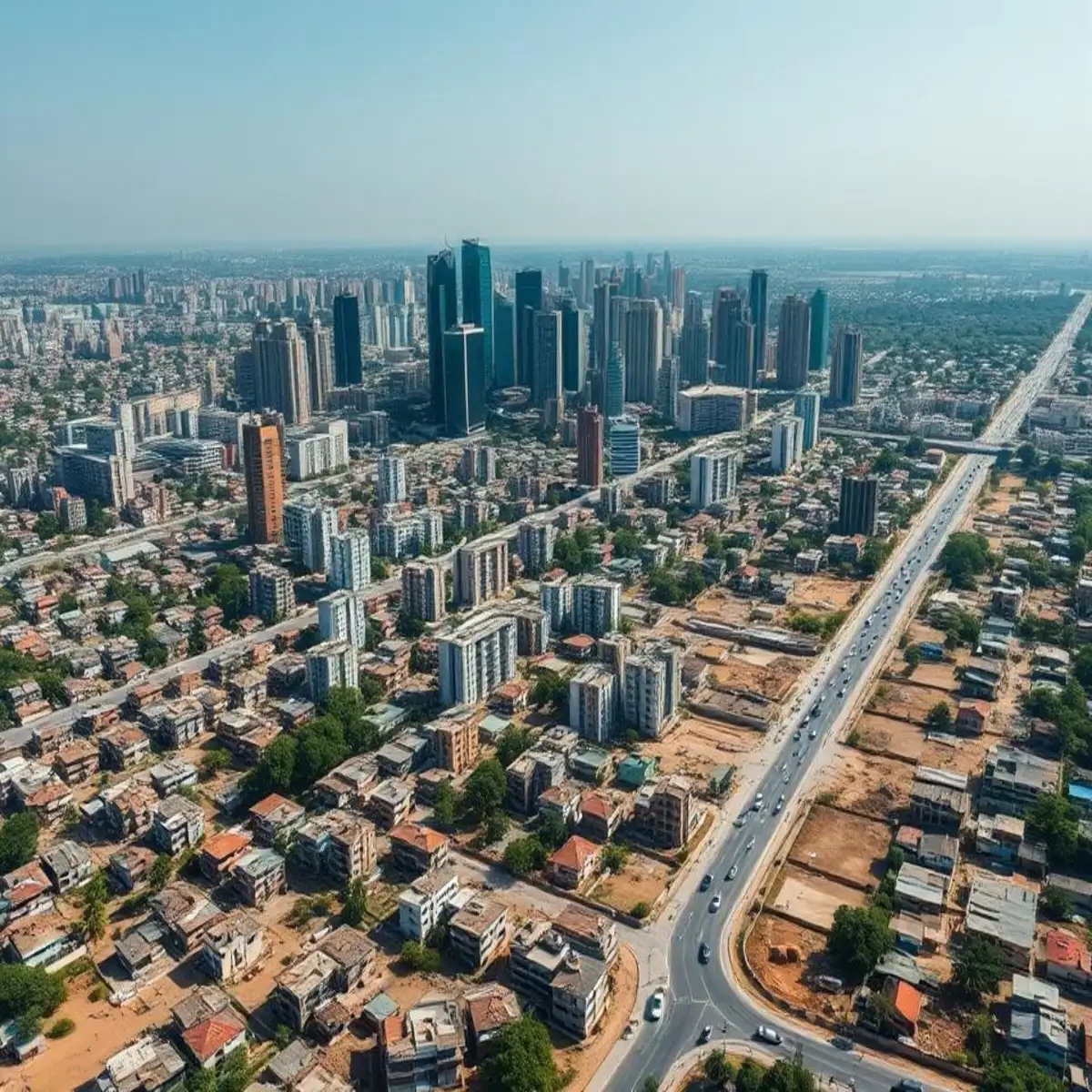
Bengaluru continues to attract a significant share of India’s working population, reinforcing its position as a leading employment hub, even as other cities outperform it on quality-of-life indicators.
A recent urban analysis highlights how the city’s economic magnetism remains strong despite growing concerns around liveability and infrastructure stress.The findings show that Bengaluru workforce trends are being driven by sustained demand across technology, start-ups, and allied service sectors. Professionals continue to migrate to the city in search of career opportunities, supported by a mature innovation ecosystem and access to venture capital. However, this influx is intensifying pressure on housing, transport, and civic services.In contrast, cities such as Hyderabad are gaining recognition for better urban living conditions, including more efficient infrastructure, planned expansion, and relatively lower congestion levels. Urban planners suggest that this divergence reflects a broader shift in how cities are evaluated—not just by job creation, but by their ability to offer a balanced urban experience.The report indicates that Bengaluru workforce trends are closely tied to its economic density, where clusters of companies, co-working spaces, and research institutions create strong employment networks. This concentration, while beneficial for productivity, has also contributed to spatial inequality, with peripheral areas struggling to keep pace with core business districts in terms of infrastructure and accessibility.
Experts argue that liveability is increasingly becoming a decisive factor for both talent retention and long-term investment. Issues such as traffic congestion, air quality, water stress, and housing affordability are shaping how professionals perceive urban centres.In Bengaluru’s case, these challenges are beginning to influence relocation decisions, particularly among mid-career professionals and families.From a real estate perspective, the imbalance between workforce demand and urban infrastructure is reshaping development patterns. Developers are expanding into suburban corridors, where land availability allows for integrated townships and improved living conditions. However, this outward growth also raises concerns about commute times and environmental sustainability.Policy analysts highlight the need for coordinated urban planning that aligns economic growth with infrastructure delivery. Investments in public transport, decentralised business districts, and green infrastructure are seen as critical to sustaining Bengaluru’s competitiveness. Without such measures, the gap between workforce attraction and liveability could widen further.At the same time, the rise of competing cities signals a more distributed model of urban growth in India. As secondary metros improve their infrastructure and governance frameworks, they are increasingly able to attract both businesses and talent.
Bengaluru’s trajectory underscores a key challenge for Indian cities: balancing rapid economic expansion with quality of life. How effectively this balance is achieved will determine whether the city can maintain its leadership position in the evolving urban economy.
Also Read:Bengaluru Kaarigari Platform Boosts Artisan Economy Growth
