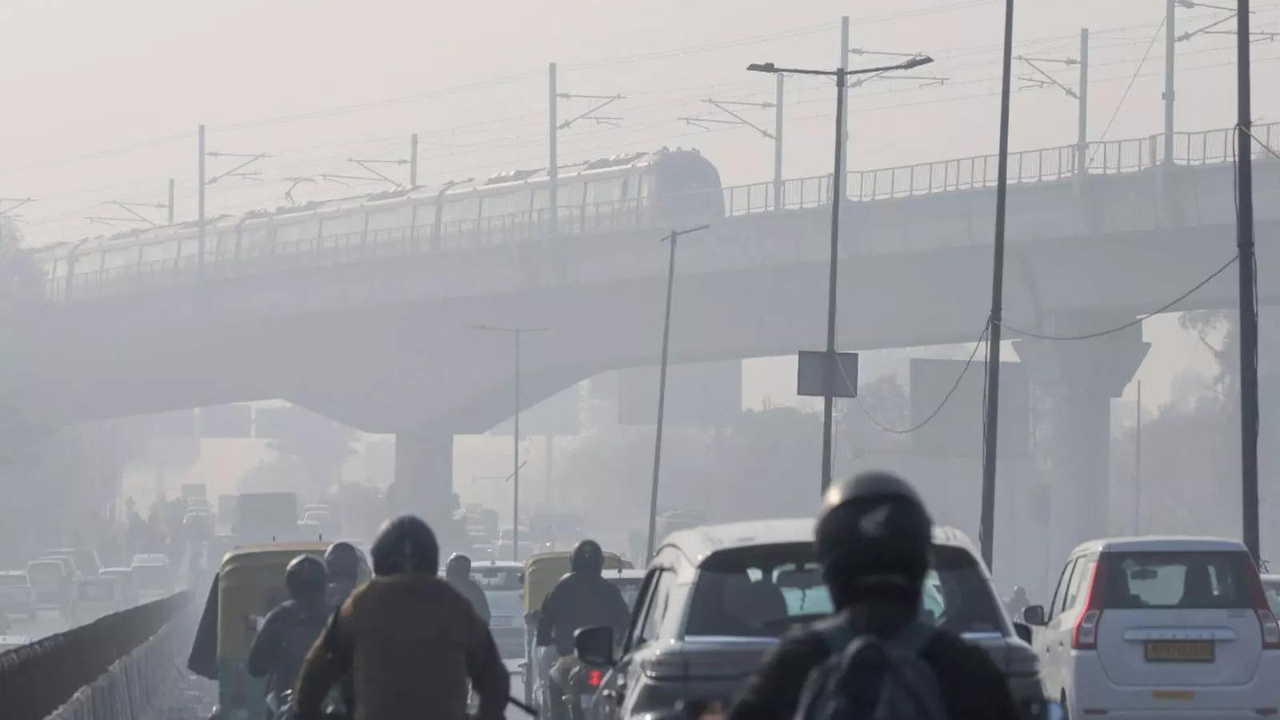
Delhi has outlined a significant fiscal push towards environmental management, with its latest budget dedicating a substantial share of public spending to pollution control and sustainability measures. The move comes as the capital continues to grapple with hazardous air quality levels, underscoring the growing urgency to align urban development with environmental resilience. The newly announced Delhi green budget allocates over one-fifth of total expenditure to initiatives aimed at reducing emissions, improving air quality monitoring, and strengthening green infrastructure. Key interventions include large-scale road redevelopment to curb dust pollution, expansion of electric mobility systems, and deployment of real-time environmental tracking technologies across the city.
This policy shift coincides with fresh global assessments that continue to rank Delhi among the world’s most polluted urban centers. While recent data indicates a modest decline in annual particulate pollution levels, concentrations of fine particulate matter remain significantly above international health benchmarks. Urban analysts note that incremental improvements, though encouraging, are insufficient to offset the long-term health burden associated with sustained exposure. The Delhi green budget also reflects a broader attempt to integrate environmental considerations into infrastructure planning. Dust mitigation through road redesign, for instance, is increasingly being viewed not just as a maintenance issue but as a public health intervention. Similarly, the push towards electrified public transport is expected to reduce vehicular emissions, one of the largest contributors to urban air pollution. However, trends across other Indian metropolitan regions highlight a mixed trajectory. While some cities have recorded marginal improvements, several others are witnessing rising particulate levels, driven by rapid urbanization, construction activity and transport emissions. This divergence underscores the complexity of managing air quality in high-growth urban environments, where economic expansion often outpaces environmental safeguards.
Health experts emphasize that particulate matter, particularly PM2.5, poses severe risks due to its ability to penetrate deep into the lungs and bloodstream. Long-term exposure has been linked to respiratory and cardiovascular diseases, placing a significant burden on healthcare systems. Studies assessing the impact of air pollution suggest that reduced life expectancy remains a critical concern in highly polluted cities, with Delhi among the most affected. From an urban governance perspective, the Delhi green budget signals a transition towards outcome-based environmental management. Investments in monitoring systems, clean mobility and green infrastructure could enable more targeted interventions, provided they are supported by consistent implementation and inter-agency coordination. For the real estate and infrastructure sectors, the shift carries implications as well. Demand for cleaner, healthier urban environments is increasingly influencing investment decisions, particularly in residential and commercial developments. Developers and planners may need to incorporate sustainability features more systematically to align with evolving regulatory and market expectations.
As Delhi advances its environmental agenda, the effectiveness of the Delhi green budget will likely depend on how well policy intent translates into measurable improvements. Strengthening enforcement, enhancing local-level interventions and ensuring citizen participation could be critical to sustaining progress in the years ahead.