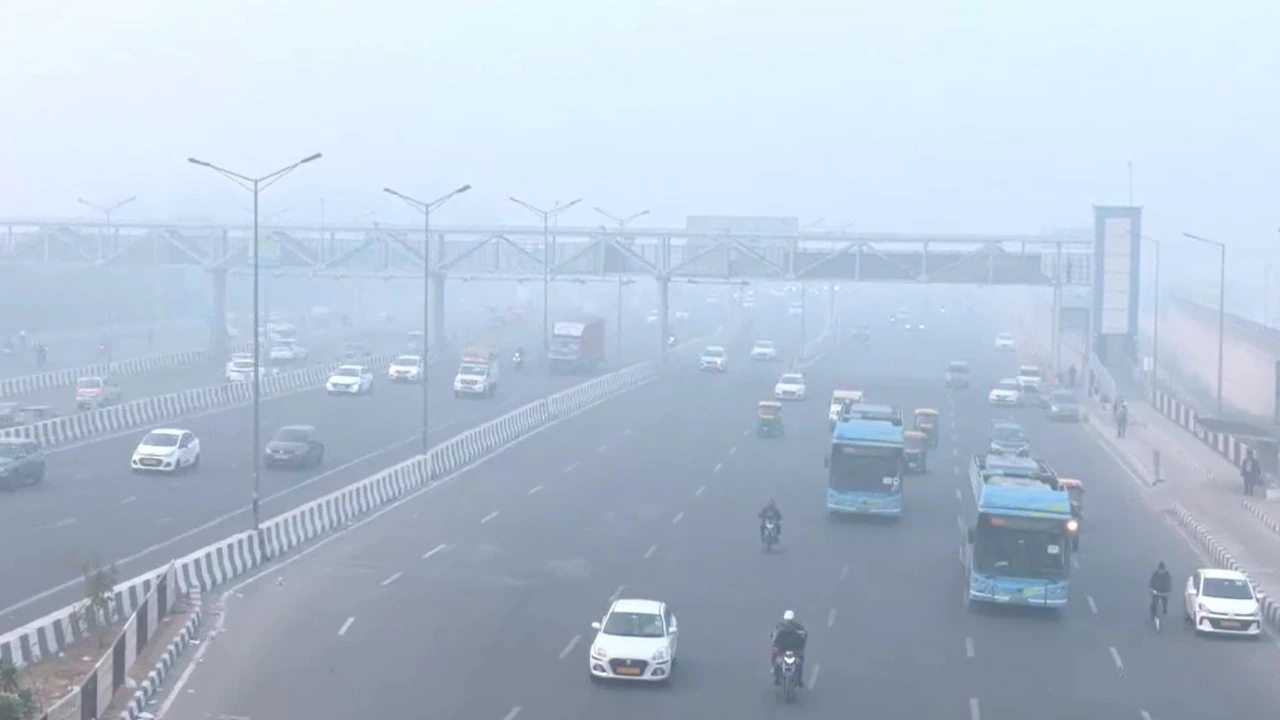
South Delhi Education Hub Faces Worsening Air Quality
Air quality in a key student-dominated neighbourhood in South Delhi is showing signs of deterioration, with pollution levels edging closer to the ‘poor’ category, raising concerns over health exposure in one of the capital’s busiest academic corridors. Recent monitoring data from a station along Aurobindo Marg indicates that the area remains within the ‘moderate’ band, but is trending upwards. This South Delhi air quality pattern is particularly significant given the high density of daily commuters, including students, faculty and service workers who rely on the corridor for access to major educational institutions and residential clusters.
Independent on-ground readings suggest even higher pollution levels than official averages, pointing to localised variations that may not always be captured by fixed monitoring infrastructure. Experts say such discrepancies are common in dense urban pockets, where vehicular congestion, construction activity and street-level dust can create micro-environments with elevated particulate matter. Particulate pollutants such as PM2.5 and PM10 remain the primary concern. These fine particles can penetrate deep into the respiratory system, posing risks even at moderate levels when exposure is prolonged. In areas with heavy pedestrian movement, the health implications become more pronounced, particularly for younger populations and those with pre-existing conditions. Urban planners highlight that South Delhi air quality challenges are closely tied to land-use patterns. Mixed-use zones that combine institutional campuses, informal housing and high traffic volumes often lack adequate buffers such as green cover or low-emission mobility systems. As a result, pollution hotspots emerge even when citywide averages appear stable.
The situation also reflects broader seasonal and structural issues. Transitional weather conditions, combined with road dust and emissions from transport, tend to push pollution levels upward during certain periods. While policy interventions have focused on large-scale solutions such as cleaner fuels and electric mobility, neighbourhood-level mitigation remains uneven. From an infrastructure standpoint, the findings underscore the need for hyperlocal air quality management. This includes better integration of real-time monitoring networks, targeted dust control measures, and improved last-mile public transport to reduce reliance on private vehicles. Experts also point to the role of urban design—such as pedestrian-friendly streets and shaded corridors—in reducing both emissions and exposure. For a city positioning itself as a knowledge and services hub, environmental quality in academic zones carries economic implications as well. Poor air quality can affect productivity, attendance and long-term public health outcomes, ultimately influencing urban competitiveness.
As South Delhi air quality trends towards higher risk categories, the focus is likely to shift towards more granular interventions. Ensuring that pollution control measures reach high-density educational and residential clusters could become a critical component of Delhi’s broader climate resilience and public health strategy.