



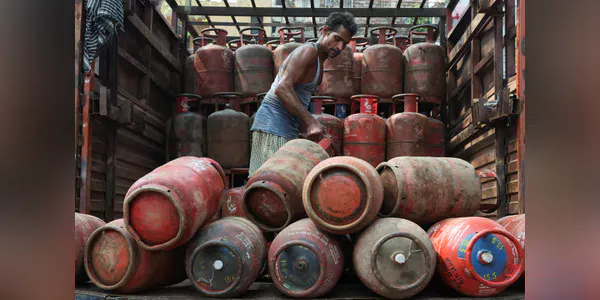
Chennai’s food service sector is facing mounting operational stress as disruptions in commercial fuel availability begin to impact restaurants across the city, exposing vulnerabilities in urban energy supply systems.
The ongoing Chennai LPG supply crisis has intensified concerns around business continuity, cost pressures, and the need for more resilient fuel infrastructure in rapidly growing urban economies.Restaurant operators report inconsistent access to commercial liquefied petroleum gas, a primary fuel source for kitchens, despite efforts to stabilise supply. The Chennai LPG supply crisis is being linked to global geopolitical disruptions affecting energy markets, which have filtered down to local distribution networks. For small and mid-sized establishments, these disruptions are translating into reduced operating hours, menu adjustments, and rising costs.Industry observers note that while supply constraints may be temporary, the broader implications are structural. Urban economies like Chennai rely heavily on decentralised, fuel-dependent service sectors, where even short-term disruptions can cascade into significant economic losses. The Chennai LPG supply crisis highlights the fragility of systems that depend on external supply chains without sufficient local buffers or alternatives.Officials indicate that measures have been initiated to improve distribution and prioritise commercial users, but gaps remain in last-mile delivery and allocation efficiency. In dense commercial clusters, where restaurants operate in close proximity, competition for limited supply has further complicated access.
This has led to uneven impacts, with smaller businesses often bearing the brunt of shortages.
Urban planners and sustainability experts suggest that the Chennai LPG supply crisis underscores the urgency of transitioning towards more diversified and resilient energy systems. Piped natural gas (PNG) networks, electric cooking technologies, and decentralised energy solutions are increasingly being viewed as viable alternatives. However, infrastructure limitations and uneven network expansion continue to restrict adoption across the city.The crisis also has implications for employment and urban livelihoods. The food service sector supports a wide range of informal and semi-formal jobs, from kitchen staff to delivery workers. Disruptions in operations can therefore have ripple effects across the urban economy, affecting income stability and local supply chains.From a climate and sustainability perspective, the situation presents both a challenge and an opportunity. While LPG is considered a cleaner alternative to traditional fuels, reliance on imported energy sources raises questions about long-term resilience. Transitioning to locally supported, lower-emission energy systems could align with broader goals of building climate-resilient and self-reliant cities.
As Chennai navigates the current disruptions, the Chennai LPG supply crisis is likely to influence policy discussions around urban energy planning. Strengthening infrastructure, diversifying fuel sources, and improving distribution systems will be critical to ensuring that essential service sectors remain stable in the face of global uncertainties.
Also Read:Kolkata Sleeper Vande Bharat To Boost Connectivity
