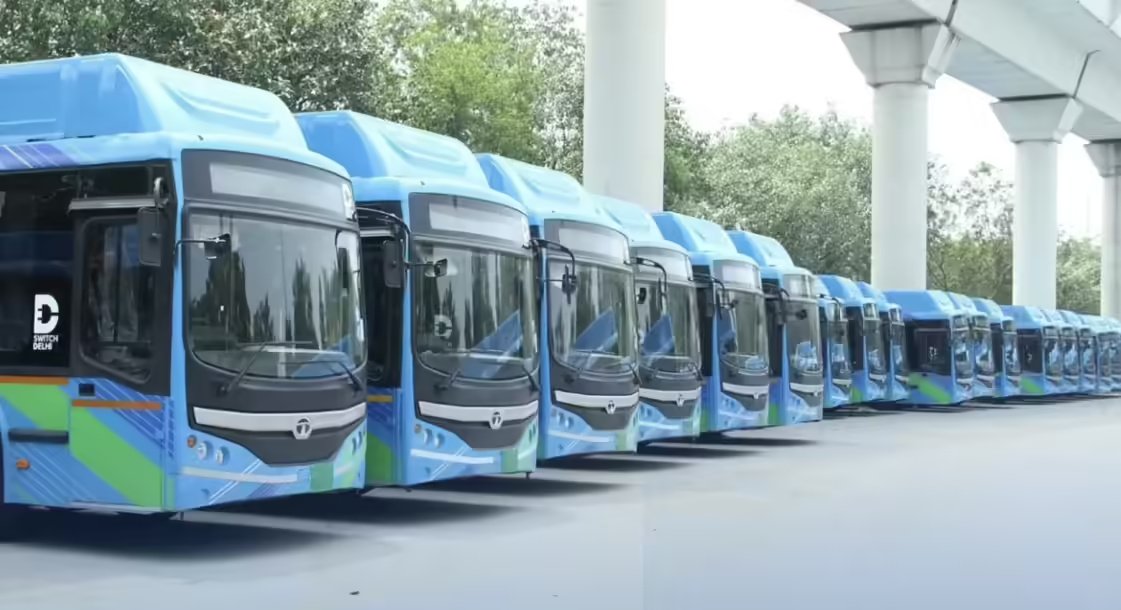
Delhi has outlined an intensified roadmap for electric mobility, combining policy reform, fleet expansion and targeted incentives to accelerate the shift away from fossil fuel-based transport. The latest Delhi EV policy framework signals a transition towards outcome-driven measures, linking financial incentives to the retirement of older, high-emission vehicles while scaling up public transport electrification. A central feature of the plan is the rapid expansion of the city’s electric bus fleet. Authorities aim to significantly increase the number of zero-emission buses operating on Delhi’s roads over the next few years, with a longer-term goal of building one of the largest electric bus networks in the region. Transport experts highlight that electrifying public buses can deliver immediate air quality benefits, particularly in dense urban corridors where diesel fleets have historically contributed to pollution.
The revised Delhi EV policy introduces a shift in incentive design by tying benefits to scrappage compliance. Under this approach, vehicle owners seeking higher incentives must demonstrate that older petrol or diesel vehicles have been formally scrapped. Urban policy analysts view this as a move towards lifecycle emissions management, ensuring that cleaner vehicles replace the most polluting segments of the fleet rather than simply adding to total vehicle numbers. In addition to scrappage-linked incentives, the policy outlines financial support across multiple vehicle categories, including private cars, two-wheelers and three-wheelers. Measures to support retrofitting of internal combustion engine vehicles into electric formats also form part of the strategy, reflecting an effort to broaden adoption pathways beyond new vehicle purchases. The government has also committed resources to expand charging infrastructure and related capital systems, a critical component for sustaining long-term EV adoption.
Industry observers note that charging availability remains a key barrier in many urban areas, and scaling up this network will be essential to support both public and private electric mobility. Fiscal incentives such as exemptions on road tax and registration charges are expected to continue, albeit with revised thresholds to prioritize more affordable vehicle segments. This recalibration is seen as an attempt to balance fiscal sustainability with equitable access to clean mobility options. From an urban development perspective, the Delhi EV policy aligns with broader efforts to reduce transport-related emissions while improving public health outcomes. However, experts caution that electrification alone cannot resolve congestion challenges. Integrating EV adoption with expanded public transport, transit-oriented development and non-motorized mobility will be critical to achieving long-term sustainability goals.
As Delhi advances its clean transport agenda, the effectiveness of this policy will depend on execution, behavioural uptake and infrastructure readiness. The coming years will determine whether the city can translate ambitious targets into measurable reductions in emissions and a more resilient, low-carbon mobility system.