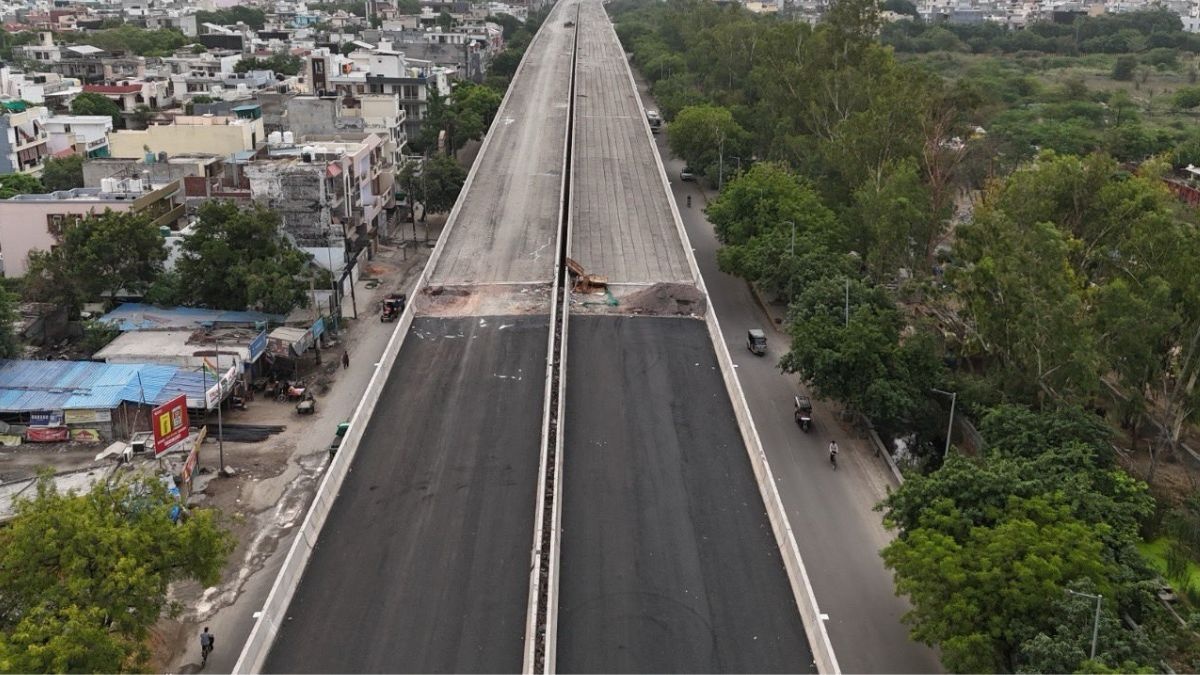
Authorities in Noida have initiated plans for a new elevated corridor aimed at easing persistent congestion along the Delhi-Noida Link Road, one of the region’s most heavily used commuter routes. The proposed 1.4-kilometre stretch will connect the Mahamaya Flyover to the Yamuna embankment road near Sector 94, offering an alternative path for traffic moving between Delhi and Greater Noida. The Noida elevated road project is being positioned as a targeted intervention to address bottlenecks that occur where multiple high-volume corridors converge. Commuters exiting from Delhi-facing routes often encounter delays as traffic merges onto surface roads, particularly during peak hours. Officials involved in the planning process indicate that the elevated link is expected to separate through-traffic from local flows, reducing intersection pressure and improving travel time reliability.
Urban transport analysts note that such grade-separated infrastructure can provide immediate congestion relief in high-density corridors where road expansion at ground level is constrained. By enabling uninterrupted movement between key junctions, the proposed elevated stretch could streamline connectivity for both daily commuters and long-distance traffic heading towards the Noida Expressway and beyond. The project is currently in its preparatory phase, with technical studies and alignment planning expected to be undertaken by academic and engineering institutions. Once detailed assessments are completed, authorities will move towards finalizing the design and execution framework. Industry experts highlight that early-stage planning will be crucial in ensuring minimal disruption to existing traffic patterns and surrounding developments during construction. Beyond congestion management, the Noida elevated road project also reflects broader infrastructure trends in the National Capital Region, where urban expansion continues to intensify intercity travel demand.
Improved connectivity between Delhi and Noida has direct implications for real estate activity, logistics efficiency and workforce mobility, particularly as commercial hubs expand along expressway corridors. However, planners caution that while elevated roads can ease vehicular movement, long-term sustainability depends on integrating multimodal transport systems. Without complementary investments in public transit, cycling infrastructure and pedestrian access, reliance on private vehicles may persist, limiting the environmental benefits of such projects. The proposed corridor is also expected to integrate with other ongoing infrastructure works in the area, including nearby elevated routes, creating a more cohesive transport network. This layered approach to mobility planning could enhance network resilience by offering multiple route options during peak demand or disruptions.
As the project progresses from concept to execution, its impact will depend on design efficiency, coordination across agencies and alignment with broader urban mobility goals. For a rapidly growing region like Noida, balancing congestion relief with sustainable transport planning will remain a key challenge in shaping future infrastructure outcomes.