


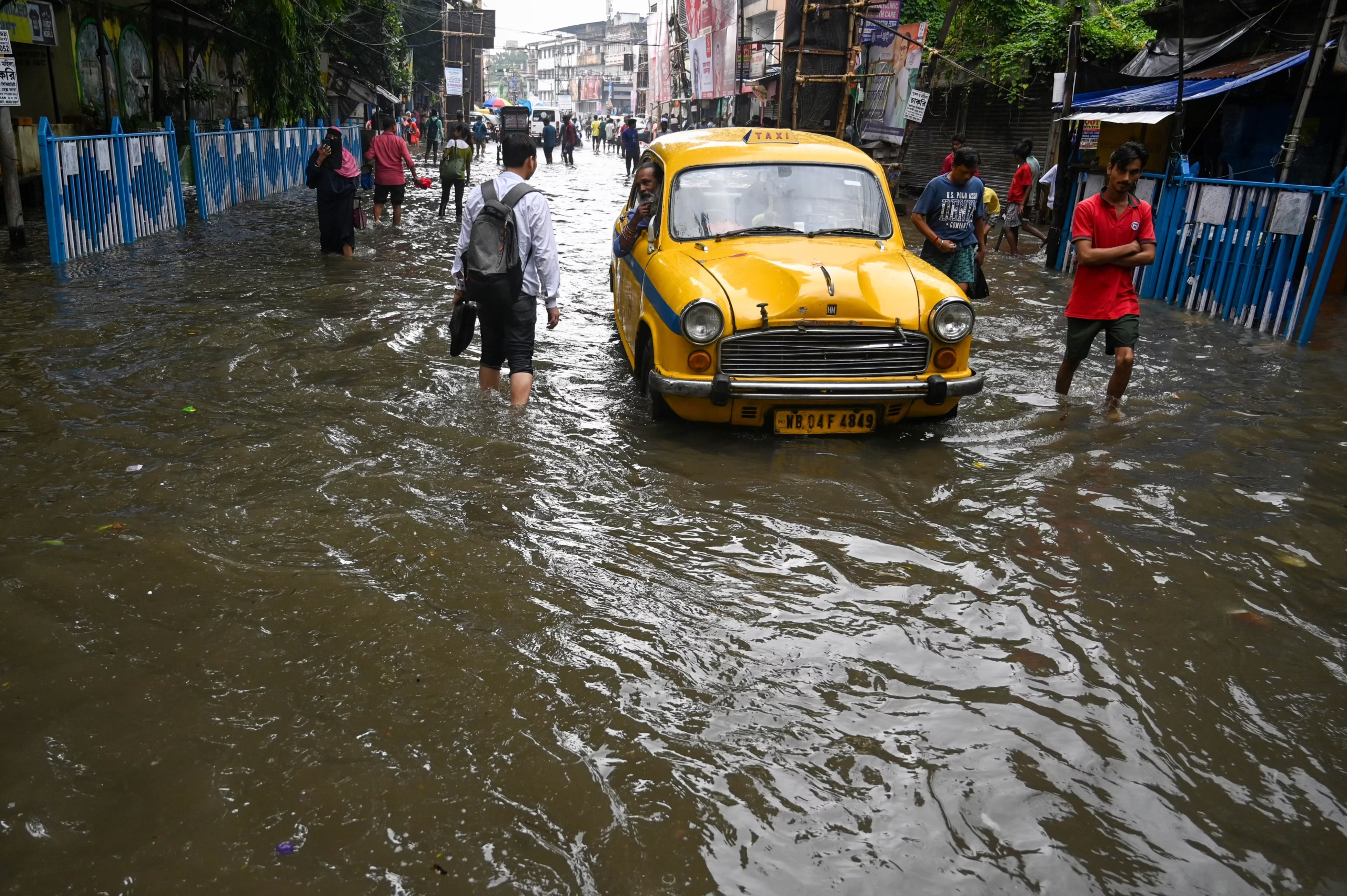
Kolkata is preparing for a spell of intense rainfall and thunderstorms expected over the coming days, with authorities anticipating disruptions to daily life and pressure on urban infrastructure.
The forecast, issued by the India Meteorological Department, signals heightened risks of waterlogging, transport delays, and civic strain in one of eastern India’s most densely populated metropolitan regions.Weather officials have indicated that the city could experience heavy showers accompanied by strong winds and lightning, driven by evolving atmospheric conditions over eastern India. While such weather patterns are not uncommon during seasonal transitions, the intensity and short duration of these events are increasingly becoming a concern for urban planners and civic agencies.The possibility of Kolkata Heavy Rainfall raises immediate concerns around drainage capacity, particularly in low-lying neighbourhoods that have historically been vulnerable to flooding. Despite ongoing investments in pumping stations and canal desilting, experts suggest that ageing infrastructure and rapid urban expansion continue to limit the city’s ability to manage sudden bursts of rainfall.Municipal authorities have initiated precautionary measures, including deploying emergency response teams and monitoring critical zones prone to water accumulation. A senior civic official noted that coordination with disaster management units and transport agencies is being strengthened to ensure faster response during peak rainfall periods.
Beyond short-term disruptions, repeated episodes of Kolkata Heavy Rainfall highlight deeper structural challenges. Urban development in recent decades has often prioritised density over resilience, reducing natural drainage pathways and increasing surface runoff. As a result, even moderate rainfall events can lead to significant urban flooding in certain pockets.Transport networks are expected to face temporary slowdowns, particularly on arterial roads and key transit corridors. Public transport systems may also experience delays, affecting daily commuters and economic activity across the city. Small businesses and informal sector workers are particularly vulnerable, as weather-related interruptions can directly impact earnings and supply chains.Environmental and infrastructure experts argue that Kolkata’s long-term resilience will depend on integrated planning approaches. These include expanding green cover, restoring wetlands, and adopting permeable urban design to absorb excess water. Investments in smart drainage systems and real-time monitoring could further improve response capabilities.The situation also underscores the importance of climate-adaptive urban strategies as extreme weather events become more frequent. For Kolkata, balancing growth with sustainability will be critical to reducing future risks and ensuring that infrastructure systems remain functional under stress.
As the city braces for the incoming weather system, the immediate focus remains on minimising disruption and safeguarding vulnerable areas. However, the broader lesson lies in strengthening resilience frameworks to better withstand the increasing volatility of urban climate patterns.
Also Read:Bengaluru Hyderabad Urban Economy Shift Reshapes Growth
