Ramgarh Coal Action Highlights Safety And Governance Gaps
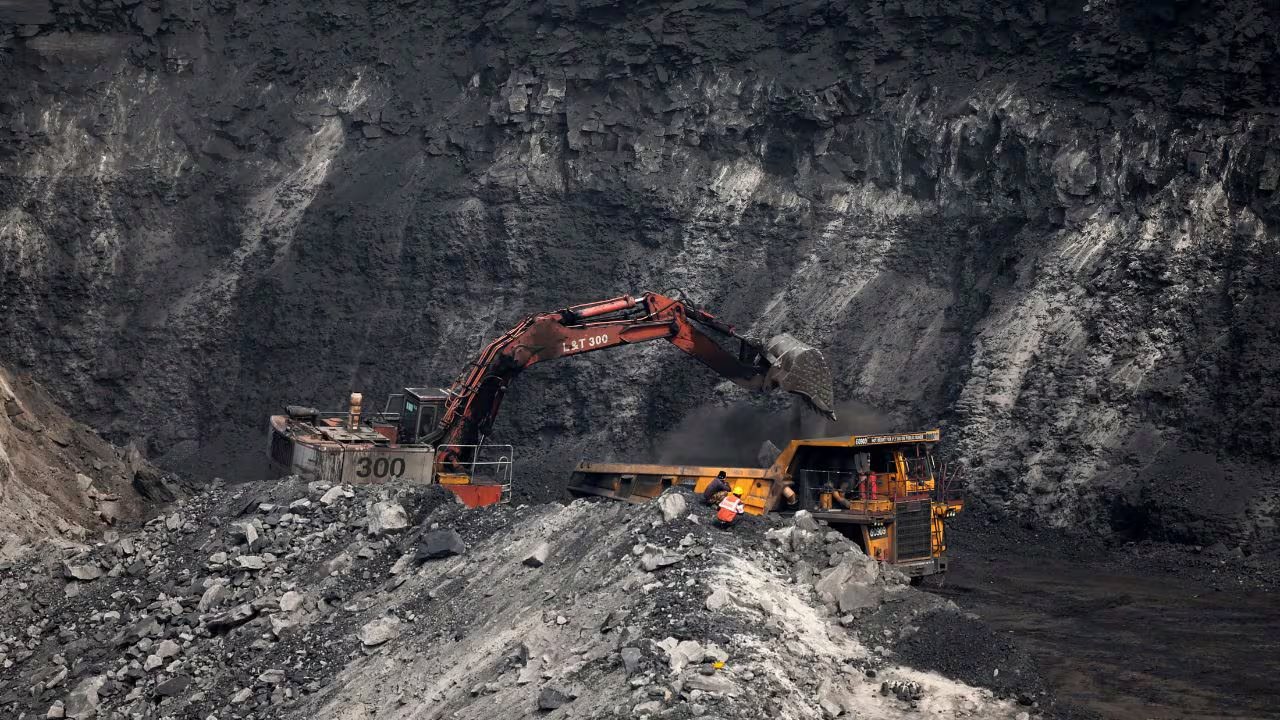
Authorities in Jharkhand’s Ramgarh district have intensified efforts to curb illegal coal extraction, carrying out controlled blasting to seal unauthorised mine entrances in a move aimed at addressing persistent safety, environmental, and governance challenges in India’s coal belt.The operation, conducted by the district administration in coordination with mining officials and security agencies, targeted illegal access points in abandoned coal mines. These entry points are often used for unregulated extraction, exposing workers to hazardous conditions and undermining formal supply chains.
Illegal coal mining has long been a structural issue in eastern India, particularly in regions such as Ramgarh, Dhanbad, and Hazaribagh. Abandoned or depleted mines frequently become sites of informal extraction, where local workers enter unstable pits without safety measures. Such practices have historically led to accidents, including mine collapses and fatalities, highlighting the human cost of unregulated mining. The latest enforcement action reflects a broader shift towards stricter oversight of coal-bearing regions. Officials indicate that dismantling illegal mine entrances is intended not only to prevent unauthorised extraction but also to reduce risks of subsidence, gas leaks, and environmental degradation. Controlled blasting allows authorities to permanently seal these access points while minimising impact on surrounding areas.
From an economic perspective, illegal mining disrupts formal coal supply chains and results in revenue losses for both state and central agencies. It also creates parallel markets where coal is sold outside regulatory frameworks, often at lower prices, distorting demand patterns. Recent reports from the region suggest that demand spikes—driven by fuel shortages or rising LPG prices—can further incentivise such informal activity. Urban and infrastructure planners point out that the issue extends beyond mining governance. Coal remains a critical input for India’s energy system, supplying the majority of electricity and supporting industrial activity. Ensuring that extraction is regulated and safe is therefore essential not only for worker welfare but also for maintaining reliable supply chains that underpin urban growth and infrastructure development.
At the same time, the crackdown highlights deeper socio-economic dynamics. In many mining regions, illegal extraction is often linked to livelihood challenges, where local communities depend on informal mining for income. Addressing the issue sustainably may therefore require a combination of enforcement, rehabilitation of abandoned mines, and alternative employment opportunities.Environmental considerations also play a key role. Unregulated mining can lead to land degradation, deforestation, and contamination of water sources, affecting both ecosystems and nearby settlements. Strengthening monitoring systems and restoring mined land are increasingly seen as necessary steps towards balancing resource extraction with ecological resilience.The Ramgarh action signals a more assertive approach by authorities, but experts caution that long-term solutions will depend on sustained enforcement and structural reforms. These include better fencing of abandoned mines, increased surveillance, and improved coordination between mining companies and local administrations.
As India continues to rely on coal for energy security while pursuing cleaner alternatives, the challenge lies in managing extraction responsibly. Efforts to curb illegal mining will be central to ensuring that the country’s coal economy remains both safe and aligned with broader goals of sustainable and inclusive development.