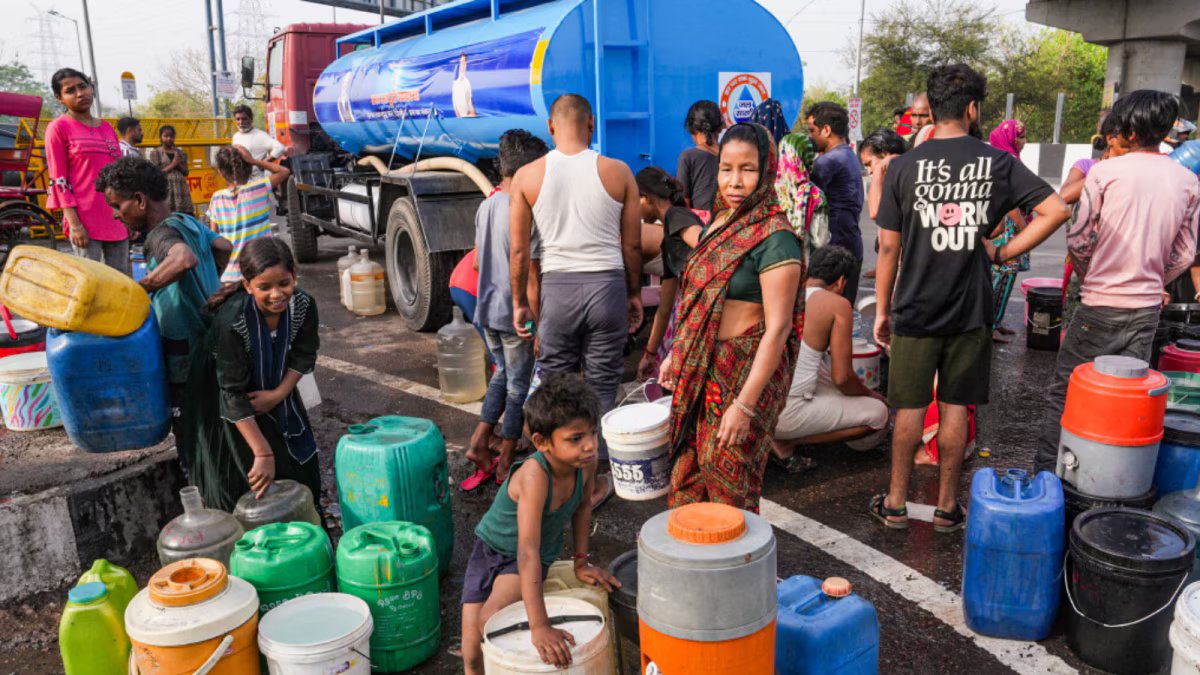
A sudden halt in water production at a key treatment facility has disrupted supply across several central neighbourhoods in Delhi, exposing the fragility of the city’s ageing water infrastructure. The incident, triggered by flooding at a major plant, has affected both residential and institutional zones, underlining the growing risks posed by climate variability and system vulnerabilities. The disruption began after water entered critical sections of the Chandrawal treatment facility, forcing operations to scale down. Authorities indicated that while water has been cleared from the premises, repairs to electrical systems and transmission infrastructure could delay full restoration. The affected unit is a significant contributor to the city’s daily supply, intensifying the impact across densely populated localities.
Residents in multiple central districts reported prolonged outages, with limited access to tanker services and delayed communication from service agencies. Urban analysts note that such Delhi water supply disruption events disproportionately affect middle- and lower-income households, many of whom lack access to private storage or alternative supply options. The episode has also drawn attention to communication gaps during infrastructure failures. Feedback from citizen groups suggests that advance advisories and helpline responsiveness remain inconsistent, complicating emergency response at the household level. In high-density urban settings, timely information is as critical as physical supply in managing service disruptions. From an infrastructure standpoint, the incident highlights the exposure of legacy water systems to extreme weather events. Flooding of pump houses and electrical panels indicates insufficient climate-proofing of critical assets. Experts argue that as rainfall patterns become more erratic, utilities must prioritise flood-resilient design, including elevated installations, improved drainage, and redundant power systems.
The Delhi water supply disruption also underscores the importance of decentralisation in urban water management. Cities that rely heavily on a limited number of large treatment plants face higher systemic risk when one facility fails. Diversifying supply through decentralised treatment units, groundwater recharge, and recycled water networks can improve resilience and reduce dependency on single nodes. In parallel, the continued reliance on tanker-based distribution during emergencies raises questions about scalability and equity. While tankers provide short-term relief, their availability and affordability vary widely, often leaving vulnerable populations at a disadvantage. Urban planners suggest that integrating real-time monitoring systems with predictive maintenance could help prevent such breakdowns. Early detection of vulnerabilities—whether structural, electrical, or hydrological—can reduce downtime and improve service continuity. Investments in smart infrastructure, coupled with transparent public communication systems, are increasingly seen as essential for modern utilities.
As repairs continue and supply gradually stabilises, the incident serves as a reminder that infrastructure expansion alone is not sufficient. Strengthening resilience, improving governance, and ensuring equitable access will be central to preventing future Delhi water supply disruption events in a city facing rising demand and climate stress.