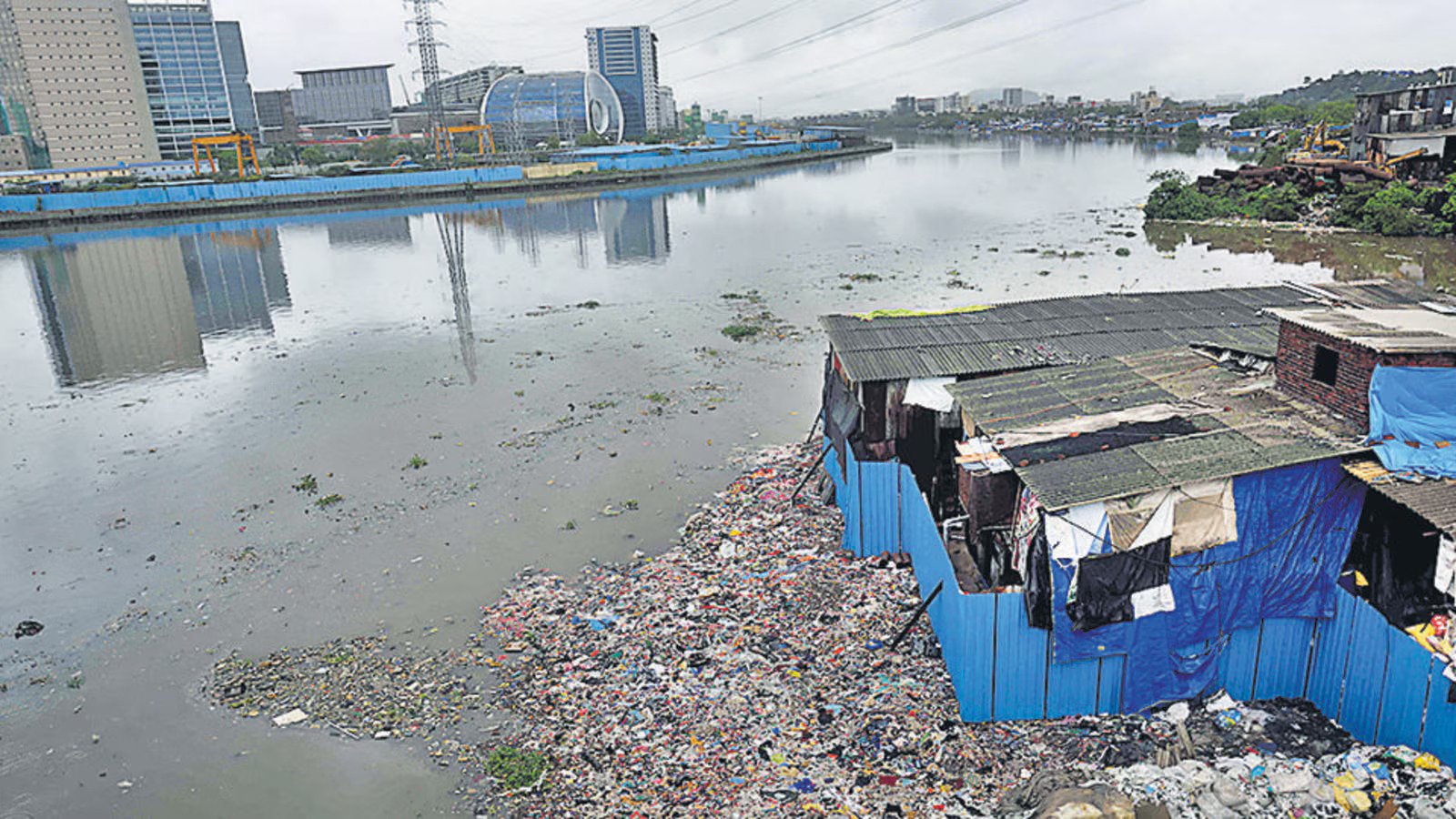
Mumbai’s long-standing struggle with marine pollution has come under renewed scrutiny as gaps in its sewage treatment network continue to allow untreated wastewater to flow into the Arabian Sea, affecting both coastal ecosystems and local livelihoods.
Civic officials have indicated that a full-scale upgrade of the city’s sewage treatment infrastructure is underway, with all planned treatment facilities expected to be operational by 2027. Once completed, the system is designed to ensure that nearly all wastewater generated in the city undergoes treatment before being discharged. However, until these systems are fully functional, large volumes of untreated sewage continue to enter coastal waters, intensifying environmental stress. The issue has become particularly visible in fishing-dependent coastal pockets, where residents report declining fish availability and deteriorating water quality. Urban planners note that untreated discharge disrupts breeding cycles, damages marine biodiversity, and weakens the coastal food chain. This has direct economic consequences for fishing communities already vulnerable to climate variability and rising operational costs.
At the centre of the concern is the uneven progress of key infrastructure projects under the city’s sewage modernisation programme. While some treatment plants are nearing completion, others remain delayed due to land constraints, design changes, and regulatory approvals. Supporting infrastructure, such as pumping stations intended to divert and manage wastewater flows, has also faced setbacks, including alignment conflicts with other large-scale projects and the need for environmental clearances. Compounding the challenge is the temporary shutdown of smaller decentralised treatment facilities in certain coastal areas. These local plants play a critical role in intercepting sewage before it reaches the sea. Their inactivity, even for short durations, can significantly increase pollution loads along the shoreline.
Experts in urban water management point out that Mumbai’s ageing drainage and sewage systems were not designed to handle current population densities or climate pressures. During the monsoon, the problem intensifies as stormwater mixes with untreated sewage, leading to flooding in low-lying areas and further contamination of coastal waters. This overlap between drainage and sewage networks highlights the need for integrated, climate-resilient infrastructure planning. The broader concern extends beyond environmental degradation. Coastal pollution also impacts tourism, public health, and real estate values in waterfront areas. As cities globally move towards circular water economies and zero-discharge goals, Mumbai’s ongoing transition reflects both the scale of the challenge and the urgency of reform.
Officials are now focusing on accelerating project execution, securing regulatory approvals, and ensuring continuity in operations at existing facilities. For a city that relies heavily on its coastline for economic and social activity, the effectiveness of its sewage treatment network will be central to achieving long-term urban sustainability.
Mumbai Coastal Pollution Rises Amid Sewage Infrastructure Gaps