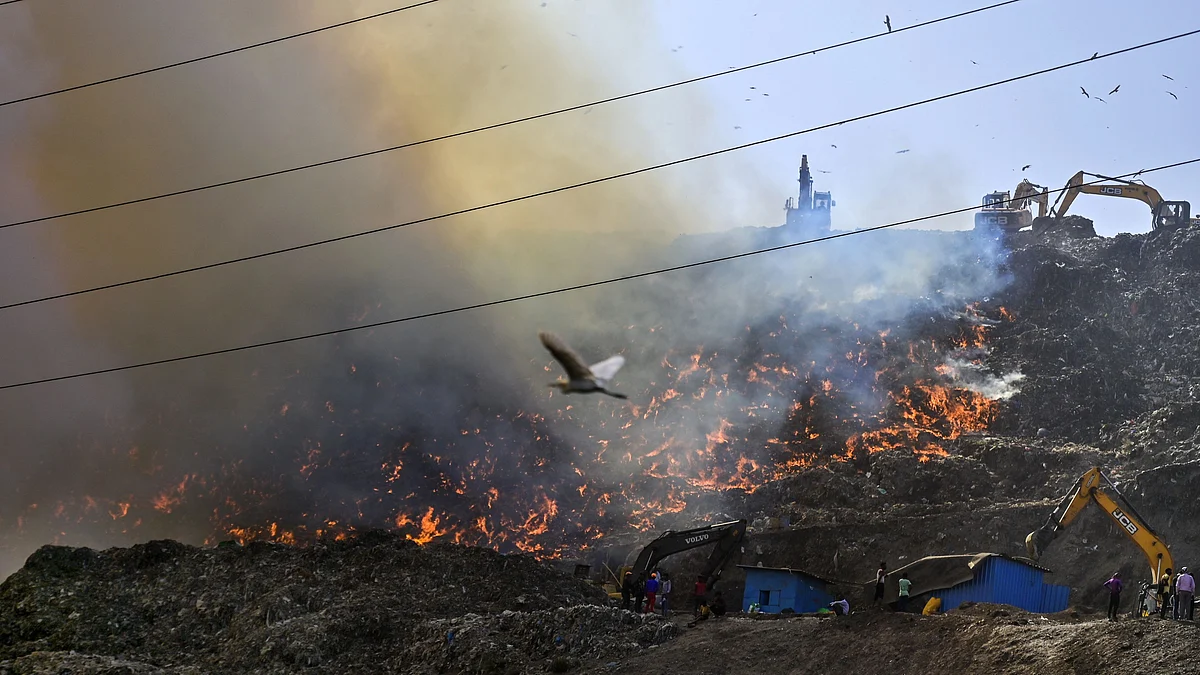
Delhi Landfill Fire Reduction Strengthens Pollution Control
Delhi has reported a complete absence of landfill fire incidents in 2025, marking a significant shift in how the city manages its waste disposal sites and associated environmental risks. The development highlights the impact of sustained monitoring, regulatory enforcement and infrastructure interventions in addressing one of the capital’s persistent sources of air pollution. The achievement underlines the growing importance of structured waste management systems in large urban centers. Under the Delhi landfill fire reduction framework, authorities have implemented stricter protocols to prevent ignition at dumping grounds, alongside increased surveillance during high-risk periods such as winter months.
Environmental experts note that landfill fires, often caused by methane build-up and unmanaged waste, have historically contributed to toxic emissions and deteriorating air quality. A combination of enforcement measures and on-ground monitoring has played a critical role in reducing such incidents. Dedicated patrol teams were deployed across the city to curb open burning of waste materials, while penalties for violations have been reinforced. These actions are seen as essential in tackling informal waste disposal practices that often escape formal regulatory systems. The Delhi landfill fire reduction effort also reflects progress in addressing legacy waste at the city’s major dumping sites. Large-scale bio-mining operations have significantly reduced the volume of accumulated waste over the past few years. Urban planners highlight that clearing legacy waste not only lowers fire risks but also frees up land for potential redevelopment, contributing to more efficient land use in a space-constrained city.
Key landfill sites in north, east and south Delhi are undergoing phased remediation, with timelines extending over the next two years. The gradual clearance of decades-old waste is expected to improve local environmental conditions, including air quality and groundwater safety. For nearby communities, this translates into reduced health risks and improved living standards. From a broader urban development perspective, the decline in landfill fires signals a shift towards more accountable and data-driven waste governance. Cities across India are increasingly recognizing that unmanaged waste systems have direct economic and environmental costs, from healthcare burdens to reduced land values. Effective waste management, therefore, is becoming central to sustainable urban growth strategies. However, experts caution that maintaining this progress will require continuous vigilance. Open burning of biomass and municipal waste remains a concern, particularly in peri-urban areas where enforcement is more challenging. Strengthening decentralized waste processing, segregation at source and public awareness will be critical to sustaining long-term gains.
As Delhi advances its waste management reforms, the elimination of landfill fires in a single year represents a notable milestone. The next phase will depend on whether these gains can be institutionalized through consistent policy implementation, technological integration and community participation, ensuring that environmental improvements translate into lasting urban resilience.