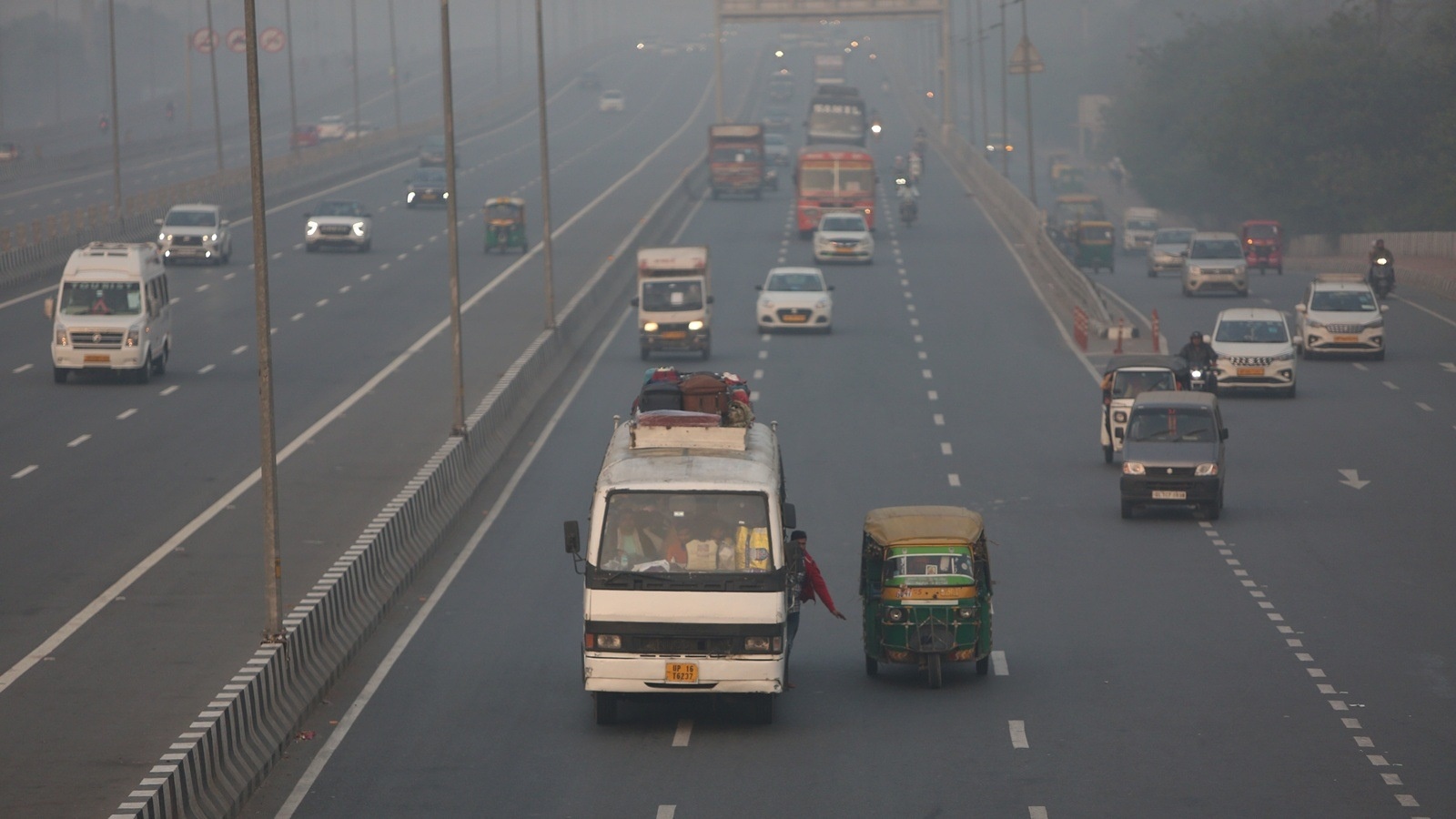
Delhi Air Pollution Oversight Exposes Monitoring Weaknesses
Delhi’s legislative audit mechanism has raised concerns over structural gaps in the capital’s approach to tackling vehicular emissions, pointing to inconsistencies in monitoring systems, public transport capacity and regulatory enforcement. The findings underscore the complexity of managing air quality in a rapidly growing urban region, where infrastructure, governance and mobility systems remain deeply interconnected. The review, based on an assessment of environmental and transport performance, indicates that several air quality monitoring stations may not be positioned in accordance with national technical standards. Urban experts suggest that the placement of these stations is critical, as inaccurate siting can distort pollution readings and weaken policy responses.
Questions have also emerged around instances where air quality indices were derived despite incomplete pollutant data, raising concerns about the reliability of public information systems. A key issue highlighted under the Delhi air pollution oversight review is the absence of comprehensive tracking of emission sources. Despite earlier investments in scientific studies, the city continues to lack robust real-time data on pollution contributors, particularly from vehicles. This data gap limits the ability of policymakers to design targeted interventions and assess the effectiveness of existing measures. Concerns extend beyond monitoring to fuel-related emissions, especially in high-density urban zones. Experts indicate that pollutants such as benzene require continuous surveillance at fuel stations, along with the deployment of vapour recovery systems to prevent harmful emissions. The absence of consistent oversight mechanisms in this area reflects broader challenges in aligning environmental compliance with urban infrastructure operations.
Public transport capacity has emerged as another critical fault line. The capital’s bus fleet remains significantly below assessed demand, with operational inefficiencies further reducing service availability. Inadequate last-mile connectivity and non-functional routes continue to push commuters towards private vehicles, undermining efforts to reduce congestion and emissions. Urban planners emphasize that expanding electric bus fleets and improving feeder networks are essential for achieving a modal shift towards sustainable mobility. The Delhi air pollution oversight findings also draw attention to weaknesses in enforcement frameworks. Irregularities in vehicle emission certification processes and slow progress in phasing out older, high-polluting vehicles highlight systemic inefficiencies. Additionally, gaps in data related to inter-state vehicle movement complicate enforcement efforts in a region where daily cross-border traffic is substantial. Implementation delays in clean mobility initiatives, including electric vehicle adoption and charging infrastructure, further illustrate the fragmented nature of policy execution. Industry observers note that without coordinated institutional mechanisms and adequate staffing, even well-designed policies risk underperformance.
As Delhi continues to expand, the intersection of transport planning, environmental governance and infrastructure delivery will remain central to its sustainability trajectory. Strengthening data systems, improving inter-agency coordination and accelerating public transport investments are likely to define the next phase of urban policy action, with direct implications for air quality, economic productivity and quality of life.