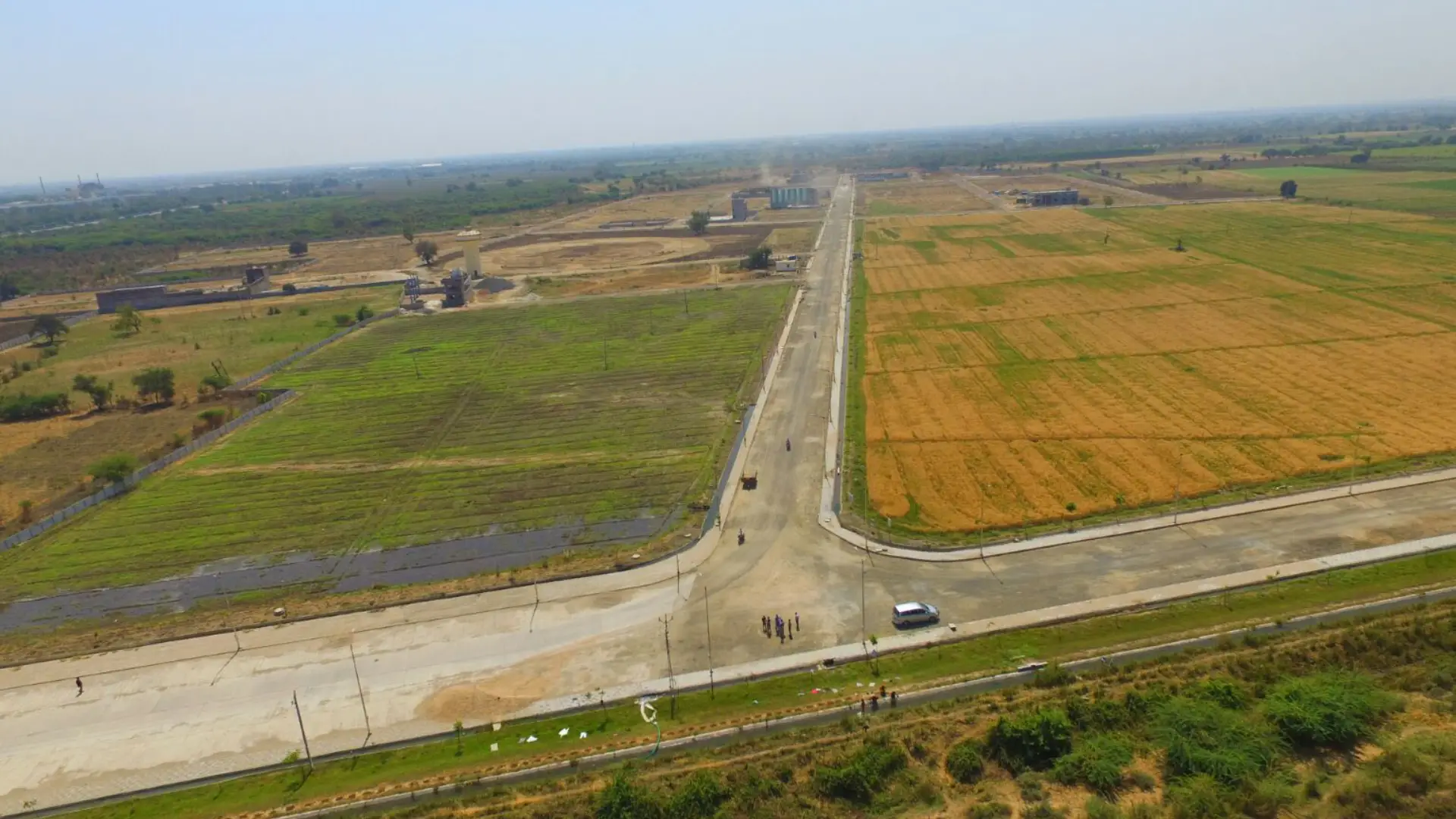
A targeted clearance operation in Ahmedabad’s Narol area has unlocked land for a critical infrastructure upgrade, as civic authorities moved to remove unauthorised structures obstructing a planned road corridor. The intervention, linked to an ongoing town planning scheme, signals a renewed push towards structured urban expansion and improved mobility in one of the city’s industrial zones.
The Ahmedabad road widening effort focuses on creating an 18-metre-wide carriageway under a notified planning framework, aimed at easing congestion and improving intra-city connectivity. The recent action cleared a mix of residential and commercial encroachments that had developed along the designated alignment, releasing over 3,500 square metres of land required for the project. Municipal officials indicated that prior notices had been issued to occupants, allowing time for voluntary compliance. With limited response, enforcement measures were initiated under supervision, enabling work on a nearly 200-metre stretch to move forward. Temporary structures, extensions and other obstructions within the road boundary were also removed as part of the exercise.
The Ahmedabad road widening initiative highlights a recurring challenge in rapidly growing cities—balancing planned infrastructure expansion with informal or unauthorised development. Urban planners note that encroachments along transport corridors not only reduce carriageway capacity but also disrupt drainage systems, pedestrian access and emergency services. Narol, an important industrial and logistics hub on the city’s periphery, has seen incremental growth over the years without commensurate upgrades in road infrastructure. Improved road width and alignment are expected to ease freight movement, reduce travel times and support local economic activity. For businesses operating in the area, better connectivity could translate into more predictable logistics and lower operating costs.
At the same time, such clearance drives raise broader questions around inclusive urban development. Experts argue that while enforcing planning norms is essential, cities must also ensure that displaced households and small businesses are integrated into formal systems through rehabilitation or alternative planning solutions. This is particularly relevant in industrial belts where informal settlements often emerge alongside economic activity. From a real estate perspective, consistent execution of town planning schemes tends to enhance investor confidence by bringing clarity to land use and infrastructure timelines. The Ahmedabad road widening project is likely to improve the attractiveness of surrounding micro-markets for both industrial and residential development, provided supporting infrastructure such as drainage, public transport and utilities keeps pace.
The episode also underscores the importance of proactive land management. Regular monitoring of designated public land, combined with digital mapping and enforcement mechanisms, can help prevent encroachments before they become large-scale challenges requiring disruptive interventions. As Ahmedabad continues to expand, the success of such initiatives will depend on how effectively infrastructure delivery is aligned with social considerations and environmental resilience. Road projects, when integrated with pedestrian infrastructure, drainage planning and public transport, can contribute to more balanced and sustainable urban growth.
Ahmedabad Road Widening Clears Narol Encroachments