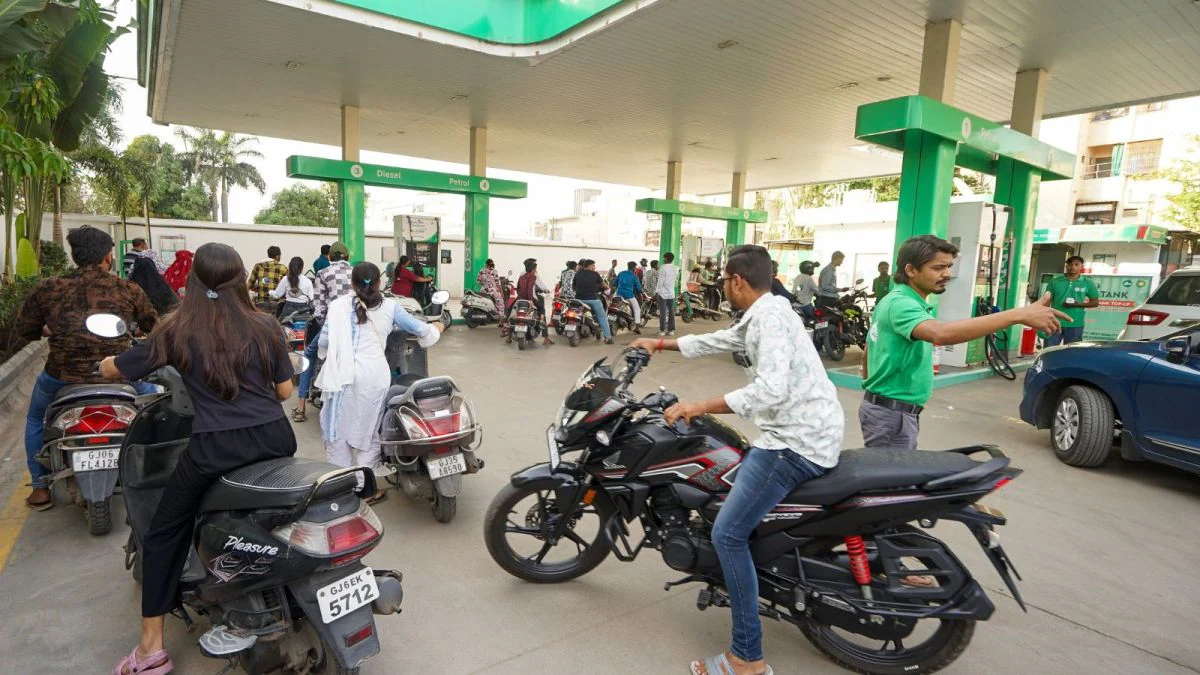
A sudden surge in demand at fuel stations across Gujarat’s major cities led to widespread disruption on Monday evening, as rumours of a supply crunch triggered fuel panic buying among motorists. The rush resulted in long queues, temporary stockouts at select outlets and traffic congestion in high-density urban corridors, exposing the fragility of last-mile fuel distribution systems.
The disruption was most visible in cities such as Ahmedabad, Surat, Rajkot and Vadodara, where arterial roads around petrol stations witnessed gridlock during peak hours. Traffic management teams were forced to intervene in several locations as queues spilled onto carriageways, affecting commuter movement and local business activity. Authorities and oil marketing companies maintained that there was no actual shortage of petrol or diesel. However, the intensity of the response was driven by a combination of misinformation and underlying operational adjustments in the fuel supply chain. Industry representatives indicated that recent changes in dealer payment systems have altered how inventory is replenished, creating short-term gaps at some retail outlets.
Under revised norms, fuel dealers are increasingly required to make advance payments for supplies, replacing earlier credit-based cycles. While this shift is aimed at improving financial discipline and liquidity within the supply chain, it has also reduced the buffer period that smaller operators rely on to maintain continuous stock. As a result, even minor delays in payments or deliveries can lead to temporary dry-outs at pumps. Urban economists note that such structural changes, when combined with rumours, can amplify behavioural responses like fuel panic buying, particularly in densely populated cities where private vehicle dependency remains high. The phenomenon reflects a broader challenge in urban India, where perception often outpaces official communication, leading to sudden spikes in demand for essential services.
The episode also highlights the role of digital and informal communication networks in shaping public behaviour. Unverified messages circulated rapidly, prompting households and businesses to pre-emptively refuel vehicles. In some locations, fuel stations introduced temporary limits on purchases to manage demand, while others struggled to maintain order amid crowding. From a planning perspective, the incident raises questions about urban resilience in energy distribution. Unlike centralised infrastructure such as power grids, fuel supply relies heavily on decentralised retail networks, making it more susceptible to localised disruptions. Experts argue that better coordination between oil companies, dealers and civic authorities is necessary to ensure smoother transitions when operational policies change.
There are also environmental implications. Sudden spikes in vehicular movement and idling during long queues contribute to increased emissions, undermining efforts to build low-carbon urban systems. Reducing dependence on fossil fuels through public transport expansion and electric mobility could help mitigate such vulnerabilities over time. While supplies have since stabilised, the fuel panic buying episode serves as a reminder that urban infrastructure is not only about physical capacity but also about trust, communication and system design. Strengthening these aspects will be critical as cities navigate both growth and transition in their mobility ecosystems.
Ahmedabad Fuel Panic Buying Triggers Urban Chaos