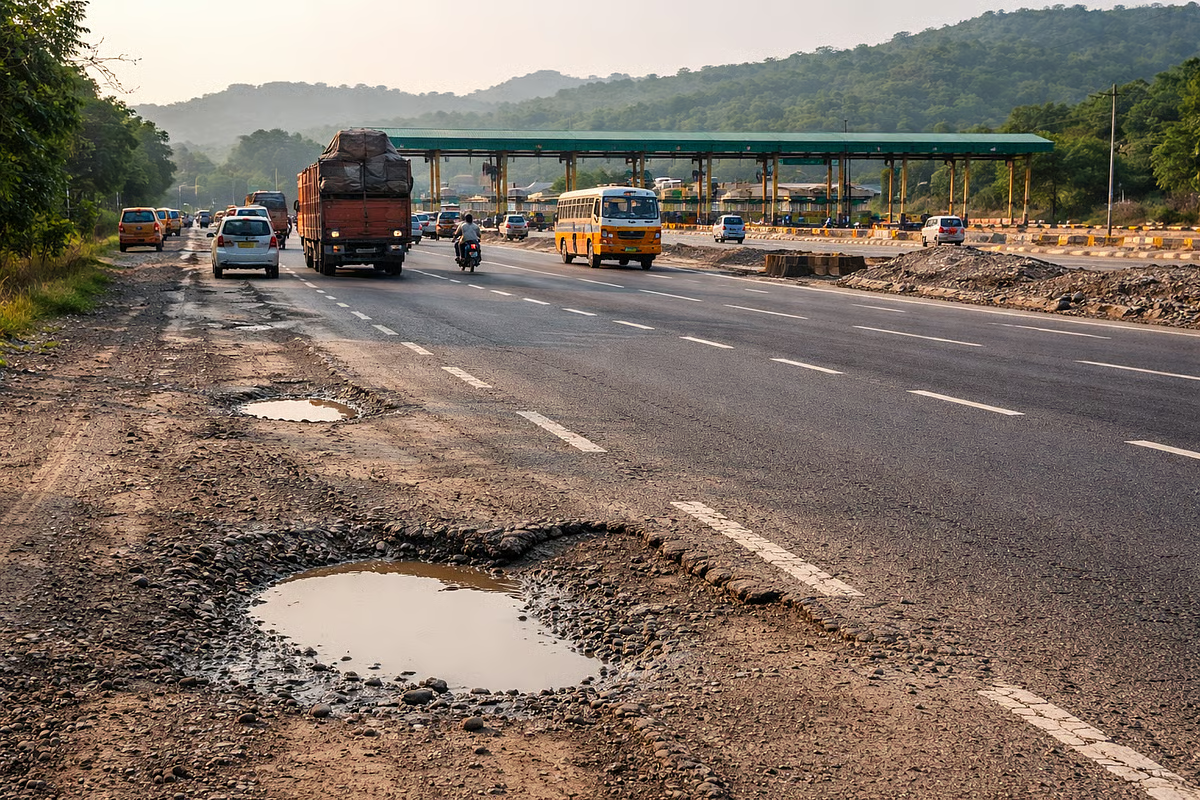
A critical road corridor linking Mumbai with Maharashtra’s Konkan belt is approaching its final phase, with central authorities indicating that the long-delayed Mumbai Goa Highway could be operational within weeks. The development carries significant implications for regional mobility, logistics efficiency and tourism, particularly for districts that remain dependent on slow, congested routes.
The Mumbai Goa Highway, a key national highway upgrade project, is now largely constructed, with only a small portion pending completion. Officials familiar with the project indicate that most structural work is complete, and efforts are now focused on resolving bottlenecks in select stretches. A site review by senior leadership is expected shortly, signalling a push to meet the revised deadline after multiple missed targets over the past decade. The highway is designed to ease pressure on existing arterial roads that connect Mumbai to coastal Maharashtra. Currently, commuters and freight operators face unpredictable travel times due to narrow carriageways, accident-prone segments and seasonal disruptions. Urban planners note that completing this corridor could reduce travel time significantly, while also redistributing traffic away from saturated urban nodes.
However, the final leg of execution reflects persistent structural challenges in India’s infrastructure pipeline. Land acquisition delays have slowed progress in pockets where alignment passes through densely inhabited or fragmented land parcels. In addition, underperformance by contractors in certain packages required corrective interventions, including reallocation of work and stricter monitoring frameworks. Environmental and climatic constraints have also shaped construction timelines. Low-lying sections of the alignment have experienced recurring waterlogging during monsoon months, raising concerns about long-term resilience. Experts suggest that climate-adaptive engineering such as improved drainage systems and elevated road design—will be critical to ensure durability, particularly as extreme rainfall events become more frequent along the western coast.
Forest clearances have posed another layer of complexity. Portions of the highway pass through ecologically sensitive zones, requiring regulatory approvals and mitigation planning. Infrastructure analysts point out that balancing connectivity with ecological preservation remains a central tension in large linear projects, especially in biodiversity-rich regions like the Konkan. espite these hurdles, the near-completion of the Mumbai Goa Highway is expected to unlock broader economic opportunities. Improved connectivity could strengthen tourism flows to coastal destinations, enhance agricultural supply chains and support small businesses that rely on inter-district mobility. Real estate observers also anticipate incremental development along select nodes, particularly near junctions and bypasses.
Looking ahead, the project’s success will depend not only on timely completion but also on operational quality. Road safety, maintenance standards and climate resilience will determine whether the corridor delivers long-term value to commuters and regional economies. As India continues to expand its highway network, the lessons from this project underline the importance of integrated planning, execution discipline and environmental sensitivity in shaping future infrastructure outcomes.
Mumbai Goa Highway Nears Completion After Delays