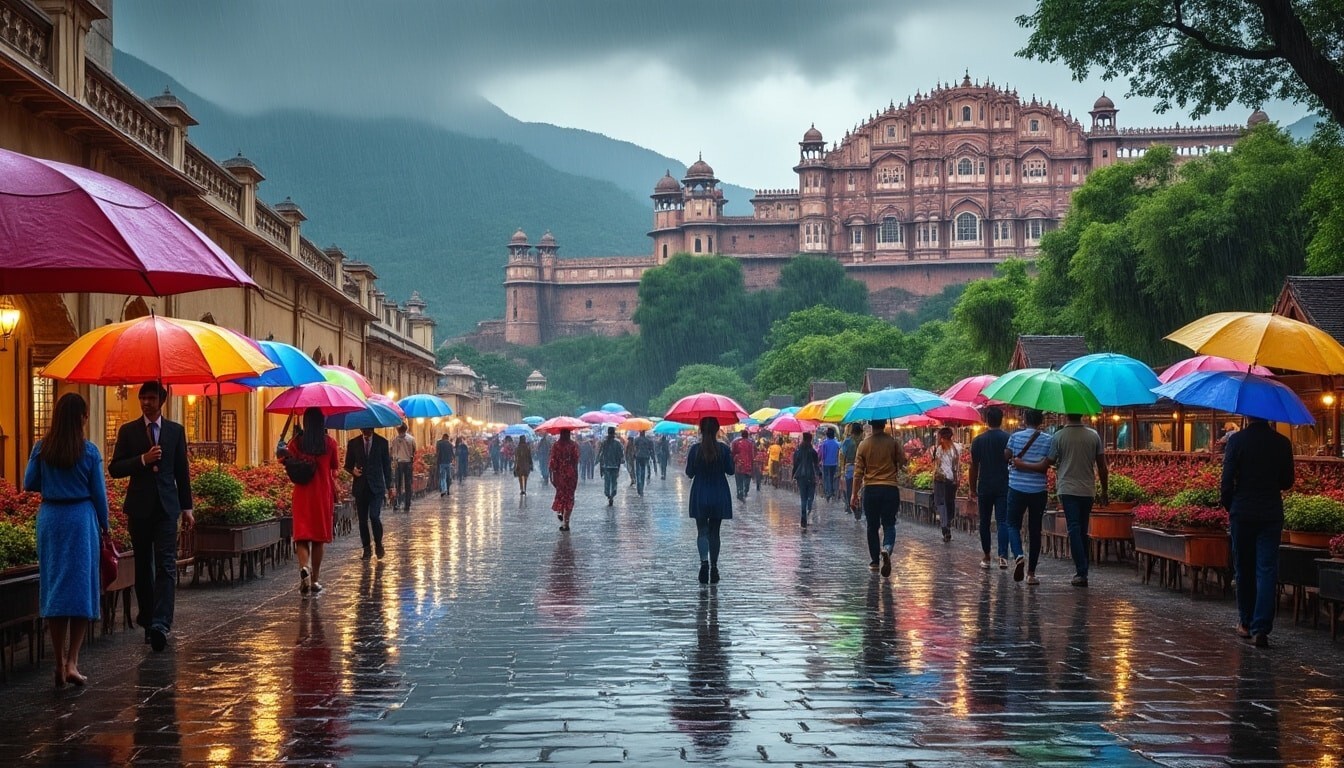
A sudden spell of rainfall has brought a noticeable shift in weather conditions across Jaipur, offering temporary relief from rising temperatures and signalling broader atmospheric changes across northern and central India. The latest Jaipur rainfall event reflects a wider pattern of pre-summer instability, with implications for urban climate resilience, agriculture, and infrastructure preparedness. Early morning showers across multiple parts of the city transformed what had been a warming trend into cooler, more comfortable conditions. While the rainfall was relatively short-lived, it marked a clear departure from the dry and increasingly warm days typically seen during this time of year. Weather officials attribute the change to active thunderstorm systems influencing large parts of the country.
Beyond immediate comfort for residents, the Jaipur rainfall carries wider significance for both urban systems and the rural economy. State authorities have already initiated assessments of crop damage in several districts following recent heavy precipitation. Agricultural experts note that while moderate rainfall can benefit soil moisture, unseasonal or intense showers during sensitive crop stages can disrupt yields and affect farm incomes, particularly in semi-arid regions like Rajasthan. Urban planners highlight that such weather variability underscores the need for cities to adapt to increasingly erratic climate patterns. Jaipur’s expanding built environment, characterized by dense residential zones and growing infrastructure networks, is particularly sensitive to sudden rainfall events. Even brief showers can test drainage capacity, increase the risk of waterlogging, and disrupt mobility if systems are not designed for rapid runoff management. At a broader scale, meteorological agencies have indicated that thunderstorm activity is currently active across several parts of India, accompanied by lightning and gusty winds.
This pattern is expected to persist in multiple regions, with varying intensity. Such systems often emerge during seasonal transitions, when temperature gradients between land and atmosphere create conditions for convective activity. For cities like Jaipur, this transitional phase presents a dual challenge. On one hand, intermittent rainfall can help reduce dust levels and improve air quality in the short term. On the other, sudden weather events—especially those involving strong winds or hail—can strain urban infrastructure and pose risks to construction sites, transport systems, and informal settlements. The recent weather shift also highlights the interconnected nature of urban and rural resilience. While cities experience immediate impacts such as improved thermal comfort or disrupted commutes, the broader economic consequences often unfold in agricultural hinterlands that support urban consumption and supply chains.
Looking ahead, experts suggest that improving forecasting systems, strengthening drainage networks, and integrating climate-responsive design into urban planning will be critical. As Jaipur rainfall events become less predictable, the focus is likely to shift towards building adaptive capacity—ensuring that both cities and surrounding regions can respond effectively to rapid weather fluctuations without compromising economic stability or public safety.