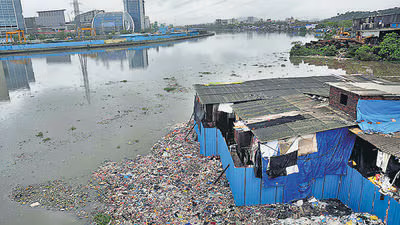
Mumbai’s efforts to build a circular water economy are facing a demand challenge, with large volumes of treated wastewater going unused despite rising pressure on freshwater resources.
The Brihanmumbai Municipal Corporation is preparing to revise pricing for treated sewage water in a bid to attract more buyers, after limited uptake forced the city to discharge millions of litres of reusable water into the sea each day. The issue has emerged prominently at the Colaba treatment facility, currently the only plant in the city producing tertiary-grade recycled water suitable for non-potable use. Civic officials estimate that a significant share of the plant’s treated output remains unutilised, even as the city continues to invest in expanding wastewater treatment capacity. The proposed pricing shift — bringing down rates to a uniform level — is aimed at making treated sewage water more competitive for construction, industrial, and landscaping purposes.
Urban infrastructure experts point to a structural mismatch between supply and demand. While treatment technology has advanced, distribution logistics and pricing dynamics remain key barriers. In Mumbai, relatively low potable water tariffs and the cost of transporting recycled water across long distances reduce its commercial viability, especially for private sector users. The Colaba facility, operational since 2020, was envisioned as a pilot for sustainable water reuse. However, its location at the southern tip of the city has limited its reach. Moving water to high-demand zones in the suburbs requires additional infrastructure, including tanker logistics or dedicated pipelines, which increases overall costs for end users.
Despite these constraints, sporadic demand has emerged from sectors such as infrastructure development and institutional landscaping. Recent interest from private operators for bulk procurement indicates a potential market, particularly for construction activities where potable water is not essential. Industry observers suggest that aligning pricing with operational realities — while ensuring consistent supply — could gradually improve adoption. The broader challenge lies in scaling up reuse across Mumbai’s expanding network of sewage treatment plants. Facilities in other parts of the city are expected to generate treated sewage water in the coming years, which could decentralise supply and reduce transportation costs. This shift is seen as critical for improving utilisation rates and strengthening the city’s water resilience.
From a sustainability perspective, increasing reuse of treated wastewater is essential for reducing dependence on freshwater sources and minimising marine discharge. In coastal cities like Mumbai, where climate variability and population growth strain water systems, circular water strategies are becoming integral to long-term planning. However, experts caution that pricing reforms alone may not be sufficient. Policy support, infrastructure investment, and regulatory mandates for non-potable water use in construction and industry could be necessary to build a stable market.
As Mumbai reconsiders its approach, the outcome will likely shape how effectively the city transitions towards resource-efficient urban infrastructure — balancing economic feasibility with environmental responsibility.
Mumbai Reworks Pricing To Boost Recycled Water Use