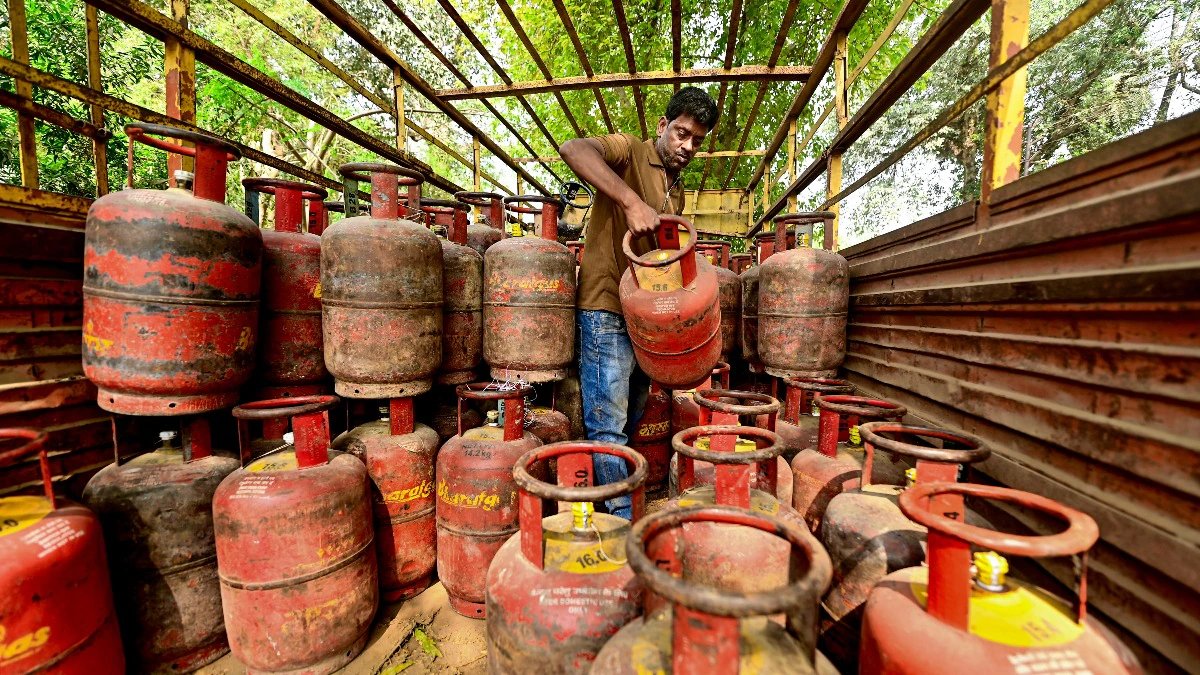
A supply disruption in cooking gas has triggered an urgent infrastructure response in Gurugram, where authorities and gas distributors are moving to expand piped connections across residential clusters. The push to scale up the PNG rollout Gurugram reflects both an immediate crisis response and a longer-term shift towards more reliable and lower-emission urban energy systems. Officials across city agencies and gas distribution companies are working to compress approval timelines and resolve long-standing bottlenecks that have slowed network expansion. The effort follows recent directions from the Union petroleum ministry, with local authorities now focusing on improving coordination between departments responsible for road access, utility permissions, and infrastructure planning.
At the core of the strategy is the expansion of the city gas distribution network, which delivers piped natural gas directly to households. Compared to liquefied petroleum gas cylinders, PNG offers continuous supply, lower logistics dependency, and a reduced carbon footprint. Urban planners note that accelerating PNG access aligns with broader climate goals by reducing emissions linked to transport and distribution of fuel cylinders. Despite this, the current penetration remains uneven. Estimates suggest that only a portion of households in Gurugram are connected to piped networks, while a majority continue to depend on LPG or alternative cooking methods. The recent shortage has exposed this dependency, prompting authorities to prioritise areas where internal pipeline infrastructure already exists but final approvals are pending. A key challenge slowing the PNG rollout Gurugram has been the absence of integrated utility corridors. Multiple agencies control permissions for digging, road restoration, and alignment approvals, often leading to delays and repeated excavation. Officials acknowledge that high restoration charges and fragmented clearance processes have also increased project costs, making expansion less viable in certain zones.
Residents in newly developed sectors and along growth corridors have reported waiting months, and in some cases over a year, for activation despite pipeline installation. Industry representatives point out that demand has risen sharply in recent months, particularly in high-density residential developments, where uninterrupted fuel supply is critical for daily living. To address these gaps, authorities are exploring policy adjustments, including reducing connection costs, capping restoration fees, and introducing time-bound approvals. If these measures are implemented effectively, officials estimate that tens of thousands of additional households could be connected within the year. Urban development experts view the current moment as an opportunity to correct systemic inefficiencies in infrastructure planning. Integrating gas pipelines with other utilities during road development, rather than retrofitting them later, could reduce costs and improve service delivery.
As Gurugram continues to expand as a major urban and economic hub, the success of its energy transition will depend not just on supply availability, but on how efficiently infrastructure systems are planned and executed. The ongoing push suggests a shift towards more resilient and coordinated urban service delivery, where energy access is treated as a critical component of sustainable city growth.