


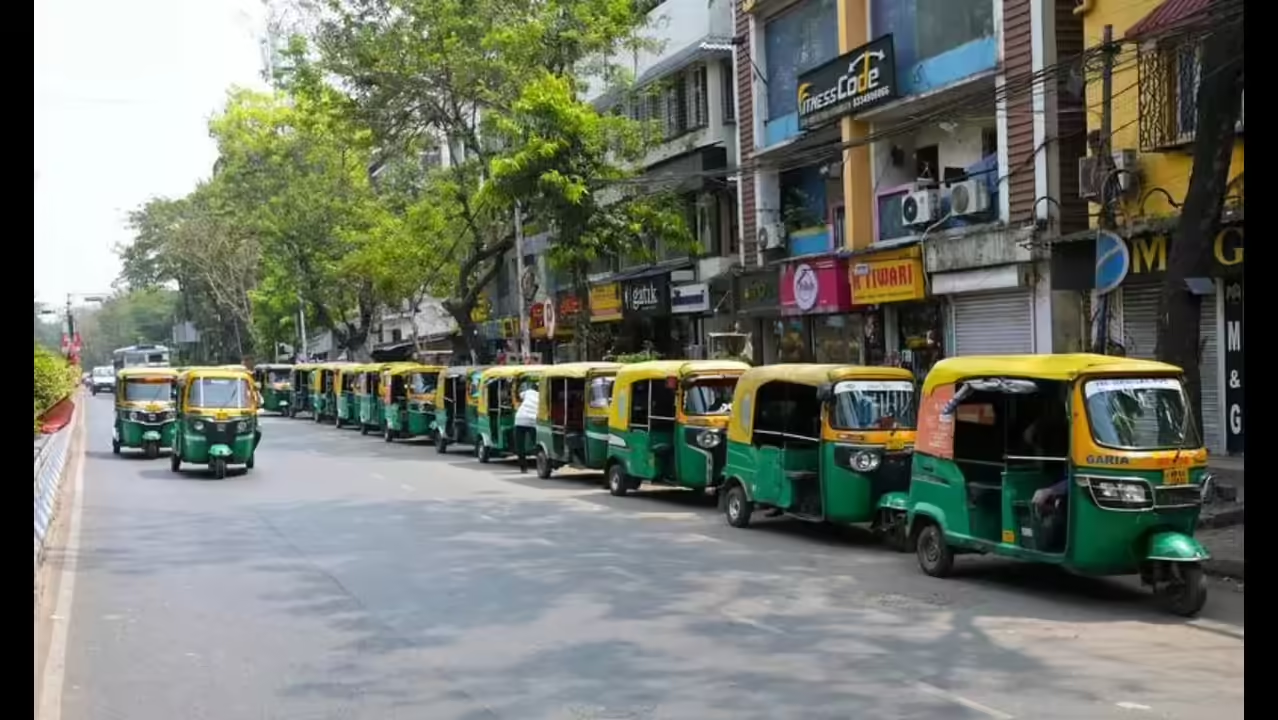
A tightening supply of auto LPG in Kolkata is beginning to strain the city’s transport ecosystem, highlighting vulnerabilities in urban fuel logistics and raising concerns over the reliability of cleaner mobility options.
The shortage, affecting vehicles dependent on liquefied petroleum gas, has disrupted daily operations for sections of the city’s para-transit network. Auto-rickshaws and small commercial vehicles, which rely on LPG as a relatively lower-emission fuel, are facing reduced operating hours and rising input costs. For commuters, this is translating into longer wait times and higher fares across key routes.Industry participants indicate that the auto LPG shortage is linked to supply constraints and distribution bottlenecks rather than a sudden surge in demand. Urban fuel supply chains, particularly for alternative fuels, remain sensitive to logistical disruptions, including refinery allocations, transport delays, and storage limitations within city limits.For a dense metropolis like Kolkata, where informal and semi-formal transport modes play a critical role in last-mile connectivity, the implications are significant. Urban planners note that disruptions in para-transit systems can quickly ripple across the broader mobility network, affecting access to jobs, education, and essential services, especially for lower-income residents.The auto LPG shortage also raises questions about the stability of transition fuels in India’s evolving urban energy landscape. While LPG has been promoted as a cleaner alternative to conventional fuels like diesel and petrol, inconsistent supply can undermine user confidence and slow adoption.
Experts argue that predictable availability is as important as environmental benefits when scaling low-emission transport solutions.From an economic standpoint, small vehicle operators are among the most affected. Reduced access to fuel directly impacts earnings, particularly for drivers who depend on daily cash flows. In the absence of buffer mechanisms, such disruptions can deepen financial stress within the informal urban workforce.The situation underscores the need for integrated urban energy planning. As cities push toward cleaner mobility systems, coordination between fuel suppliers, urban authorities, and transport stakeholders becomes essential. Infrastructure for storage, distribution, and real-time monitoring of supply chains can help mitigate sudden shortages.There is also a broader policy dimension. Diversifying fuel options—through electric mobility, compressed natural gas, and other alternatives—can reduce dependence on any single energy source. However, such transitions require parallel investments in infrastructure, regulatory clarity, and financial support mechanisms for small operators.
As Kolkata navigates the current auto LPG shortage, the episode serves as a reminder that urban sustainability goals must be supported by resilient supply systems. Ensuring reliability in cleaner fuel access will be key to maintaining public trust and advancing the city’s shift toward low-carbon, inclusive mobility solutions
Also Read:Kolkata GST Tribunal Bench Boosts Tax Dispute Resolution
