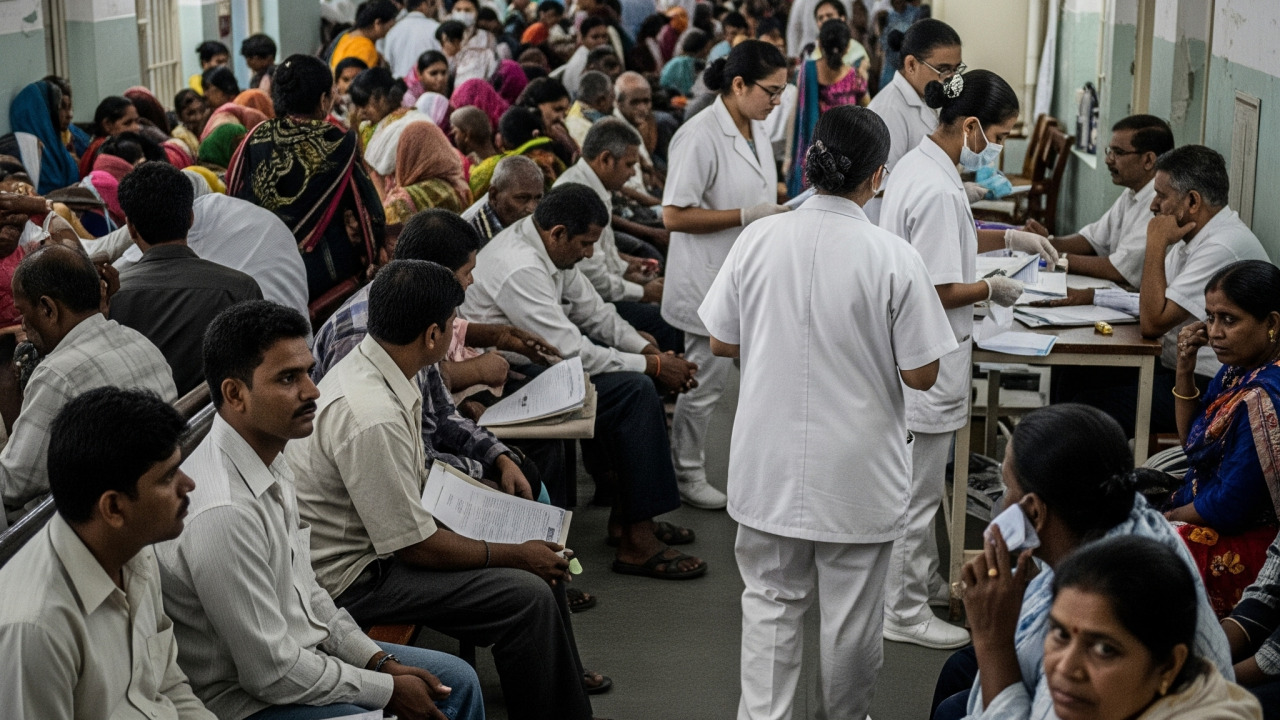
Delhi Healthcare Capacity Growth Lags Population Needs
Delhi’s healthcare system is witnessing incremental expansion, but capacity additions continue to fall short of the city’s growing population needs, raising concerns about long-term urban resilience. Recent estimates show a modest increase in hospital bed availability, highlighting structural gaps in public health infrastructure despite ongoing investments. The Delhi healthcare infrastructure has seen an increase in bed capacity over the past year, with additional beds created largely within existing facilities rather than through new hospitals. While this reflects efforts to optimise current assets, it also signals limited expansion in physical healthcare infrastructure. For a rapidly growing metropolitan region, such incremental gains may not be sufficient to meet rising demand.
A closer look at the distribution of beds reveals a heavy reliance on private healthcare providers, which account for more than half of the total capacity. Public hospitals operated by various government agencies contribute a smaller share, with local civic bodies representing only a marginal portion. This imbalance raises questions about equitable access, particularly for lower-income populations who depend on affordable public healthcare services. Despite the recent increase, the bed-to-population ratio in the capital has improved only marginally and remains well below global benchmarks. Urban health experts note that inadequate bed availability can strain emergency services, delay treatment, and increase out-of-pocket expenditure for patients. In dense urban environments, where health risks are amplified by pollution and population density, this gap becomes even more critical. The Delhi healthcare infrastructure challenge is not just about numbers but also about spatial distribution and accessibility. Many peripheral and underserved areas continue to face limited access to quality healthcare facilities, leading to uneven service delivery across the city. Urban planners argue that future expansion must prioritise decentralised healthcare networks, ensuring that essential services are available closer to residential clusters.
Looking ahead, authorities are planning a more substantial expansion through a mix of hospital redevelopment and new construction projects. Several existing hospitals are slated for upgrades, which are expected to significantly increase capacity. In parallel, new hospital projects are being planned to add thousands of beds over the coming years. These initiatives indicate a shift towards scaling infrastructure rather than relying solely on incremental additions. From an urban development perspective, healthcare infrastructure plays a critical role in shaping liveability and economic productivity. Cities with robust healthcare systems are better positioned to attract investment, support workforce stability, and respond to public health emergencies. Integrating healthcare planning with broader urban policies—such as housing, transport, and environmental management—will be essential to build resilient communities.
As Delhi continues to expand, the pace and quality of healthcare infrastructure development will remain a key determinant of its urban future. Bridging the capacity gap will require sustained investment, better coordination across agencies, and a focus on inclusive access to ensure that growth translates into improved health outcomes for all residents.