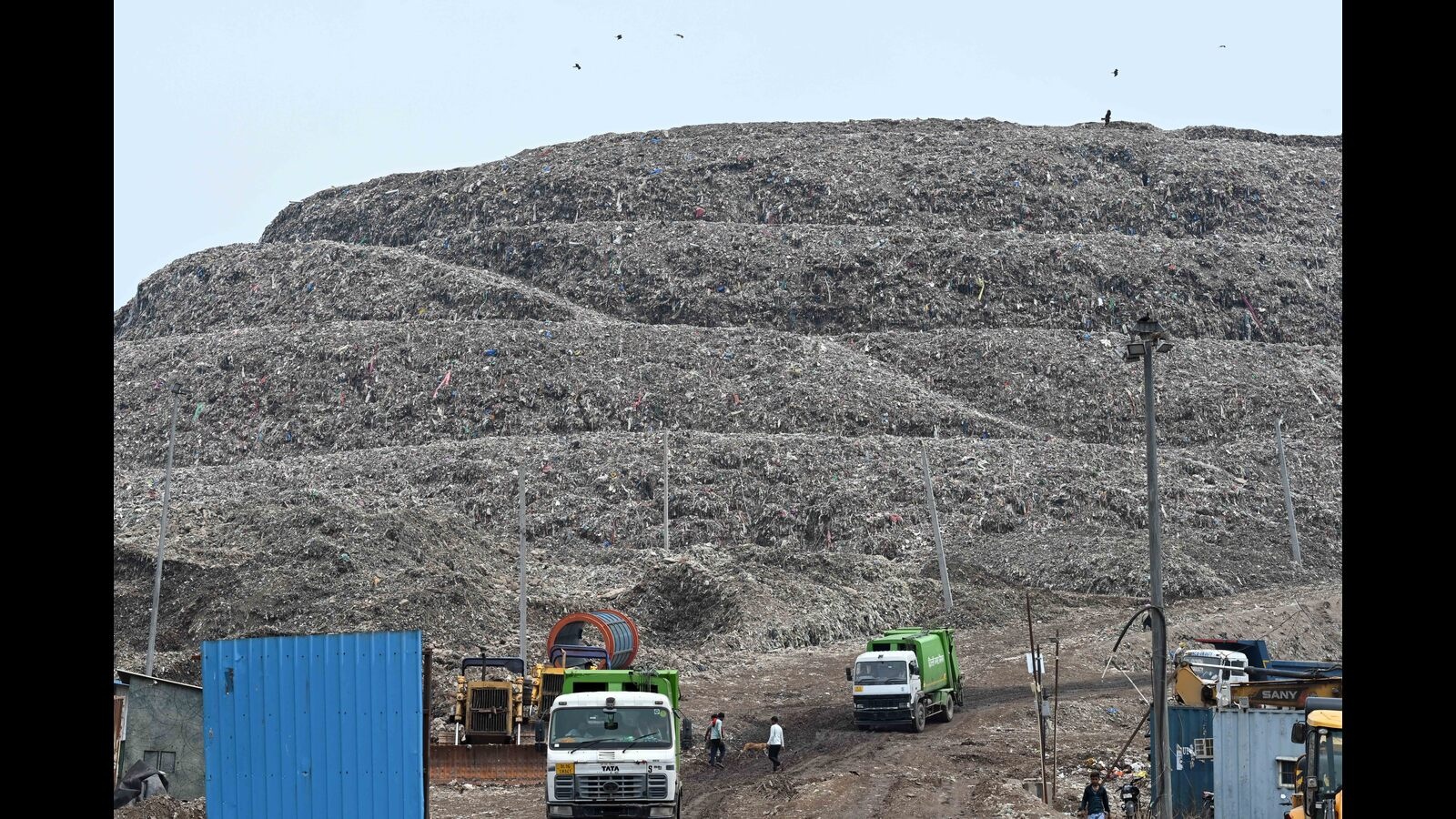
Delhi’s urban systems are under increasing pressure as a widening mismatch between waste generation and treatment capacity exposes structural gaps in the capital’s civic infrastructure. With thousands of tonnes of municipal waste produced daily, the shortfall in processing is emerging as a critical challenge for public health, land use, and environmental sustainability. Current estimates indicate that Delhi generates nearly 12,000 tonnes of municipal solid waste each day, while existing facilities are able to process only a fraction of this volume. The resulting Delhi waste processing gap has left a significant portion of refuse either untreated or diverted to already burdened landfill sites. For a city with limited land availability, this imbalance has direct implications for urban planning and liveability.
Municipal authorities have achieved near-total collection coverage, suggesting that operational logistics at the primary level are largely in place. However, the inefficiency lies further along the value chain, particularly in segregation and scientific processing. Experts highlight that waste segregation at source remains inconsistent, reducing the efficiency of downstream recycling and energy recovery systems. In several zones, segregation rates remain well below optimal levels, constraining the effectiveness of treatment plants. The persistence of the Delhi waste processing gap is also intensifying pressure on landfill sites, many of which have exceeded their designed capacity. These sites continue to pose environmental risks, including methane emissions, groundwater contamination, and localised air pollution. Urban planners point out that unmanaged landfill expansion can also distort surrounding land values and hinder planned real estate development. To address the deficit, authorities are planning a substantial expansion of waste treatment infrastructure, including additional waste-to-energy facilities.
These projects are expected to significantly increase processing capacity over the coming years, offering a potential pathway to reduce landfill dependency. However, sector specialists caution that infrastructure expansion alone may not be sufficient without parallel improvements in waste segregation, decentralised processing, and behavioural change at the household level. From an economic standpoint, the waste sector represents both a challenge and an opportunity. Efficient waste management systems can unlock value through recycling markets, energy generation, and job creation in the circular economy. Conversely, inefficiencies increase municipal costs and environmental liabilities, ultimately affecting urban productivity. The issue also intersects with broader climate goals. Poorly managed waste contributes to greenhouse gas emissions, undermining efforts to build low-carbon cities. Integrating waste systems with climate action strategies—such as biogas generation and material recovery—could help align civic services with sustainability targets.
As Delhi continues to expand, the effectiveness of its waste management systems will play a defining role in shaping urban resilience. Bridging the processing gap will require not just capacity addition, but a systemic shift towards segregation, accountability, and resource recovery—factors that will determine whether the city can transition towards a cleaner and more sustainable urban future.