


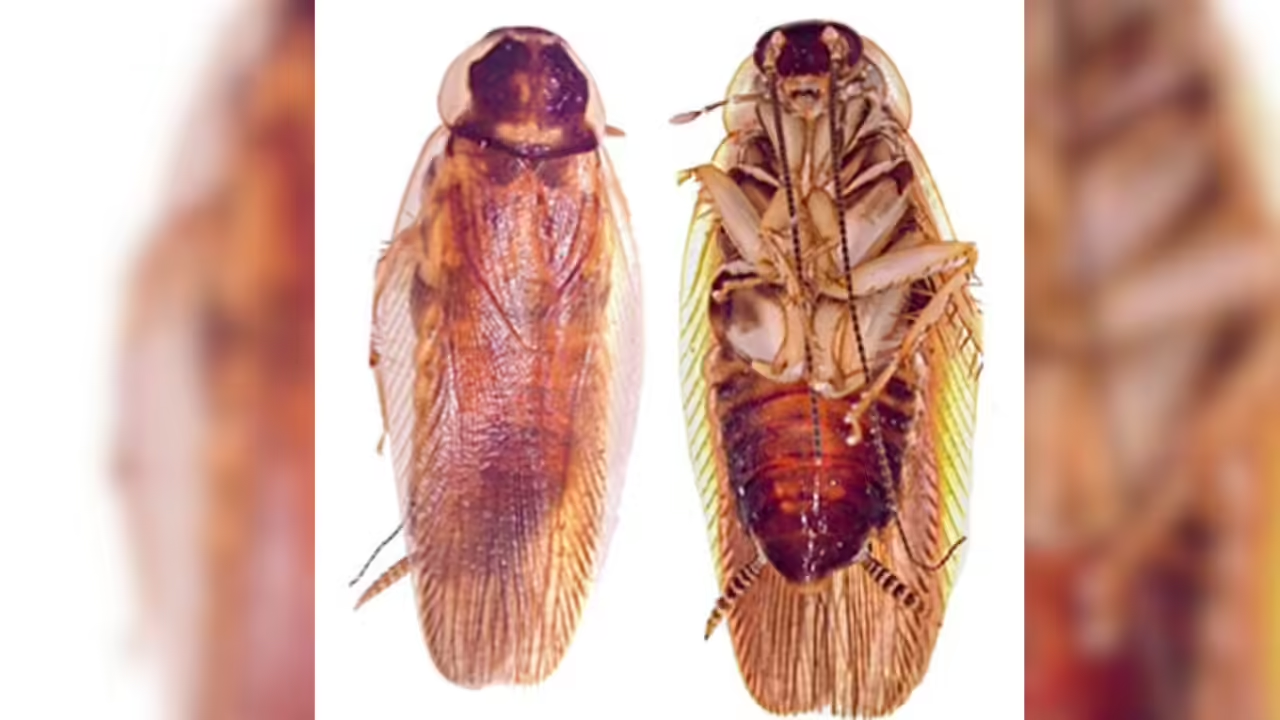
A scientific breakthrough in Kolkata has marked a significant shift in how biodiversity is identified in India, with researchers successfully classifying a new cockroach species using DNA-based taxonomy.
The development represents a departure from centuries-old classification methods and signals a wider transformation in environmental science that could reshape urban ecological management and biodiversity tracking.The research, led by a city-based academic institution, applied genetic sequencing techniques to distinguish the newly identified species from existing classifications. Traditionally, species identification relied heavily on morphological features—physical traits such as size, colour and structure. However, experts note that such methods often struggle to differentiate between closely related organisms, particularly in dense ecosystems where visual similarities are common.By using DNA taxonomy, scientists were able to pinpoint genetic differences with higher accuracy, offering a more reliable classification framework. A senior researcher associated with the project indicated that this approach reduces ambiguity and helps build a more precise understanding of species diversity, especially in regions with limited historical biological documentation.The implications extend beyond academic research. Urban planners and environmental specialists point out that accurate species identification is crucial for managing ecosystems within rapidly expanding cities.
In dense urban centres like Kolkata, where natural habitats intersect with built environments, understanding biodiversity patterns can inform waste management, pest control strategies, and public health policies.Cockroach species, in particular, are closely linked to urban sanitation systems and human habitation. Improved classification can help authorities differentiate between harmless species and those that pose health risks, enabling targeted interventions rather than broad-spectrum chemical use. This aligns with growing calls for sustainable pest management practices that minimise ecological disruption and chemical exposure in residential areas.The adoption of DNA taxonomy also reflects a broader trend toward integrating advanced technologies into environmental governance. Industry experts suggest that such methods could eventually support large-scale biodiversity mapping, helping cities monitor ecological changes in real time. This becomes increasingly important as climate change alters species distribution patterns, often bringing new organisms into urban ecosystems.Economically, the research underscores the value of investing in scientific infrastructure and biotechnology capabilities. Enhanced research capacity can position cities as hubs for innovation in environmental science, attracting funding, talent and collaborative opportunities. It also strengthens the knowledge base required for evidence-driven policymaking, particularlyin sectors linked to health, sanitation and urban resilience.Looking ahead, scientists emphasise the need to expand DNA-based research across other species groups, including insects, plants and microorganisms that play critical roles in urban ecosystems.
As Indian cities continue to grow, integrating scientific precision into biodiversity management will be key to balancing development with ecological sustainability.The Kolkata study signals an important step in that direction, demonstrating how modern scientific tools can deepen understanding of the natural world while supporting more resilient and informed urban planning.
Also Read:Bengaluru Sewage Inflow Threatens Water Reuse Systems
