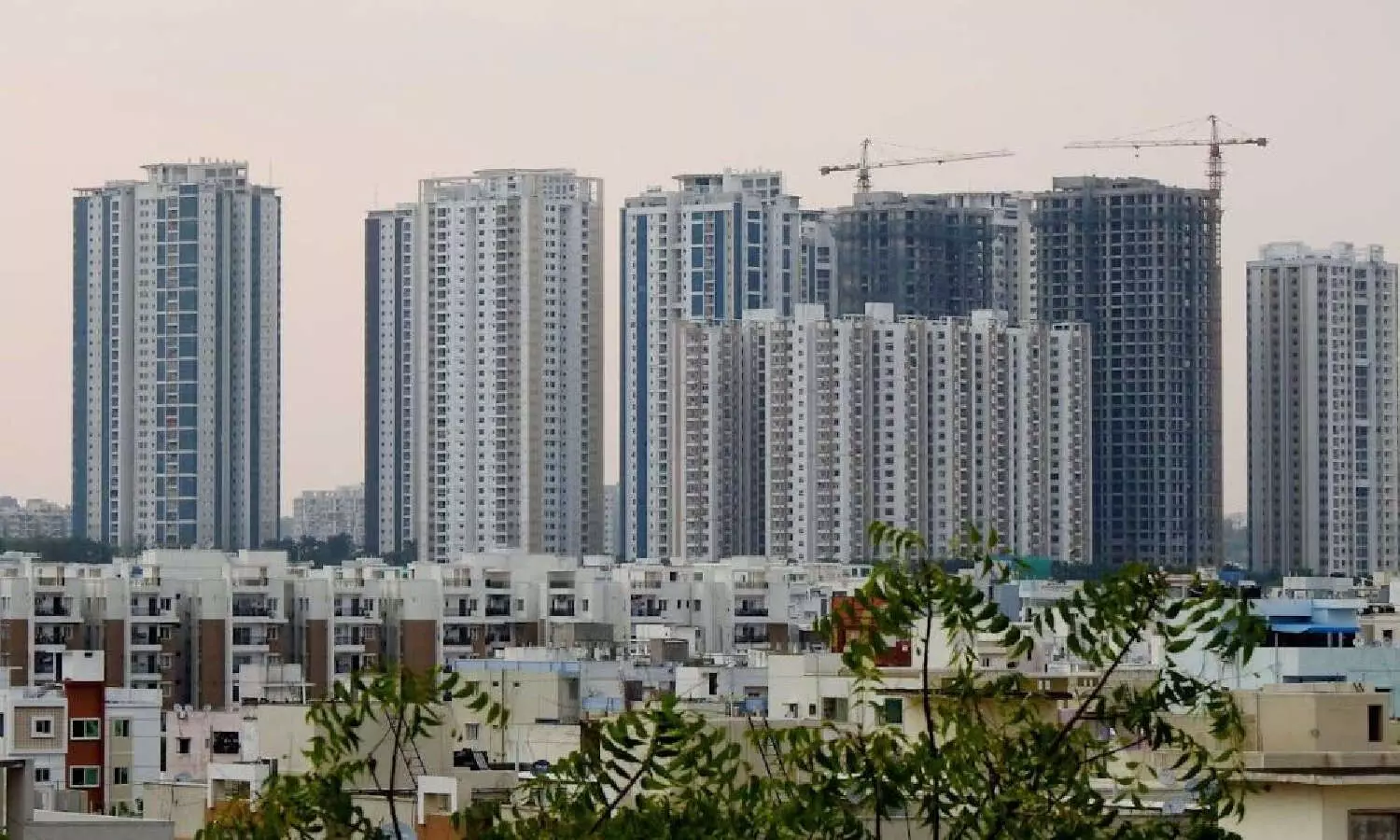
A fresh round of regulatory changes by the Telangana government is set to recalibrate development patterns across Hyderabad, with revised norms for transferable development rights (TDR) and building parameters extending up to the Outer Ring Road. The move is expected to influence how density, height, and land value are negotiated in one of India’s fastest-growing urban regions.
The updated framework introduces greater flexibility in how developers can utilise TDR an instrument that allows additional built-up area in exchange for land surrendered for public purposes. Urban planners note that such changes could unlock stalled land parcels while simultaneously encouraging vertical growth, particularly in peripheral zones where infrastructure is still catching up with demand. A key shift under the revised Hyderabad building rules is the reclassification of buildings above 21 metres as high-rise structures. This change brings clarity to approval processes but also places greater responsibility on developers to comply with safety, access, and environmental norms associated with taller buildings. For mid-sized plots, particularly those between 750 and 2,000 square metres, additional height between 18 and 21 metres will now depend on TDR usage, linking density gains directly to planning trade-offs.
The policy also allows setback relaxations through TDR, a move that could alter building footprints in already constrained urban pockets. For high-rise projects, limited relaxation is permitted while maintaining a baseline buffer, signalling an attempt to balance buildable area with ventilation, light access, and emergency movement critical aspects in high-density environments. Larger plots exceeding 2,000 square metres stand to benefit the most. The new provisions enable extra floors based on adjacent road width, effectively tying vertical expansion to infrastructure capacity. Experts suggest that this could encourage more transit-oriented and corridor-based development, especially along wider arterial roads, but caution that without parallel upgrades in drainage, mobility, and public services, the gains may strain existing systems. From a market perspective, the Hyderabad building rules are likely to improve project feasibility and land monetisation prospects, particularly in emerging growth corridors. Developers may find renewed incentives to invest in outer zones, where land availability remains relatively higher but regulatory rigidity has often limited design flexibility.
However, urban policy observers highlight the importance of integrating such regulatory easing with climate-sensitive planning. Increased built density, if not aligned with green building standards and water management systems, could exacerbate urban heat and resource stress. The success of the revised Hyderabad building rules will therefore depend not just on approvals and incentives, but on how effectively they are paired with resilient infrastructure and inclusive urban design. As Hyderabad continues its outward expansion, the regulatory shift signals a broader attempt to align real estate growth with evolving urban needs though its long-term impact will hinge on execution, oversight, and the city’s capacity to absorb higher densities sustainably.