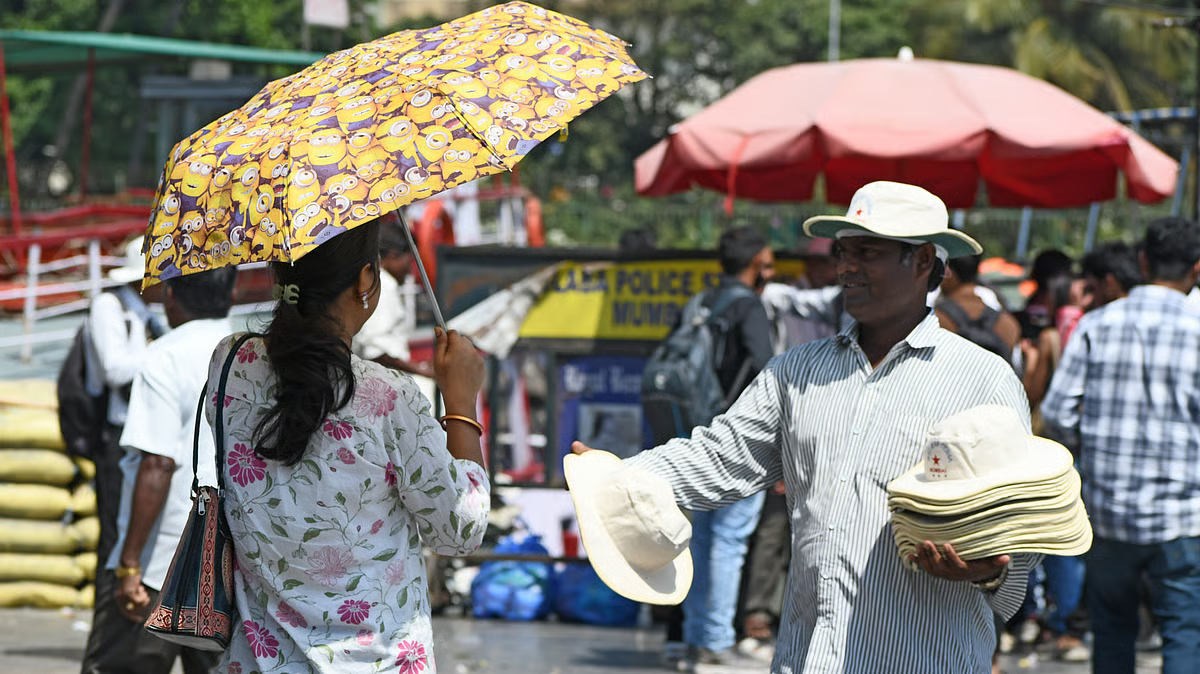
Mumbai and its surrounding districts entered a phase of elevated heat stress on Monday, as weather authorities flagged the likelihood of heatwave conditions in parts of the metropolitan region. The alert, covering key urban clusters including Thane and Raigad, signals not just a seasonal spike in temperatures but a growing pattern of climate volatility with implications for urban infrastructure, public health, and economic activity.
Forecasts indicate daytime temperatures approaching the mid-30s Celsius range, accompanied by high humidity levels that intensify discomfort and health risks. Such combined conditions often reduce labour productivity, strain energy systems, and place vulnerable populations including outdoor workers and informal settlements at heightened risk. Urban planners note that the Mumbai heatwave warning comes earlier than typical peak summer cycles, reinforcing concerns about shifting climate baselines.
Across the wider Konkan belt, hot and humid conditions are expected to persist, while interior districts of Maharashtra may experience contrasting weather patterns, including thunderstorms and gusty winds. This divergence highlights the increasing unpredictability of regional climate systems, complicating planning for both municipal authorities and infrastructure operators. The Mumbai heatwave warning also brings renewed attention to the city’s built environment. Dense construction, limited green cover in several precincts, and extensive paved surfaces contribute to the urban heat island effect, where city temperatures remain higher than surrounding rural areas. Experts argue that without sustained interventions—such as reflective building materials, expanded tree cover, and climate-responsive urban design—heat events will become more disruptive and prolonged.
From an economic perspective, rising temperatures have direct and indirect costs. Increased electricity demand for cooling places pressure on power distribution networks, while construction and logistics sectors may face operational slowdowns. Real estate developers, particularly those focused on large-scale housing and commercial projects, are increasingly being pushed to integrate passive cooling techniques and energy-efficient designs to mitigate long-term risks. Public health systems are also likely to feel the strain. Heat-related illnesses, including dehydration and heatstroke, typically rise during such periods, especially in high-density neighbourhoods with limited access to cooling or ventilation. Civic authorities often respond with advisories, but experts emphasise the need for more systemic preparedness, including heat action plans tailored to micro-level urban conditions. Looking ahead, the recurrence of such alerts underscores a broader challenge for Mumbai’s growth trajectory. As climate variability intensifies, cities will need to align infrastructure expansion with resilience strategies that prioritise both environmental sustainability and human comfort. The current Mumbai heatwave warning may be temporary, but its implications for urban planning and climate adaptation are likely to be long-lasting.
Mumbai Braces For Rising Heatwave Risk