


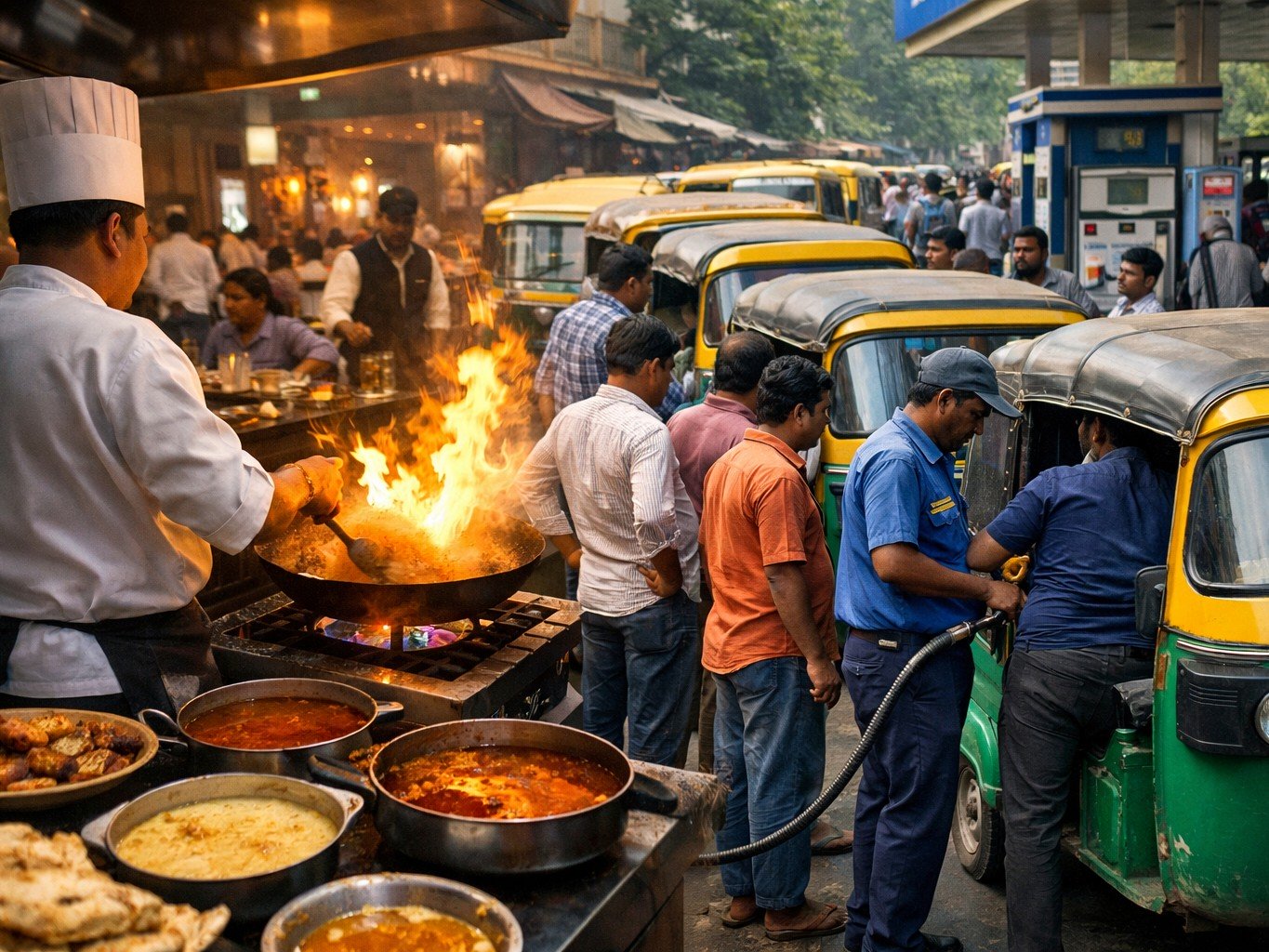
A gradual transition in kitchen energy use is underway across Kolkata, where restaurants are increasingly shifting to alternative cooking systems amid evolving fuel economics and supply considerations.
The trend of Kolkata restaurant fuel shift reflects broader changes in how urban food businesses are adapting to cost pressures, regulatory signals, and sustainability concerns.Industry observers indicate that many eateries are diversifying away from traditional liquefied petroleum gas (LPG) towards a mix of piped natural gas (PNG), electric appliances, and induction-based systems. While the transition is not uniform, it is gaining traction among mid-sized and large establishments that operate at scale and are more sensitive to fuel price volatility.The Kolkata restaurant fuel shift is being shaped by both market forces and infrastructure availability. Areas with access to piped gas networks are witnessing faster adoption, as businesses seek more predictable pricing and uninterrupted supply. In contrast, smaller establishments and those in older neighbourhoods continue to rely on LPG due to limited connectivity and upfront conversion costs.
Urban economists note that energy choices in the hospitality sector have a cascading impact on city systems. A shift towards electricity-based cooking increases demand on power grids, particularly during peak dining hours. At the same time, the expansion of piped gas networks requires coordinated infrastructure investment, including underground pipelines and safety systems, which can influence urban planning decisions.
From an environmental standpoint, the move carries mixed implications. While PNG is often considered a cleaner-burning alternative to LPG, both remain fossil fuels.
However, the growing interest in electric cooking—especially when paired with renewable energy sources—points to a potential pathway for reducing emissions in commercial kitchens over the long term.Restaurant operators highlight operational efficiency as a key driver. Modern equipment, including induction stoves and automated systems, offers better temperature control and faster cooking cycles. This can improve consistency in food preparation and reduce wastage, particularly in high-volume kitchens. However, the initial investment remains a barrier for smaller players, raising questions about equitable access to cleaner technologies.Urban planners argue that the Kolkata restaurant fuel shift also intersects with building design and compliance norms. Commercial spaces are increasingly being evaluated for their ability to support multiple energy systems, from gas pipelines to high-capacity electrical connections. This has implications for real estate developers, who must anticipate future energy needs in mixed-use developments.As the transition continues, policymakers may face the challenge of balancing affordability, infrastructure expansion, and environmental goals. Incentives for cleaner technologies, along with improved access to energy networks, could accelerate adoption across the sector.
For now, the shift in Kolkata’s restaurant kitchens signals a broader recalibration of urban energy use—one that reflects both immediate economic realities and the longer-term push towards more resilient and sustainable city systems.
Also Read:Kolkata Temperature Rise Signals Urban Climate Stress
