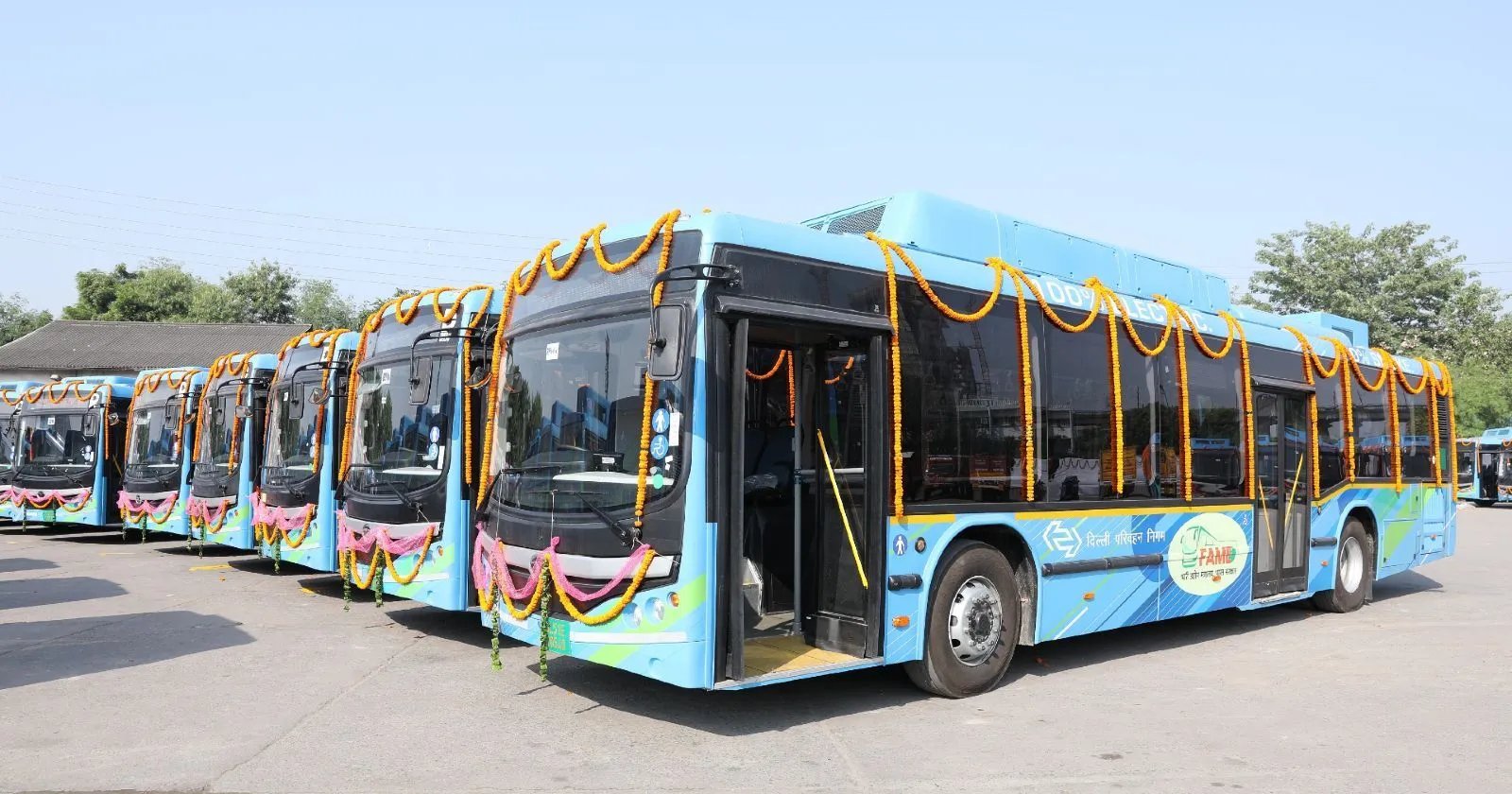
Delhi has significantly strengthened its urban transport capacity with the addition of 300 electric buses, raising the city’s total fleet to 6,100 vehicles and signalling a strategic push toward sustainable public mobility. The launch also marked the start of new interstate services connecting Delhi to Ghaziabad, aiming to reduce reliance on private vehicles while supporting regional connectivity in the National Capital Region. Transport planners highlight that the expanded fleet is part of a broader effort to electrify Delhi’s public transport network. Analysts note that integrating large-scale electric vehicles (EVs) can substantially reduce urban emissions, improve air quality, and align with long-term climate resilience objectives.
Experts emphasise that EV adoption in dense metropolitan regions is critical to achieving sustainable mobility while mitigating the environmental footprint of urban transport systems. In parallel, the Delhi government announced the disbursement of nearly Rs 24 crore in pending EV subsidies to over 12,800 beneficiaries, addressing delays from previous years. The initiative leverages a centralised digital portal to facilitate transparent enrolment, enabling citizens to claim subsidies efficiently. Policy observers note that such mechanisms are vital in accelerating consumer adoption of EVs and creating a visible market for electric transport solutions. The expansion also includes investments in supporting infrastructure, including the foundation of a new Delhi Transport Corporation office near the IP depot. Urban development specialists suggest that institutional strengthening, alongside fleet growth, is necessary to manage maintenance, scheduling, and operational efficiency in a growing electric fleet. Proper integration of infrastructure, vehicles, and digital management systems will determine long-term performance and commuter experience.
Socially, officials engaged with gig workers and transport-sector Shramiks prior to the fleet expansion, gathering inputs for the forthcoming state budget. These consultations addressed systemic challenges, including formal employment status and urban logistics infrastructure, underscoring the importance of participatory governance in public transport planning. Analysts observe that incorporating stakeholder feedback into infrastructure investments can improve policy alignment, operational efficiency, and workforce satisfaction. From an economic standpoint, scaling electric buses reduces fuel expenditure and offers predictable operational costs compared with conventional diesel fleets. Industry experts further argue that mass adoption of EVs encourages domestic manufacturing, battery technology deployment, and ancillary service ecosystems, contributing to broader urban economic resilience.
Overall, the fleet expansion reflects a convergence of environmental, social, and operational priorities. By coupling EV deployment with subsidy schemes, institutional upgrades, and stakeholder engagement, Delhi aims to create a more sustainable, equitable, and efficient transport system. Observers note that sustaining these gains will require continuous investment in charging infrastructure, maintenance capabilities, and policy frameworks that encourage modal shifts from private vehicles to public EV transport.