


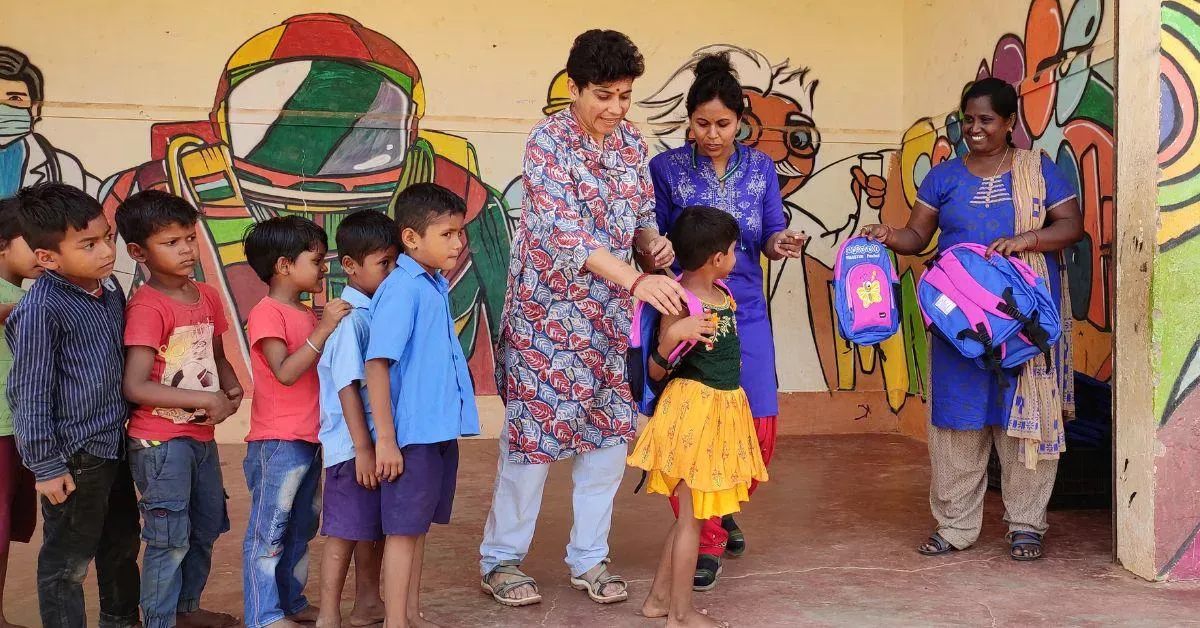
A community-led education initiative in Bengaluru is drawing attention for addressing gaps in migrant children education, offering an alternative learning pathway for children often left out of formal schooling systems.
Operating in low-income neighbourhoods across the city, the model focuses on bridging language barriers and ensuring continuity in education for families frequently on the move.Urban centres such as Bengaluru rely heavily on migrant labour across construction, services, and informal sectors. However, the transient nature of this workforce often disrupts access to schooling for children. Frequent relocations, lack of documentation, and language differences make it difficult for many to enrol or remain in conventional schools, leading to high dropout rates.The initiative attempts to close this gap by providing flexible learning spaces tailored to the needs of migrant communities. These centres emphasise foundational literacy, particularly in English, while also aligning students with state curricula to enable eventual integration into mainstream education. Educators involved in the programme note that building confidence and communication skills is often the first step towards reintegrating children into formal classrooms.Experts say such interventions are becoming critical as cities expand without fully integrating social infrastructure for vulnerable populations. While physical infrastructure—housing, transport, and utilities—often dominates urban planning, migrant children education remains under-addressed despite its long-term implications for workforce productivity and social equity.
From a policy perspective, the challenge lies in designing education systems that are portable and inclusive. Urban planners argue that cities must account for mobile populations by creating flexible enrolment systems, multilingual teaching frameworks, and partnerships with community organisations. Without these measures, large sections of urban children risk being excluded from the benefits of economic growth.There are also implications for real estate and urban development. Rapid construction activity often brings clusters of migrant families into peripheral or under-serviced areas where schools are either inaccessible or overcrowded. Integrating education facilities into urban expansion plans could help reduce these disparities and support more balanced development.The Bengaluru model demonstrates how decentralised, community-driven approaches can complement formal systems. By working within neighbourhoods and adapting to local needs, such initiatives create entry points for children who might otherwise remain outside institutional education frameworks.However, scaling these efforts remains a challenge. Sustained funding, trained educators, and stronger coordination with public education authorities will be necessary to ensure long-term impact. Without systemic support, isolated initiatives may struggle to meet the growing demand.
As Indian cities continue to urbanise, ensuring access to migrant children education will be central to building inclusive and resilient communities. The experience in Bengaluru suggests that bridging this gap requires not just policy intent, but on-ground innovation that places people at the centre of urban development.
Also Read:Bengaluru e Khata Delays Trigger Auto Approval Reform
