


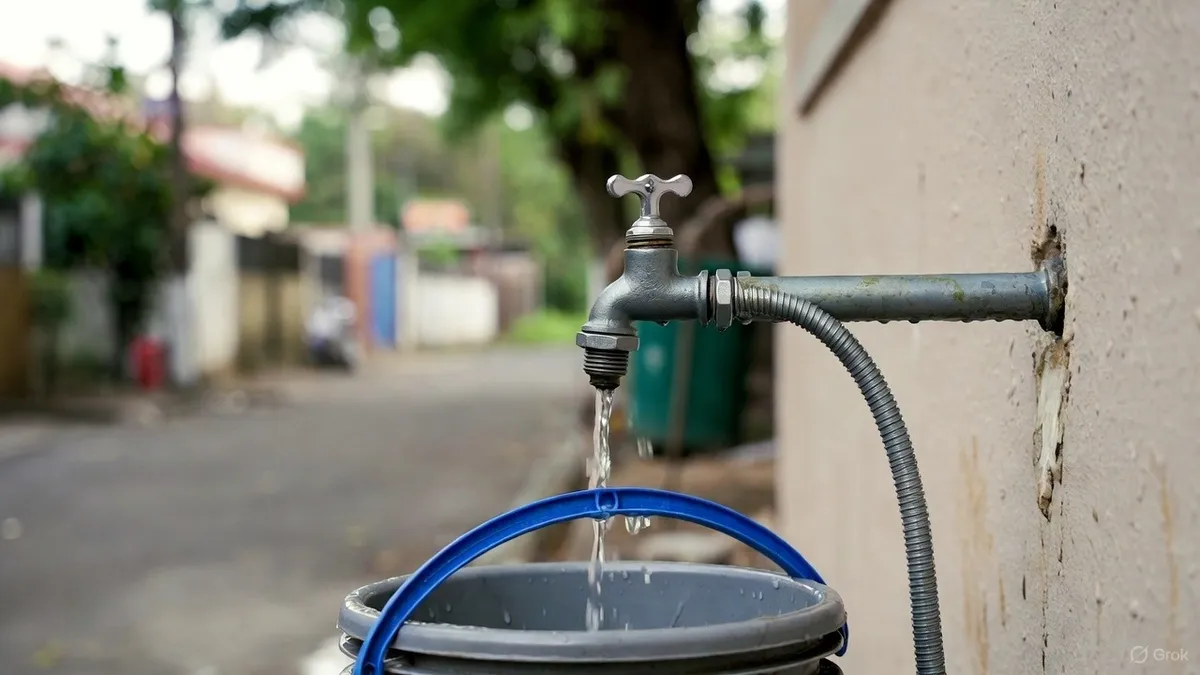
Bengaluru’s water utility has introduced a one-time settlement initiative aimed at clearing mounting unpaid bills, offering residents a full waiver on accumulated interest as authorities attempt to recover substantial dues and stabilise the city’s urban water finances.
The Bengaluru water bill settlement comes as outstanding payments have risen sharply, reflecting deeper challenges in revenue collection, affordability and service delivery across India’s rapidly expanding metropolitan regions. By removing interest penalties, the utility hopes to incentivise defaulters to regularise accounts and improve cash flow.Urban infrastructure experts say such measures are increasingly being used by civic agencies to address financial stress without resorting to punitive enforcement. In Bengaluru, where water demand has surged alongside population growth and urban sprawl, ensuring steady revenue is critical for maintaining supply networks, treatment plants and distribution systems.The scale of pending dues highlights a structural issue within urban utilities—balancing cost recovery with equitable access. For many households, especially in lower-income and informal settlements, irregular incomes and rising living costs can make utility payments difficult. A settlement scheme can provide temporary relief, but it also raises questions about long-term financial sustainability.The Bengaluru water bill settlement is expected to benefit a wide cross-section of consumers, including residential users, small businesses and commercial establishments. Industry observers note that improved collection rates could enable the utility to reinvest in infrastructure upgrades, including leak reduction, pipeline expansion and improved metering systems.
From a broader urban planning perspective, water utilities are central to climate resilience. Cities like Bengaluru face recurring water stress due to variable rainfall, groundwater depletion and increasing demand. Strengthening financial health is essential to fund projects such as rainwater harvesting systems, wastewater recycling and sustainable supply augmentation.A senior urban policy expert points out that periodic settlement schemes should be complemented by systemic reforms. These may include transparent billing practices, digital payment systems and targeted subsidies for vulnerable groups. Without such measures, the cycle of arrears could continue, placing repeated strain on public finances.The real estate sector is also indirectly impacted by the efficiency of water utilities. Reliable water supply and predictable billing structures influence property values, tenant satisfaction and long-term investment decisions. Developers are increasingly being encouraged to incorporate water-efficient technologies and decentralised systems to reduce dependence on centralised supply.At the same time, there is a growing emphasis on responsible consumption. Encouraging users to conserve water through awareness campaigns and pricing mechanisms can help reduce demand pressures, particularly during periods of scarcity.
Looking ahead, the success of the Bengaluru water bill settlement will depend on participation rates and follow-through on reforms. While the immediate goal is to recover dues, the larger challenge lies in building a resilient, inclusive and financially sustainable urban water system capable of meeting the city’s future needs.
Also Read:Chennai Art Market Growth Signals Creative Economy Shift
