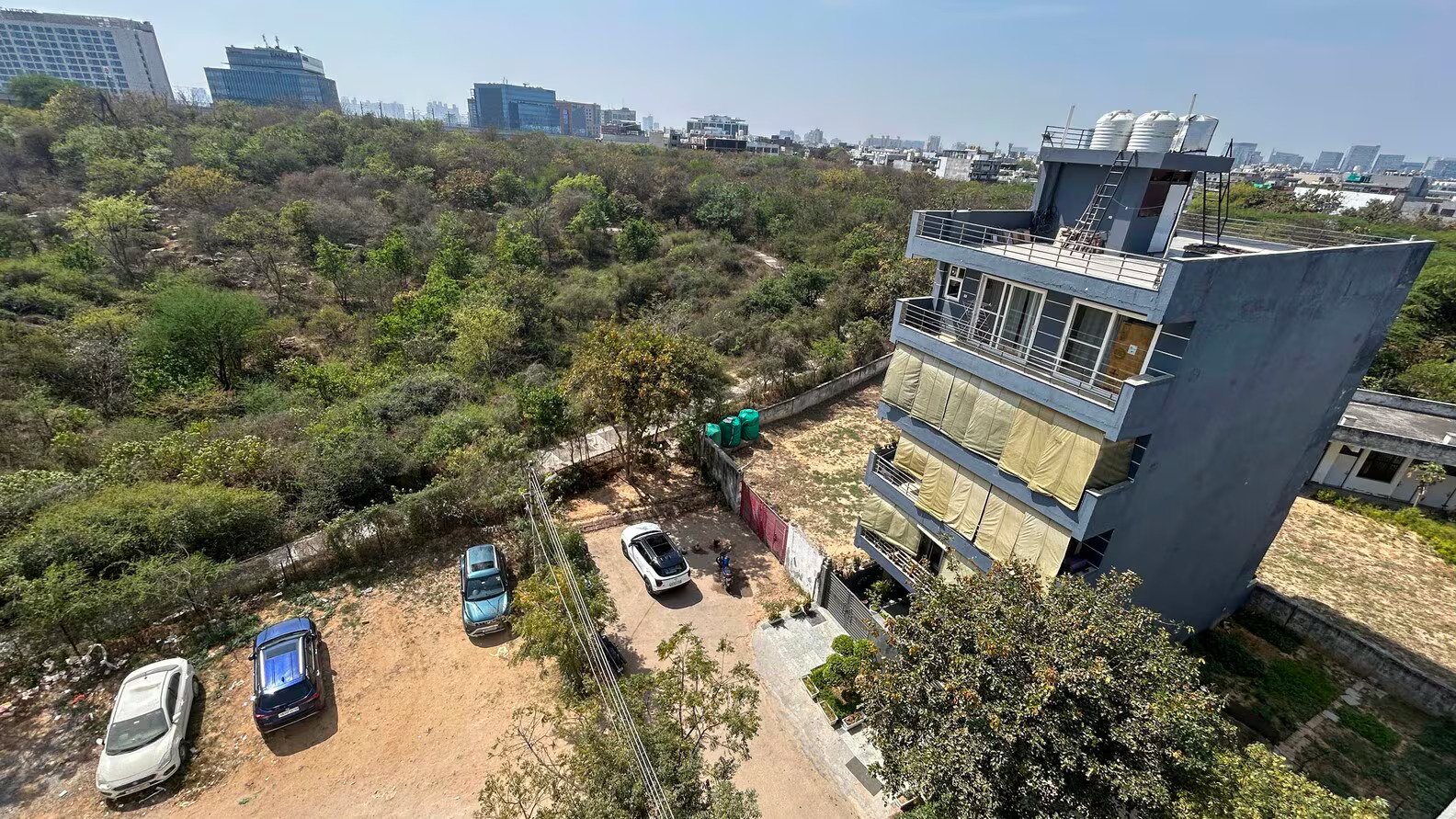
Gurugram Aravalli Park Encroachment Raises Safety Concerns
Concerns over environmental degradation and neighbourhood safety have intensified in Gurugram, where residents of a housing cluster in DLF Phase 3 have flagged alleged large-scale encroachment within the adjoining Aravalli Biodiversity Park. A formal complaint submitted to municipal authorities has triggered calls for urgent inspection and coordinated action across agencies responsible for the protected green zone. Residents’ groups report the emergence of informal settlements and temporary structures within sections of the park, attributing the situation to inadequate boundary infrastructure. The absence of a continuous, reinforced perimeter has reportedly made the forest edge accessible, raising concerns about both ecological stress and human safety in nearby residential pockets.
Urban planners note that biodiversity parks within rapidly urbanising regions such as Gurugram serve as critical ecological buffers. These landscapes support native vegetation, regulate microclimates, and help mitigate air pollution—functions that are increasingly vital as construction activity intensifies across the National Capital Region. Encroachment into such zones, experts warn, can fragment habitats, increase fire risks, and disrupt natural drainage patterns. The situation also highlights governance complexity. Officials indicate that land ownership and maintenance responsibilities are split between multiple agencies, including municipal authorities and the forest department, while adjoining residential infrastructure falls under private developers. Such fragmented jurisdiction often delays timely enforcement, particularly in peri-urban green zones where urban expansion meets protected land. Residents have urged authorities to carry out a detailed site survey, remove unauthorised structures, and implement a durable boundary solution. Community representatives also raised concerns about safety vulnerabilities, citing instances of trespassing and proximity-related risks to households, including elderly residents and children.
While some claims regarding misuse of encroached areas remain unverified, urban security experts emphasise that poorly secured green edges can become weak points in dense residential districts. Officials from the forest department have indicated that any confirmed encroachments within designated forest land will be addressed on priority. Municipal teams have also acknowledged receiving complaints and are expected to undertake further inspections. Meanwhile, representatives from the private developer managing the adjoining residential complex have initiated surveillance measures, including mapping vulnerable stretches and enhancing night-time security coverage. The episode reflects a broader pattern across Indian cities, where green infrastructure often faces pressure from informal expansion and gaps in enforcement. Experts suggest that long-term solutions must go beyond eviction drives to include clear demarcation, continuous monitoring, and community participation in stewardship.
As Gurugram continues to expand along its urban corridors, safeguarding ecological assets like the Aravalli belt will be critical to maintaining environmental resilience. Strengthening coordination between agencies and investing in protective infrastructure could determine whether such green spaces remain functional urban ecosystems or gradually erode under development pressure.