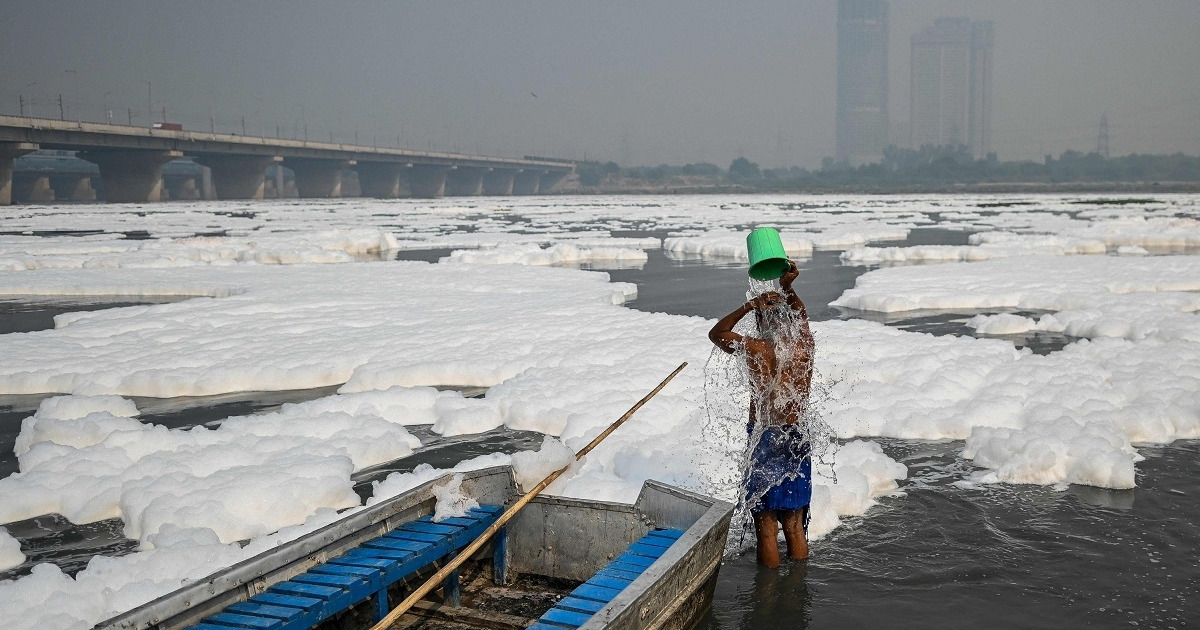
A fresh episode of foam formation along a stretch of the Yamuna in southeast Delhi has drawn attention to the complex interplay between river flow conditions and persistent pollution sources, prompting renewed scrutiny of ongoing clean-up efforts. Authorities have intensified inspections and coordination measures as part of a broader strategy to address the recurring issue of Yamuna froth. Technical assessments conducted during a joint review involving environmental experts and multiple agencies indicate that the visible foam is not solely a direct discharge phenomenon but is also influenced by hydraulic conditions near key river structures. Turbulence generated at barrage points can churn existing pollutants—particularly surfactants—into froth, making contamination more visible in specific stretches.
However, specialists emphasise that the underlying causes of Yamuna froth remain rooted in untreated and partially treated wastewater entering the river system. Household detergents, industrial effluents, and discharge from informal sectors such as dyeing units and laundry clusters contribute to the presence of surfactants. These compounds, when agitated under low-flow conditions, lead to foam formation. The situation is further exacerbated by seasonal variations in water levels. Reduced flow during certain periods concentrates pollutants, diminishing the river’s natural capacity to dilute contaminants. Urban water management experts note that maintaining ecological flow is critical to preventing such episodes, alongside improving wastewater treatment infrastructure. In response, authorities have directed pollution control agencies to strengthen monitoring and enforcement mechanisms. Identifying and eliminating illegal discharge points is being prioritised, with a focus on ensuring compliance among industrial and commercial operators. Officials suggest that stricter oversight could help reduce pollutant loads entering the river. At a systemic level, the government is advancing large-scale projects aimed at intercepting and treating wastewater before it reaches the Yamuna.
These include upgrades to sewage treatment capacity, expansion of decentralised treatment systems and in-situ remediation of major drains. Increasing the efficiency and capacity of treatment plants is seen as central to reducing the conditions that lead to Yamuna froth. Interstate coordination has also emerged as a key factor, given that river management involves multiple jurisdictions. Discussions between neighbouring states are focusing on flow regulation and structural management of barrages to mitigate localised impacts. Experts argue that collaborative governance is essential for any sustained improvement in river health. Beyond environmental concerns, the condition of the Yamuna has implications for urban liveability and economic activity. Riverfront areas, potential recreational zones and adjacent real estate developments are directly affected by water quality. Cleaner river systems can enhance public spaces and contribute to healthier urban ecosystems. While technical explanations may clarify the immediate triggers of foam formation, urban planners caution against viewing it as an isolated issue. The persistence of Yamuna froth underscores the need for integrated water management strategies that combine infrastructure investment, regulatory enforcement and behavioural change.
As Delhi continues its push towards river rejuvenation, the effectiveness of these measures will depend on sustained implementation and coordination. Addressing both visible symptoms and root causes will be essential to restoring the Yamuna as a functional and resilient urban river.