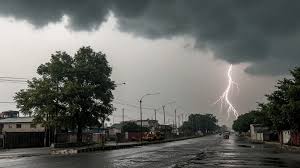
Lucknow Rain And Thunderstorms Disrupt Early Summer Pattern
Unseasonal rain and thunderstorms across Lucknow have temporarily reversed the early-summer heat trend, with the city recording its coolest day of March this week. The sudden weather shift, triggered by a western disturbance and associated storm systems, has brought heavy rainfall, strong winds and a sharp drop in temperatures across much of Uttar Pradesh — highlighting how increasingly volatile weather patterns are affecting rapidly growing cities.
According to local weather reports, Lucknow recorded a maximum temperature of around 23.5°C — more than 10 degrees below the seasonal average — after widespread rain and thunderstorm activity. Rainfall in the city reached nearly 18 mm in a single day, while strong winds and isolated hailstorm incidents were reported in parts of the state. The disruption is part of a broader weather system currently affecting large parts of northern and central India. The India Meteorological Department (IMD) has issued alerts for thunderstorms, lightning and gusty winds in multiple states over the coming days, warning that the system could continue to influence weather patterns through the week. For a fast-expanding urban centre like Lucknow, the impact goes far beyond a temporary dip in temperature. Sudden weather events in the pre-summer period often strain city infrastructure that is not designed for intense rainfall in March. Urban planners say unexpected showers can expose weaknesses in storm-water drainage networks, particularly in newly developing residential corridors where road construction and land development often outpace drainage capacity.
Transport and daily life were also affected as strong winds and heavy rain slowed traffic in several areas. While such rainfall brings short-term relief from rising temperatures, frequent weather disruptions at the start of summer can complicate construction schedules, real-estate activity and infrastructure work — all of which typically accelerate during the dry months. The weather shift also reflects a broader pattern seen across several cities in recent days. Similar thunderstorms and sudden cooling were reported in parts of Madhya Pradesh and Bihar, suggesting the disturbance is part of a larger regional weather cycle rather than an isolated event.
Climate researchers say such variability is becoming more common in north Indian cities, where rapid urbanisation is altering local micro-climates. Dense construction, reduced green cover and rising surface temperatures can intensify both heat waves and sudden cooling events triggered by storm systems. In fast-growing cities like Lucknow, the interaction between climate change and urban expansion is making seasonal weather patterns increasingly unpredictable. Despite the short-term drop in temperature, meteorological officials expect the heat to return gradually once the weather system weakens. This means cities must prepare not only for extreme heat in the coming weeks but also for sudden rainfall events that fall outside the traditional monsoon cycle.
The recent spell of rain is therefore not just a weather update but a reminder of the growing need for climate-resilient urban planning. As cities continue to expand, the focus is likely to shift towards stronger drainage systems, more urban green spaces and infrastructure that can cope with both extreme heat and unexpected rainfall — rather than treating such weather events as temporary disruptions.