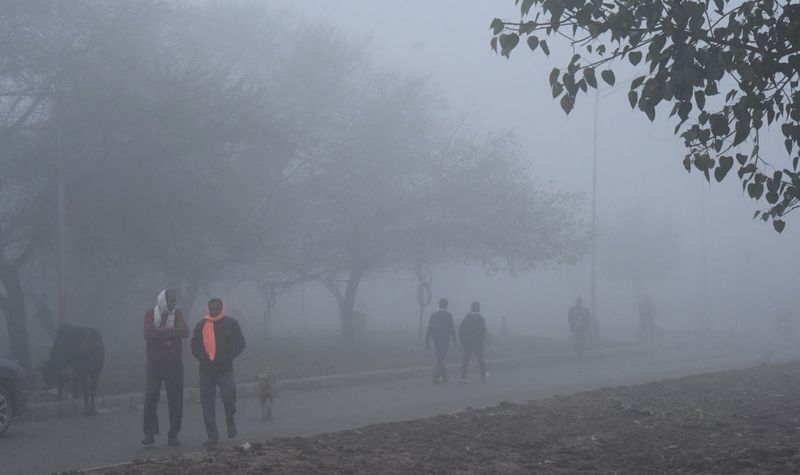
Chandigarh Rainfall Brings Sudden Return Of Winter Chill
An unseasonal spell of rainfall has sharply altered Chandigarh’s weather just as the city was entering its early summer phase, bringing an abrupt fall in temperatures and reviving winter-like conditions across the region. Meteorological updates and recent weather reports confirm that light to moderate showers in the Tricity area have already led to a noticeable drop in daytime temperatures and a shift in seasonal patterns. Local weather bulletins indicate that even a small amount of rain has had a strong cooling effect.
A recent report noted that just a few millimetres of rainfall reduced the maximum temperature by several degrees within a day, pushing conditions well below the seasonal average for March. The change has been accompanied by thick cloud cover, cool winds and intermittent showers, which together have created conditions more typical of late winter than the start of summer. Meteorological agencies attribute the shift to a fresh western disturbance moving across north India, a weather system that often brings rain and cooler temperatures between December and April. Official climate documents show that Chandigarh’s weather is particularly sensitive to these disturbances, which can trigger sudden drops in temperature, gusty winds and short bursts of rainfall during the transition from winter to summer. For residents, the immediate effect has been a brief return of colder-than-expected conditions in mid-March. The city had already recorded above-normal temperatures earlier this month, and the sudden shift has disrupted seasonal routines, from outdoor activity to construction work and traffic movement. Urban planners say such fluctuations are becoming more common in fast-growing cities, where large paved areas and reduced green cover can amplify temperature swings when weather systems change rapidly.
The rainfall also highlights a wider challenge for urban infrastructure. Even relatively light showers can disrupt transport and construction activity in rapidly expanding cities, particularly when they occur outside the traditional monsoon season. Experts say these unpredictable weather shifts are increasingly influencing how cities plan drainage systems, green spaces and heat-mitigation measures such as tree cover and reflective building materials. Climate records show that Chandigarh typically receives winter and pre-summer rainfall due to western disturbances, but the intensity and timing of these events have become less predictable in recent years. Official groundwater and climate reports confirm that rainfall patterns in the region vary significantly from year to year, making it harder for cities to plan for seasonal transitions.
While the current spell is expected to ease over the next few days, meteorologists warn that fluctuating temperatures may continue until the summer pattern stabilises. For urban planners and city authorities, however, the episode offers another reminder that climate-responsive planning—especially better drainage, resilient infrastructure and more urban green cover—is no longer optional but essential for cities facing increasingly unpredictable weather conditions.