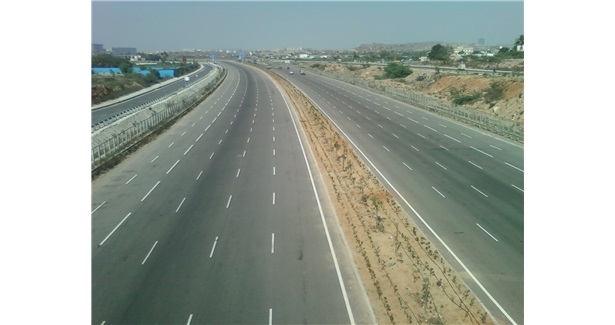
The Patna region’s long-planned outer mobility corridor has moved closer to execution after the government cleared the alignment of the proposed ring road, a decision that could significantly reshape how the city expands over the next decade. The alignment approval is being seen as a critical milestone because it determines where the highway will pass, which villages will be affected, and how the future growth of Patna will unfold.
Publicly available project documents indicate that the proposed corridor is designed as a largely greenfield road network that will link multiple national highways while bypassing the most congested parts of the city. Environmental and planning reports prepared earlier for the project show that the ring road and related bypass sections together could extend beyond 100 km, passing through parts of Patna and neighbouring districts and connecting areas such as Bihta, Naubatpur and Dighwara. The approval of the Patna ring road alignment is especially important because previous proposals had to be revised to reduce land acquisition challenges and environmental impact. Official alignment studies suggest that alternative routes were examined in order to minimise the number of structures affected and reduce the number of trees that would need to be removed.
The project is also closely linked to several highway and bridge works already under construction in Bihar. Government data released earlier this year shows that a major six-lane bridge across the Ganga, which is part of the ring-road network, is already under implementation with work expected to continue through the next few years. This indicates that the alignment clearance is not just a planning step but part of a broader infrastructure push to improve regional connectivity. Urban planners say the Patna ring road alignment could fundamentally change the way the city grows. Instead of continuing to expand in an unplanned manner along narrow roads, the new corridor could encourage more organised development around peripheral zones. Similar ring-road projects in other Indian cities have helped reduce congestion in central areas while opening new locations for residential and industrial growth.
There are also climate-resilience implications. A ring road reduces traffic pressure within the core city, which can lower emissions, improve air quality and make public transport more efficient. At the same time, experts say the project will need careful land-use planning to avoid uncontrolled real-estate sprawl along the new corridor. For residents, the biggest impact could be travel time. Once the road network is completed, vehicles travelling between northern and southern Bihar may no longer need to pass through the most congested parts of Patna. That could improve freight movement, reduce logistics costs and strengthen the city’s role as a regional economic hub.
With the alignment now approved, the next phase is expected to focus on land acquisition, environmental clearances and construction sequencing. If implemented effectively, the project could become one of the most influential urban-infrastructure developments in eastern India, shaping both mobility patterns and real-estate growth in the years ahead.