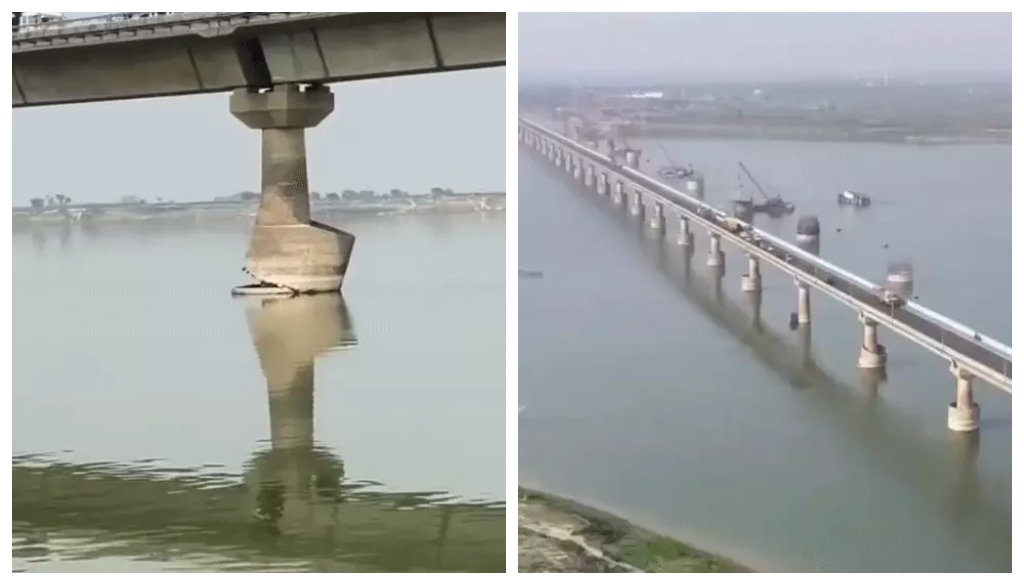
Bhagalpur Bridge Safety Concerns Grow After Damage
Fresh concerns about ageing infrastructure in Bihar have surfaced after structural damage was reported on the Vikramshila Setu in Bhagalpur, one of the most important road links connecting northern and eastern parts of the state.
The incident involves the collapse of a protective structure around one of the bridge pillars, while two additional protection walls have reportedly suffered severe damage, raising questions about the long-term safety of the bridge and the resilience of older infrastructure in flood-prone regions. The Vikramshila Setu is a 4.7-kilometre bridge across the Ganga and plays a critical role in linking the Seemanchal region with the rest of Bihar. Any disruption on the structure has direct consequences for daily commuters, small traders and freight movement between the northern districts and key urban centres. The latest damage is particularly worrying because it affects pillar protection structures, which are designed to shield bridge foundations from strong river currents and erosion.
Infrastructure specialists say such damage is rarely isolated. When protection walls collapse or weaken, the underlying foundation becomes more vulnerable to river-bed erosion, a process known as scouring. Research on concrete bridge durability published earlier this year highlights how exposure to water flow, corrosion and environmental stress can accelerate structural deterioration in bridges built decades ago, especially those located in river basins prone to seasonal flooding. The development also reflects a broader challenge for fast-growing states such as Bihar, where transport infrastructure built in earlier decades now carries far more traffic than originally planned. Official publications released earlier this month emphasised how new bridges and road corridors have already begun reducing travel distances and congestion in the state, but the current situation highlights the parallel need to maintain and upgrade older structures that still serve as vital mobility links.
Urban planners argue that the issue is not just about engineering safety but also about economic resilience. Bridge connectivity in eastern India directly affects agricultural trade, small-scale manufacturing and access to education and healthcare in semi-urban regions. When structural risks emerge on major bridges, the impact extends beyond transport delays—it can influence local markets, property values and regional economic activity. The situation has also intensified public discussion about long-term infrastructure monitoring. Across India, ageing bridges are increasingly being assessed for climate resilience, particularly those built across rivers that experience rapid changes in water flow during monsoon months. Experts say that routine structural audits, real-time monitoring systems and stronger river-bank protection measures are becoming essential, especially in states with dense river networks.
With the latest damage now under scrutiny, the immediate focus is expected to be on safety inspections and reinforcement work. In the longer term, the incident could push authorities to prioritise maintenance budgets and adopt a more preventive approach to infrastructure management—an issue that will become more urgent as traffic volumes and climate pressures continue to grow.