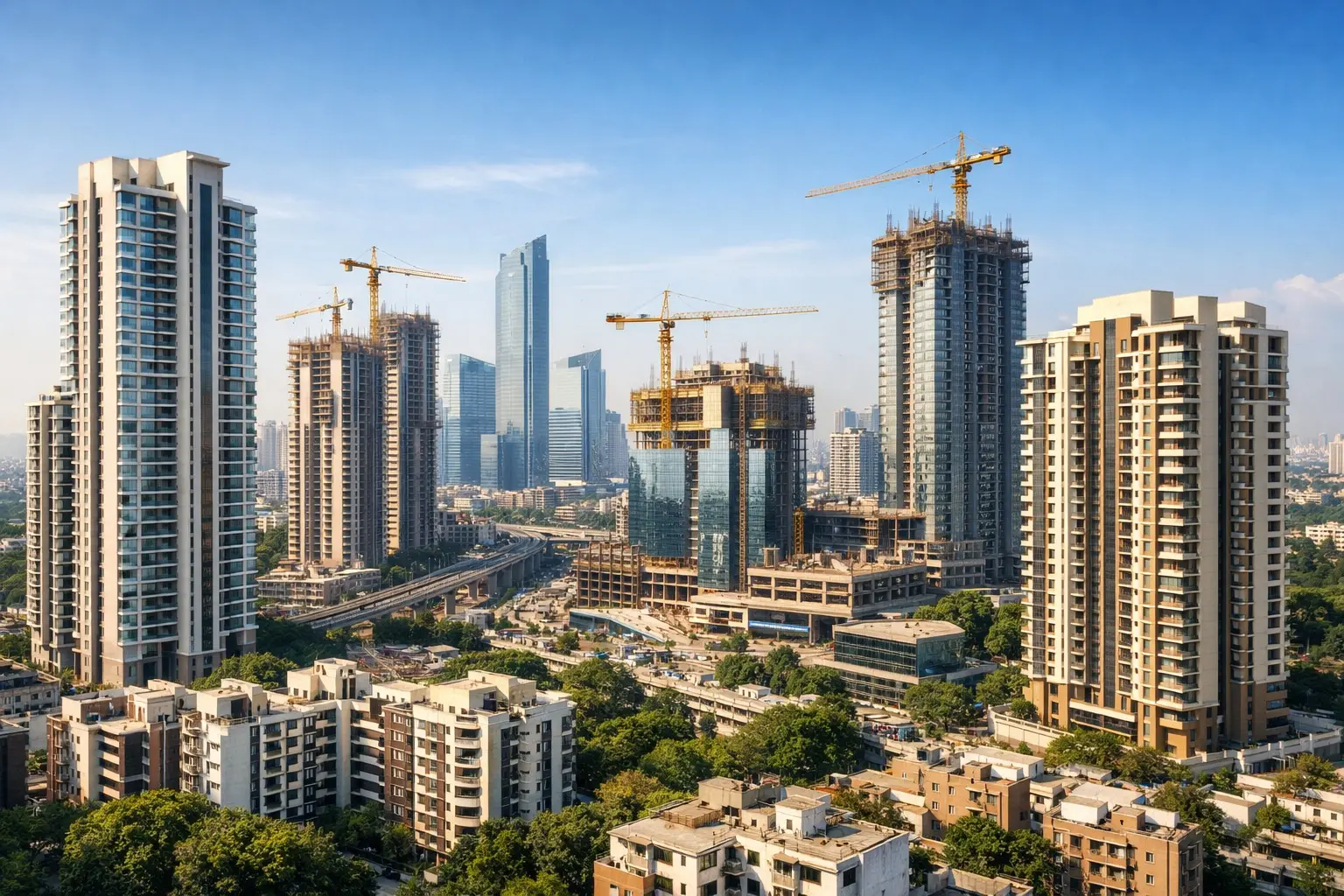
India’s smaller urban centres are rapidly emerging as the next focal point for real estate expansion, with land prices in Tier-2 and Tier-3 cities climbing sharply on the back of infrastructure investments and industrial growth. This shift signals a deeper transformation in how urbanisation is unfolding, as development momentum moves beyond traditional metropolitan strongholds.
Recent market assessments indicate that land values in several non-metro cities could rise significantly over the next few years, driven less by speculative buying and more by tangible improvements in connectivity, logistics and employment hubs. With national infrastructure spending accelerating and new economic clusters being planned, the geography of opportunity in India’s real estate market is widening. A key driver behind this trend is the scale of public investment in transport and industrial corridors. Expressways, freight networks, and regional airports are not only improving accessibility but also influencing land valuations well before project completion. Urban planners note that proximity to upcoming transit systems and highways is already commanding noticeable premiums, reflecting expectations of future growth rather than present-day demand.
The concept of integrated economic regions, supported by targeted fiscal allocations in recent policy announcements, is further reinforcing this shift. These regions aim to cluster industry, housing and services within planned ecosystems, reducing pressure on megacities while creating more balanced urban growth. For residents, this could translate into improved access to jobs, housing and civic infrastructure in cities that were previously overlooked. The rise of Tier-2 cities is also closely tied to India’s evolving industrial landscape. Expansion in manufacturing, electronics and logistics is generating employment in newer locations, attracting a workforce that drives housing demand organically. Unlike previous cycles where investor-led activity dominated, the current phase is seeing stronger participation from end-users seeking affordability and proximity to work. Cities across eastern and southern India are among those witnessing heightened activity, where entry-level property prices remain accessible compared to metros. Industry experts suggest that this affordability, combined with improving infrastructure, is creating a more stable foundation for long-term growth.
The segmentation of housing markets in these cities ranging from budget to mid-income categories further reflects a maturing demand profile. However, the rapid rise in land values also raises questions around planning and sustainability. Urban experts caution that without adequate governance, smaller cities risk replicating the congestion and environmental stress seen in larger metros. Ensuring that growth is aligned with climate resilience, efficient public transport, and inclusive housing will be critical as these cities expand. As India’s urban transition gathers pace, Tier-2 cities are no longer peripheral to the real estate narrative. Instead, they are becoming central to the country’s next phase of development offering both economic opportunity and a chance to rethink how cities are built, managed and sustained.