


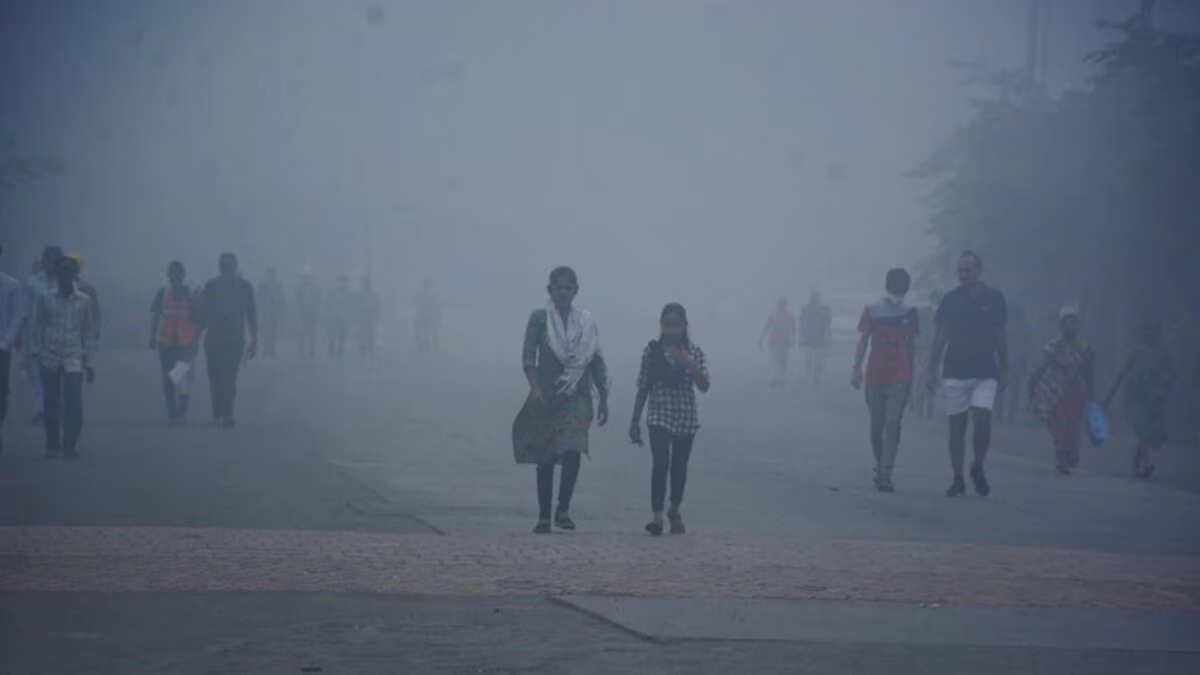
Ahmedabad recorded a noticeable dip in temperatures alongside partly cloudy skies, offering temporary relief from rising heat levels while signalling shifting pre-summer weather patterns. The Ahmedabad weather shift, influenced by broader atmospheric changes, has brought temperatures below seasonal averages, with implications for energy demand, urban comfort, and water management.
Daytime temperatures remained subdued, staying several degrees lower than typical March levels, while early morning readings also reflected a mild cooling trend. Limited rainfall activity over the preceding 24 hours contributed to the moderation, though dry conditions largely prevailed through the day. Humidity levels fluctuated, with higher moisture content in the morning tapering off by evening. Meteorological observers attribute the Ahmedabad weather shift to the influence of a western disturbance a weather system that periodically impacts northern and western India. This has led to scattered rainfall across parts of Gujarat, particularly in northern districts and the Saurashtra-Kutch region, while southern areas experienced more isolated precipitation. Such systems are known to temporarily disrupt heat build-up during the transition from winter to summer.
Across the state, temperature variations reflected localised climatic differences. While several urban centres remained close to seasonal norms, select regions recorded slightly elevated daytime temperatures, indicating uneven cooling effects. This spatial variation highlights the complexity of regional climate behaviour, especially in states with diverse geography and coastal influences. Urban planners note that such short-term cooling events, though welcome, offer limited long-term relief from intensifying heat trends observed across Indian cities. The Ahmedabad weather shift underscores the growing need for climate-responsive urban design, including heat-resilient building materials, increased green cover, and improved ventilation in dense neighbourhoods. These measures can help mitigate the impact of temperature fluctuations on vulnerable populations.
