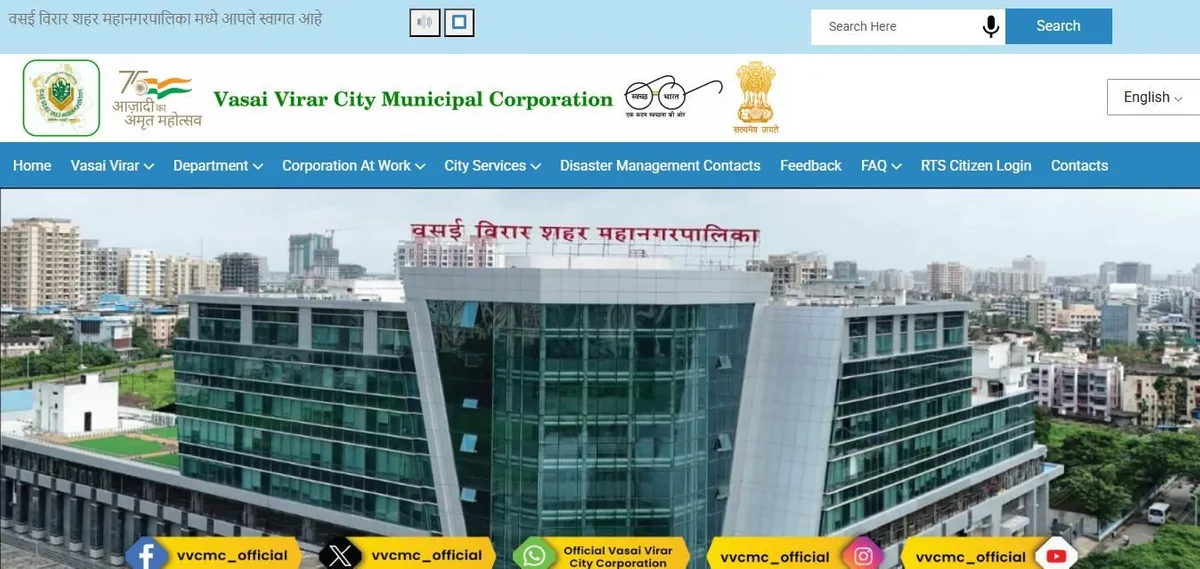
The Vasai-Virar civic administration has approved a significantly expanded budget for 2026–27, anchored by steep increases in property tax and water charges, as it seeks to stabilise municipal finances amid persistent revenue gaps. The move is expected to directly impact households and businesses across the fast-growing urban cluster on Mumbai’s northern periphery.
The revised budget outlines a sharp increase in projected expenditure, alongside a recalibration of revenue streams. Officials indicated that lower-than-anticipated collections from core sources—including property taxes, user charges and development-related fees—have strained the civic body’s financial position over the past year. In response, the administration has opted to raise taxes rather than defer planned investments in essential urban services. The Vasai Virar property tax hike is positioned as a key lever to improve fiscal stability, with authorities aiming to boost predictable, recurring revenue. At the same time, water charges have been significantly increased, reflecting rising operational costs associated with sourcing, treatment and distribution. Civic officials suggest that maintaining service delivery without tariff revisions would have required either service cuts or increased borrowing.
Urban finance experts note that such measures are becoming increasingly common across rapidly urbanising regions where infrastructure demand is rising faster than revenue generation. In Vasai-Virar, population growth and real estate expansion have placed additional pressure on water supply systems, waste management networks and public health infrastructure. However, the ability of residents to absorb higher costs remains a concern, particularly in mixed-income neighbourhoods. The budget also signals a renewed emphasis on capital expenditure, with allocations for infrastructure projects rising substantially compared to the previous year. Planned investments span water supply upgrades, solid waste management, road improvements, fire services and environmental initiatives. While these sectors are critical to long-term urban resilience, their execution timelines and efficiency will determine whether the increased financial burden translates into tangible public benefits.
Importantly, this marks the first full budget cycle under an elected council in several years, following a prolonged administrative phase. Discussions within the civic body reportedly reflected competing priorities, with some members raising concerns over spending patterns, particularly on non-essential activities, and the adequacy of allocations for healthcare and social welfare. From a planning perspective, the budget underscores the structural challenge facing emerging urban centres: balancing growth with affordability. As infrastructure demands rise, municipal corporations must expand revenue bases while ensuring equitable access to services. Without careful calibration, tax increases risk widening disparities, especially in regions where informal housing and limited incomes remain prevalent.
The coming fiscal year will test whether the revised strategy can deliver both financial stability and improved service delivery. For residents, the expectation is clear—higher taxes must translate into more reliable water supply, better public infrastructure and a measurable improvement in quality of life.
Vasai Virar Corporation Increases Property Tax And Water Charges