Pune Connectivity Plan Targets Expressway Congestion Relief
Pune’s transport planners are advancing a new intercity road corridor to Mumbai following a major disruption on the existing expressway, signalling a shift towards building redundancy in the region’s mobility network. The proposed Mumbai Pune alternative highway, linking Shirur to the Neral–Karjat belt, is being positioned as a long-term solution to rising congestion and travel uncertainty on the heavily used route.
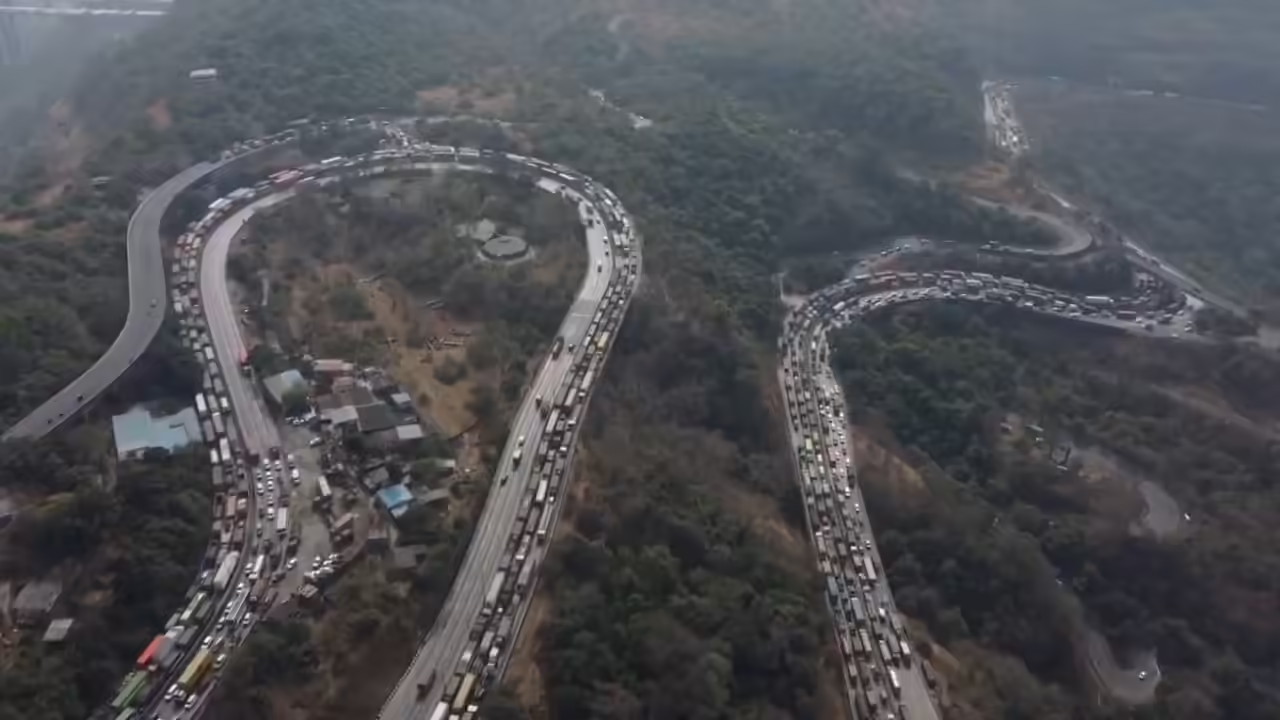
The move comes as Pune continues to expand as a major employment and logistics hub, with traffic volumes on the Mumbai–Pune Expressway reaching critical levels. A recent prolonged traffic standstill highlighted the risks of overdependence on a single corridor, prompting authorities to accelerate discussions on alternative connectivity options that can absorb future demand. The planned Mumbai Pune alternative highway will connect eastern Pune to Raigad district, creating a new access route for vehicles travelling towards Navi Mumbai and beyond. For Pune’s industrial and logistics sectors, the corridor could significantly reduce bottlenecks, particularly for freight movement that currently relies on the expressway and parallel arterial roads.
Infrastructure officials indicate that the project is being designed with a combination of elevated and surface road segments to manage both long-distance and local traffic. Such configurations are increasingly seen as necessary in fast-urbanising regions, where balancing high-speed transit with local accessibility is critical. The corridor is expected to integrate with existing highway networks, improving connectivity not just between cities but within emerging growth clusters. For Pune, the implications extend beyond transport efficiency. Improved road infrastructure towards Shirur is likely to stimulate development in the city’s eastern periphery, where land availability and industrial potential remain underutilised. Real estate analysts suggest that better connectivity could unlock new residential and warehousing zones, provided development is guided by coherent planning frameworks.
At the same time, urban experts emphasise that expanding road capacity alone cannot address long-term mobility challenges. The Mumbai Pune alternative highway will need to be complemented by investments in rail-based transit, electric mobility, and freight optimisation to ensure that growth remains sustainable. Without such integration, increased road capacity could lead to higher vehicle dependence and emissions. Financially, the project will require significant capital investment, along with coordinated land acquisition and regulatory approvals. Policymakers are expected to evaluate phased execution strategies to prioritise segments with the highest traffic impact. Connectivity with key infrastructure nodes, including coastal and regional highways, is also being considered to maximise network efficiency.
As Pune strengthens its position within Maharashtra’s economic landscape, the focus is shifting towards creating a more resilient and diversified transport system. The success of the Mumbai Pune alternative highway will ultimately depend on how effectively it reduces pressure on existing routes while supporting balanced urban expansion and climate-conscious mobility planning.
Pune Connectivity Plan Targets Expressway Congestion Relief