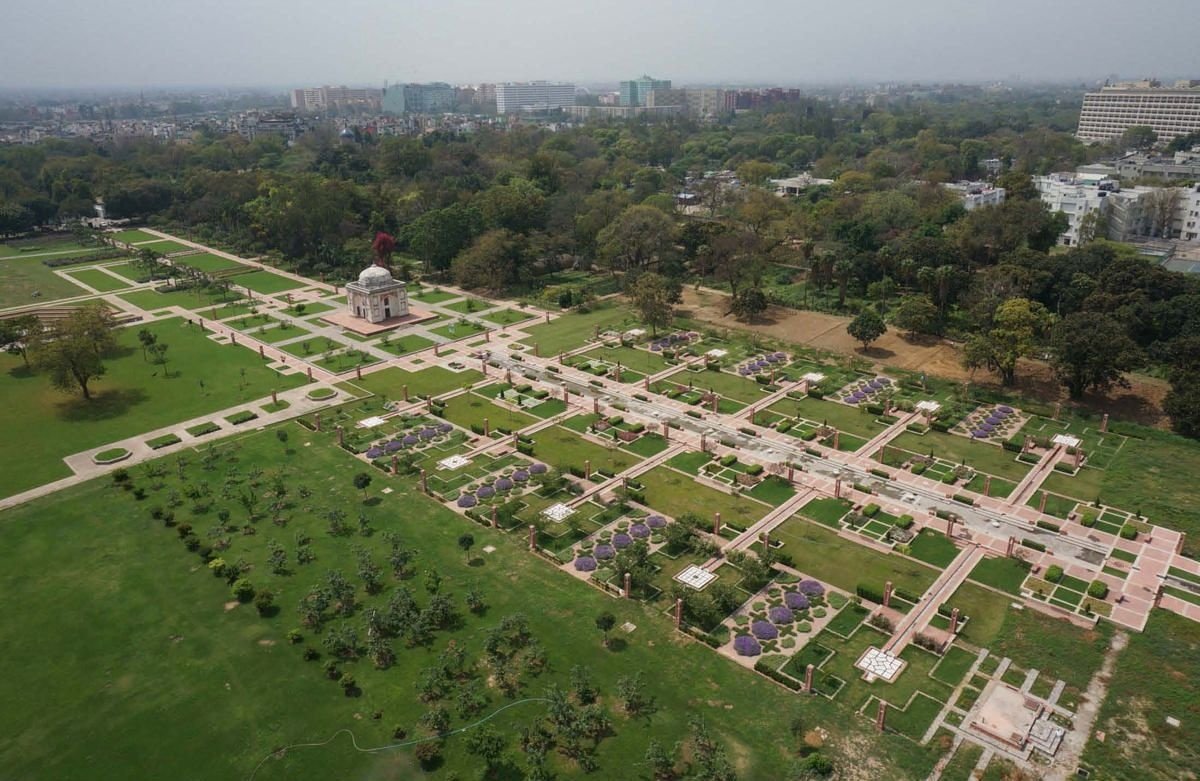
Authorities in Delhi have initiated a targeted effort to improve green cover within high-density informal settlements, aiming to enhance climate resilience and liveability ahead of the summer season. The programme focuses on upgrading neighbourhood parks in underserved areas, where access to quality public open space remains limited. The initiative, led by the city’s urban shelter agency, is currently underway in several clusters including Shakur Basti, Dwarka and Nangloi. These areas, characterised by compact housing and limited vegetation, often experience intensified heat stress during peak summer months. By strengthening urban parks in such locations, the government is attempting to address both environmental and social infrastructure gaps.
At the core of the plan is the restoration of existing but underutilised green spaces. Officials indicate that work includes soil conditioning, use of organic inputs and landscape redesign to improve plant survival and long-term sustainability. Tree and shrub species suited to local climatic conditions are being introduced to create shaded zones and reduce ambient temperatures at the neighbourhood level. Urban planners note that such interventions, though relatively small in scale, can play a significant role in mitigating the urban heat island effect. In densely built environments, even incremental increases in vegetation can lower surface temperatures, improve air quality and enhance groundwater recharge. For residents in informal settlements, access to functional parks also contributes to public health, offering spaces for recreation and social interaction. The project reflects a broader shift towards embedding climate-responsive planning within basic urban services. Traditionally, green infrastructure investments have been concentrated in formal residential zones or large public parks.
Expanding these efforts into informal settlements signals a move towards more equitable urban development, where environmental benefits are distributed across income groups. However, experts caution that the long-term success of such initiatives will depend on maintenance frameworks and community engagement. Without consistent upkeep, newly developed green spaces risk falling back into disuse. Involving local residents in stewardship, alongside clear institutional accountability, is seen as critical to sustaining outcomes. The timing of the programme is particularly relevant as cities across northern India prepare for rising temperatures and increasing climate variability. Strengthening urban parks in vulnerable areas can serve as a frontline adaptation measure, complementing broader efforts in water management, housing and public health.
As the initiative expands in phases, it may offer insights into how smaller-scale, decentralised green interventions can contribute to larger environmental goals. For Delhi, where climate pressures and population density continue to intensify, such strategies could become an essential component of building resilient and inclusive urban neighbourhoods.