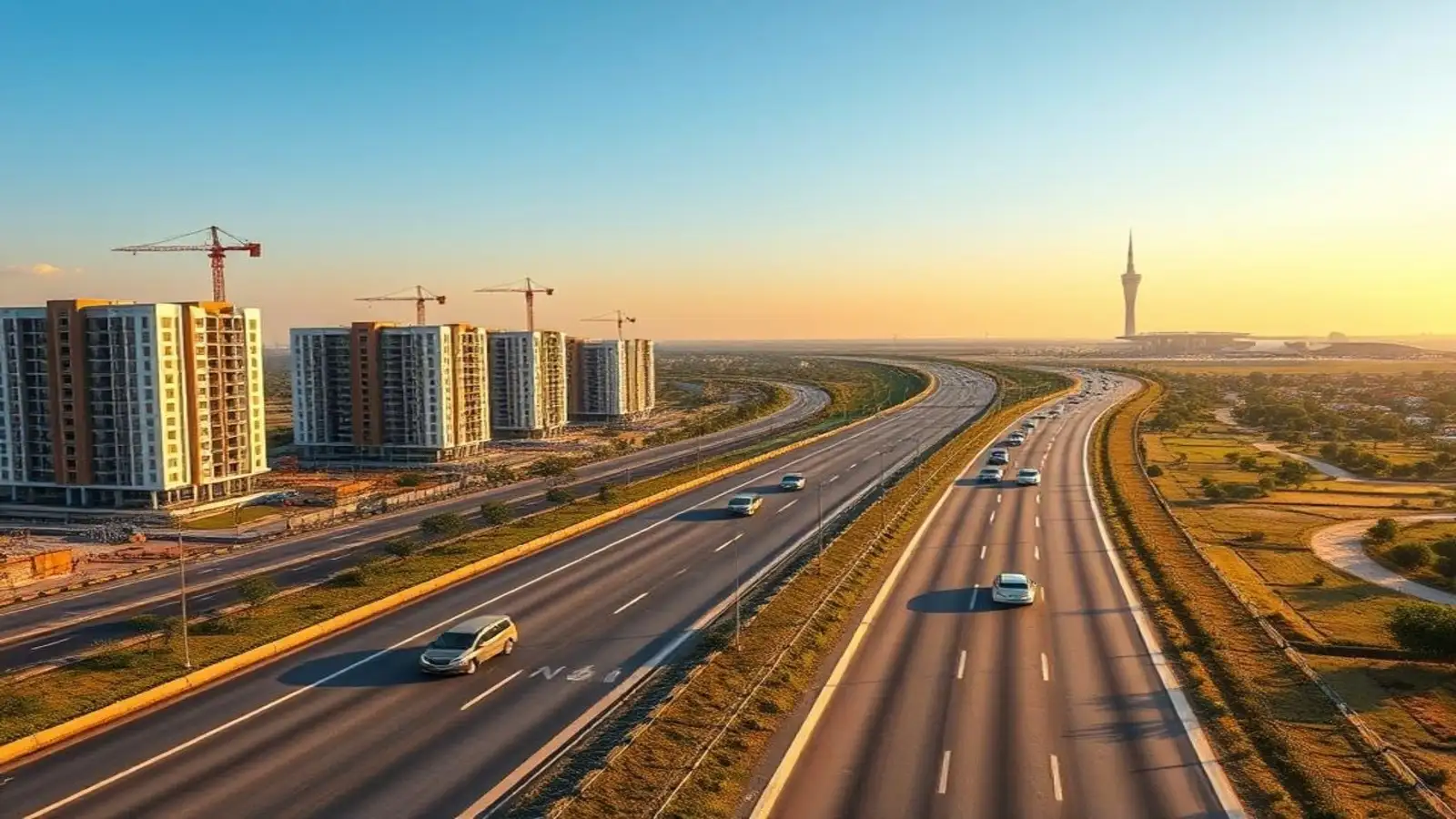
Land prices along the Yamuna Expressway corridor are set for an upward revision from April, reflecting intensifying real estate activity in one of the National Capital Region’s fastest-evolving growth zones. The increase comes at a pivotal moment, as large-scale infrastructure investments—most notably a new international airport—begin to reshape the region’s economic and spatial dynamics. The revised pricing framework applies across residential, commercial, and industrial land parcels, signalling a broad-based recalibration rather than a segment-specific adjustment. Urban development officials indicate that the move aligns with rising demand patterns and anticipates further land value appreciation driven by improved connectivity and upcoming economic activity.
At the centre of this momentum is the imminent operationalisation of a major aviation hub near the expressway, which is expected to significantly alter regional mobility and logistics networks. Industry experts note that such infrastructure typically acts as a catalyst for land monetisation, accelerating both end-user demand and investor interest. In this context, the property rates revision is being interpreted as a forward-looking response to anticipated market expansion rather than a reaction to existing saturation. The Yamuna Expressway belt has, over the past decade, transitioned from a peripheral corridor into a strategic urban extension of NCR. Planned industrial zones, logistics parks, and institutional developments have gradually strengthened its economic profile. With improved road infrastructure already in place, the addition of aviation connectivity is likely to deepen integration with Delhi and neighbouring urban centres. From a market perspective, higher property rates may raise entry barriers for new buyers in the short term. However, developers and analysts suggest that price corrections of this nature often signal confidence in long-term viability.
For institutional investors and large-scale developers, such revisions can provide pricing clarity and reduce speculative volatility, particularly in emerging regions where land valuation has historically fluctuated. The authority overseeing the region has also advanced complementary initiatives aimed at supporting long-term urban growth. These include proposals linked to skill development, road safety awareness, and heritage-led development models, which together point towards a more structured approach to city-building. Experts emphasise that infrastructure planning, when paired with social and economic amenities, plays a crucial role in ensuring that rapid real estate growth translates into liveable urban environments. Sustainability considerations are also beginning to influence planning conversations in the corridor. With increasing land consumption and construction activity, there is a growing need to integrate water management, energy efficiency, and mobility planning into development frameworks. Urban planners argue that aligning real estate expansion with climate-resilient infrastructure will be critical to avoiding the pitfalls of unbalanced growth.
As the new pricing takes effect, the Yamuna Expressway region is likely to remain a focal point for both public and private investment. The coming months will test whether infrastructure-led optimism translates into sustained demand, balanced development, and inclusive access to opportunities across this rapidly transforming urban landscape.