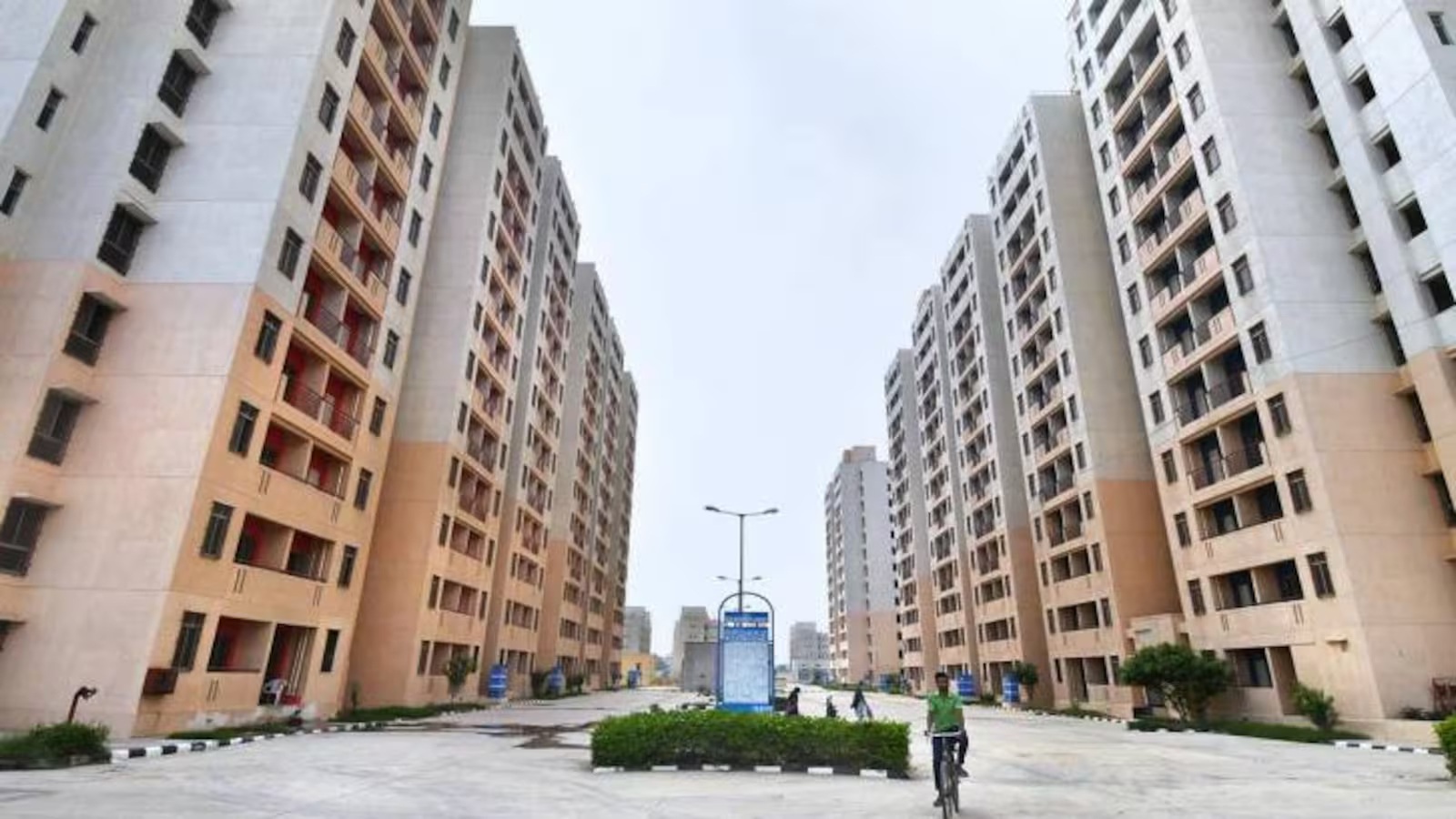
Delhi’s urban housing strategy is entering a new phase with the release of low-cost flats in its northern sub-city, as authorities push to widen access to formal housing while aligning growth with emerging transport corridors. The latest offering in Narela targets economically weaker sections, with entry-level pricing designed to draw first-time homebuyers into the planned housing market. The newly introduced inventory forms part of a broader affordable housing rollout that spans multiple income groups, but it is the entry segment that stands out for its relatively low acquisition cost. Officials involved in the process indicate that the pricing structure has been calibrated through a uniform discount mechanism, improving affordability amid rising construction and land costs across the Capital.
Located in designated sectors within Narela, the units are compact in size and built for immediate occupancy. Urban planners note that such ready-to-move housing reduces delivery risks often associated with under-construction projects, particularly for lower-income households with limited financial flexibility. The availability of these units also reflects a shift towards inventory-led housing supply rather than speculative development. A key factor shaping demand is the area’s evolving connectivity. Narela’s proximity to a national highway corridor and its integration into planned road infrastructure linking major parts of Delhi is gradually repositioning it within the metropolitan grid. In parallel, a proposed metro line connecting the sub-city to other urban nodes is expected to further influence real estate traction, although timelines remain contingent on project execution. Housing experts point out that affordability alone does not determine long-term success. Social infrastructure, employment access, and transit reliability will play a decisive role in whether such developments transition into fully functional urban communities.
In this context, the current push reflects a broader planning approach that ties housing supply to infrastructure expansion rather than treating them as isolated interventions. The booking mechanism has been digitised, with a low initial deposit aimed at reducing entry barriers. Industry observers suggest that online allocation systems have improved transparency in public housing distribution, although demand often outpaces supply in the most affordable categories. Restrictions on resale are expected to discourage speculative buying and ensure that the units serve end users. Beyond individual ownership, the initiative signals an attempt to address structural gaps in Delhi’s housing ecosystem, where informal settlements continue to house a significant portion of the population. Expanding formal, affordable housing stock is seen as critical to reducing this imbalance while improving living standards and access to basic services.
As the scheme progresses, attention will shift to occupancy rates, infrastructure readiness, and the pace of future phases. For Delhi, the challenge remains not just delivering affordable homes, but ensuring that these developments evolve into inclusive, connected, and economically viable neighbourhoods.