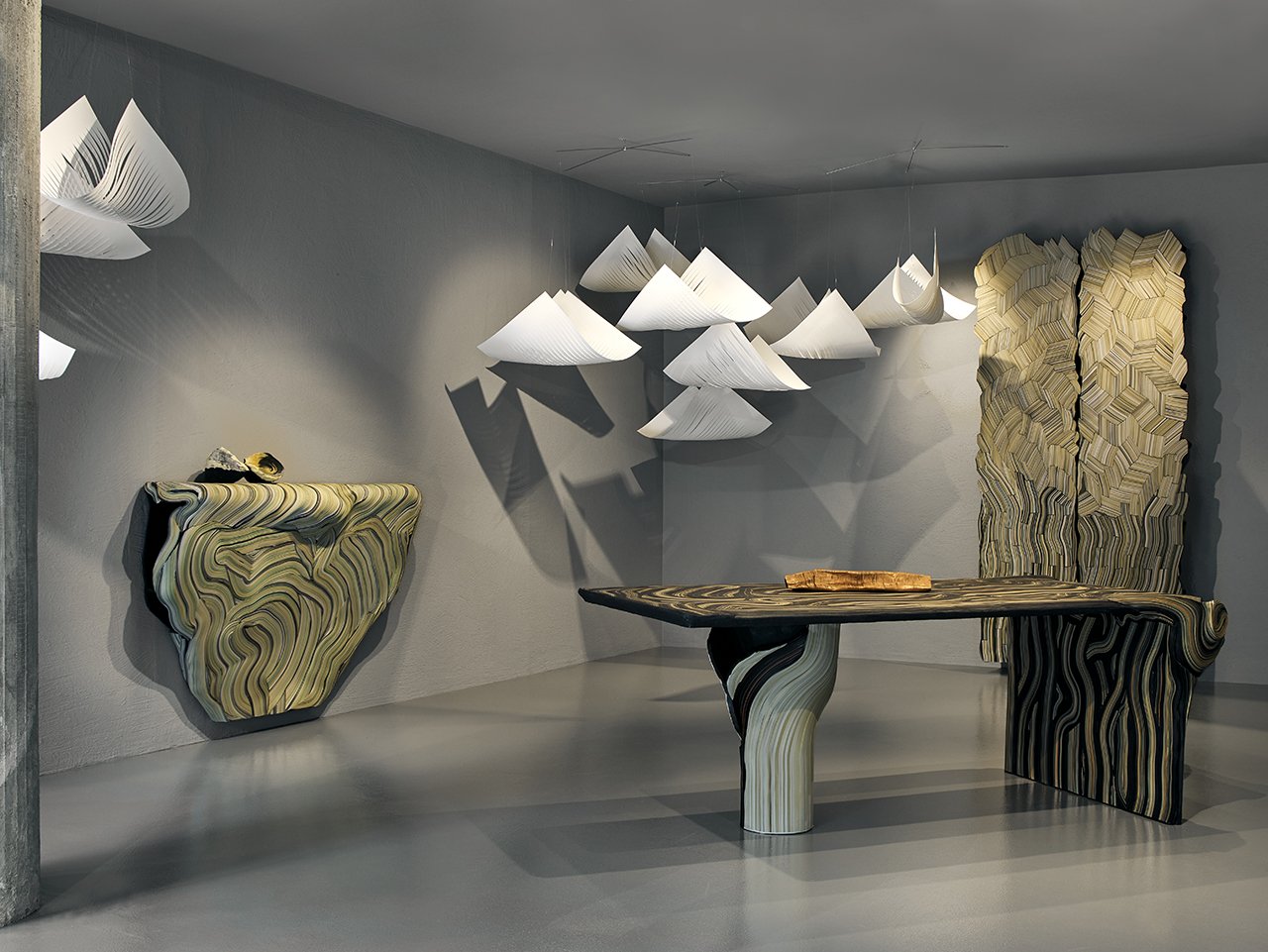
Daniele Papuli Paper Furniture Redefines Interior Design
A growing intersection between art and functional design is reshaping contemporary interiors, with Italian artist Daniele Papuli transforming paper into sculptural furniture that challenges conventional material boundaries. His work highlights how alternative materials are being reimagined for modern living spaces, particularly in design-conscious urban environments.Trained as a sculptor, Daniele Papuli has developed a distinctive practice centred on handcrafted paper, using layering and assembly techniques inspired by bookbinding and traditional craft. Over time, this approach has evolved into what he describes as “sculptographies”—objects that sit between sculpture, furniture, and architectural elements.
Recent collections, including large-scale installations and functional pieces such as tables, consoles, and shelving systems, demonstrate the structural potential of paper when treated as a composite material. By stacking and compressing layers of varying thickness, Papuli creates dense, tactile surfaces that often resemble wood grain, stone, or geological formations. This blurring of perception—where paper mimics more traditional materials—challenges long-held assumptions about durability and utility in interior design.The implications of such work extend beyond artistic experimentation. As sustainability becomes a central concern in the built environment, designers are increasingly exploring low-impact, renewable, and recyclable materials. Paper, when processed and layered at scale, offers a lightweight yet adaptable alternative that can reduce reliance on resource-intensive materials.
From an urban design perspective, this shift aligns with a broader move towards material innovation in residential and commercial interiors. As cities densify and construction practices evolve, there is growing interest in materials that combine aesthetic flexibility with environmental responsibility. Paper-based design, though still niche, represents a step towards more circular and resource-efficient production models.Industry experts note that the appeal of such work also lies in its sensory and experiential qualities. Papuli’s pieces are defined by organic textures, flowing forms, and layered colour variations inspired by natural landscapes. This emphasis on tactility reflects a wider trend in interior design, where users are seeking spaces that engage multiple senses rather than relying solely on visual minimalism.At the same time, scaling such approaches presents challenges. Ensuring structural stability, longevity, and resistance to environmental factors remains critical if paper-based furniture is to move beyond gallery settings into mainstream use. Advances in material treatment and hybrid composites are likely to play a key role in this transition.
Looking ahead, the work of Daniele Papuli signals a broader rethinking of material hierarchies in design. As architects and designers explore unconventional resources, the boundary between art, craft, and functional objects is becoming increasingly fluid—offering new possibilities for interiors that are both sustainable and experientially rich.