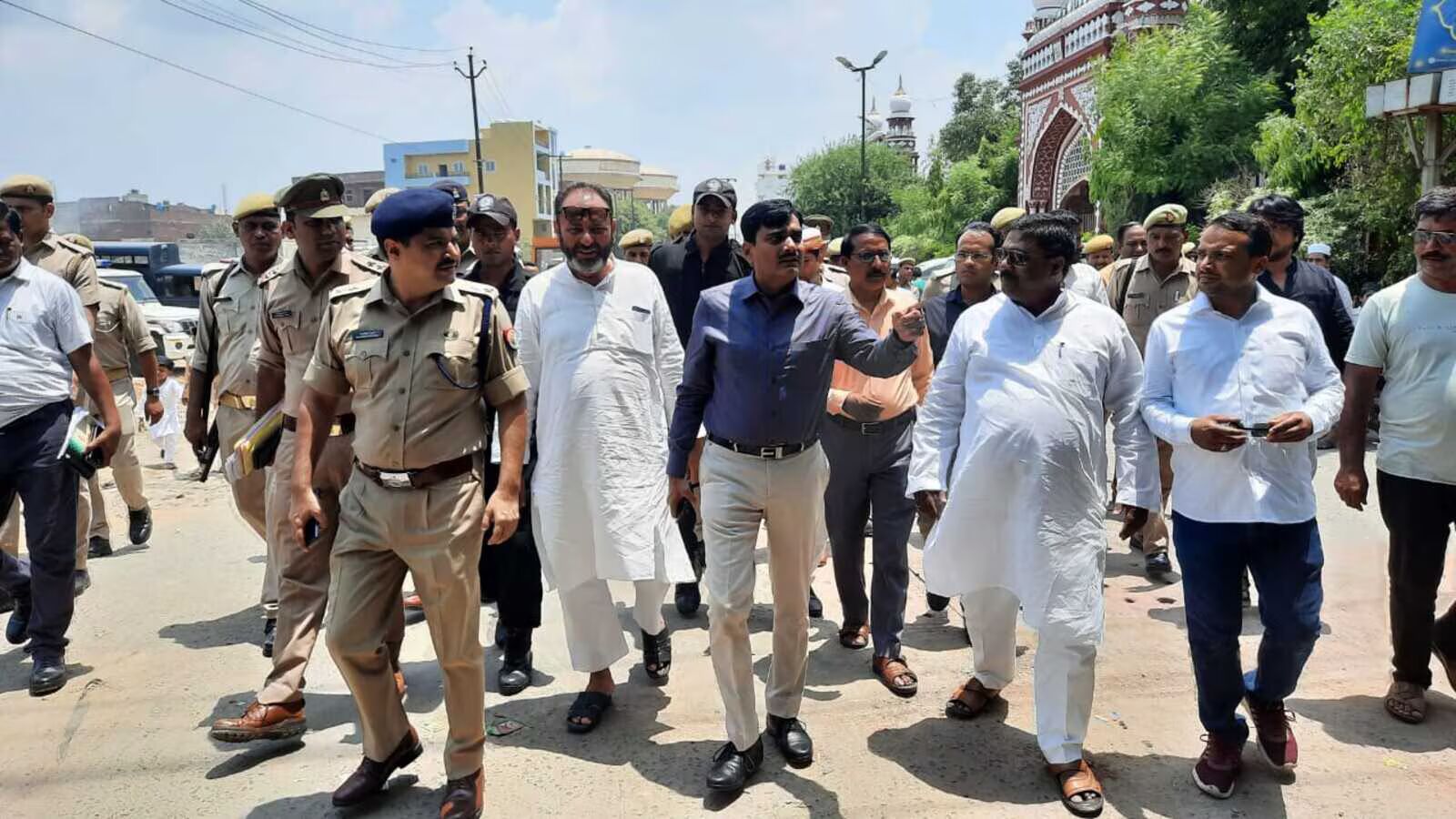
Patna Deploys Magistrates Citywide For Eid Gatherings
With large public gatherings expected for Eid this weekend, the Patna district administration has rolled out a city-wide security and crowd-management plan covering 442 locations, signalling how fast-growing urban centres are being forced to rethink safety arrangements for major religious events.
The move is aimed at ensuring smooth movement, preventing crowd congestion and maintaining law and order across neighbourhoods where thousands of residents are expected to gather for prayers and celebrations. Official instructions issued after a high-level review meeting confirm that magistrates and police personnel have been deployed across the district, including densely populated urban zones and peri-urban areas. The deployment includes multiple administrative divisions such as the central city, Patna City, Danapur, Barh, Masaurhi and Paliganj, reflecting how festival-related crowd management is no longer limited to the historic core but now extends to expanding suburban areas as well.
Authorities have also activated a 24-hour district control room, formed quick-response teams and placed additional reserve officials on standby. Temporary policing arrangements have been set up near major prayer locations, while entry and parking points are being regulated to manage the expected surge in footfall. Officials have indicated that strict action will be taken against rumours or disruptive activity, including those circulated through social media, highlighting the growing role of digital monitoring in city-level security planning. The security deployment is part of a broader sequence of preparations in the days leading up to the festival. Earlier this week, authorities had already inspected arrangements at major public spaces and temporarily restricted access to some locations to prepare for large gatherings. These steps underline how religious events are increasingly being treated as large-scale urban-management exercises rather than routine administrative tasks.
Urban planners say the development highlights a wider challenge facing fast-growing tier-two cities such as Patna. With rising population density and limited public spaces, large gatherings during festivals often put pressure on roads, emergency services and public transport systems. Managing these events now requires coordination between law-and-order agencies, civic bodies and traffic planners, especially in older parts of the city where infrastructure capacity is already stretched. The need for structured planning has become more visible as Patna expands beyond its historic core into surrounding urban clusters. As neighbourhoods grow and mobility patterns change, traditional policing models are increasingly being replaced by location-specific deployment, digital coordination and real-time monitoring. Experts say such measures are likely to become standard practice for large festivals, political gatherings and major civic events across many Indian cities.
The current Eid security plan therefore reflects more than a precautionary administrative step. It illustrates how urban governance is gradually adapting to the realities of population growth, rising mobility and the increasing complexity of managing public spaces. The effectiveness of these arrangements during the festival is likely to influence how similar events are handled in the future, particularly in cities where rapid expansion is outpacing civic infrastructure.