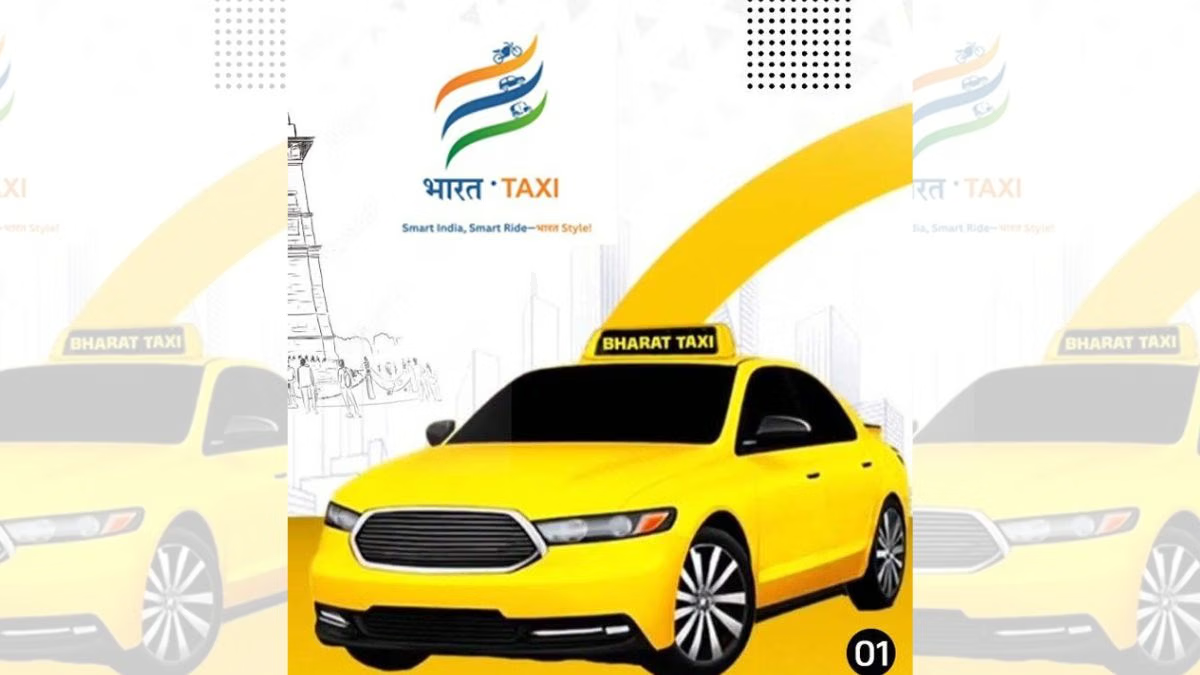
A state-backed cooperative taxi platform is set to enter Pune’s urban mobility market in the coming months, as transport authorities attempt to restore pricing discipline and improve earnings for drivers amid growing concerns over fare irregularities. The planned rollout of Bharat Taxi in the city reflects a broader push to recalibrate how app-based transport operates in rapidly expanding urban centres.
Officials indicate that the Bharat Taxi model is designed to offer a structured alternative to existing aggregator platforms by introducing standardised fares and a higher revenue share for drivers. In contrast to the commission-heavy structures commonly associated with private operators, the cooperative approach is expected to allow drivers to retain a larger portion of trip earnings, potentially stabilising livelihoods in a sector marked by fluctuating incomes. The move comes at a time when Pune’s commuters have reported increasing unpredictability in ride pricing. In the absence of a fully implemented state-level regulatory framework for cab aggregators, several operators have shifted towards flexible pricing systems, where final fares are often negotiated outside formal platforms. This has led to disputes, reduced trust, and inconsistent commuter experiences across the city.
Transport analysts say the introduction of Bharat Taxi could help reintroduce accountability by anchoring fares to a regulated structure. For cities like Pune—where daily mobility depends heavily on a mix of public transport, private vehicles, and ride-hailing services—predictable pricing is central to accessibility and inclusion. Without it, lower- and middle-income commuters may be disproportionately affected by fare volatility. At the same time, the cooperative model raises questions about scalability and service reliability. Industry observers note that while higher driver earnings may improve participation, sustaining adequate vehicle availability during peak hours will be critical. Competing against established platforms with deep digital infrastructure and customer bases will require consistent service quality and efficient dispatch systems.
From an urban planning lens, the Bharat Taxi initiative intersects with wider efforts to build more equitable and sustainable transport ecosystems. By potentially reducing informal fare practices and improving transparency, it may encourage a shift towards regulated shared mobility, which can complement public transport networks and reduce dependence on private vehicles.
However, experts caution that such interventions must be accompanied by clear policy enforcement. The delayed rollout of the state’s cab aggregator guidelines continues to create regulatory gaps, allowing hybrid business models to operate with limited oversight. Without a cohesive framework, even well-intentioned initiatives risk being undermined by market fragmentation. As Pune continues to grow as a technology and industrial hub, mobility systems will play a decisive role in shaping its economic efficiency and liveability. The success of Bharat Taxi will likely depend not only on fare structures but also on its ability to integrate seamlessly into the city’s evolving transport landscape while balancing driver welfare with commuter expectations.
Pune Bharat Taxi Entry May Reshape Commute