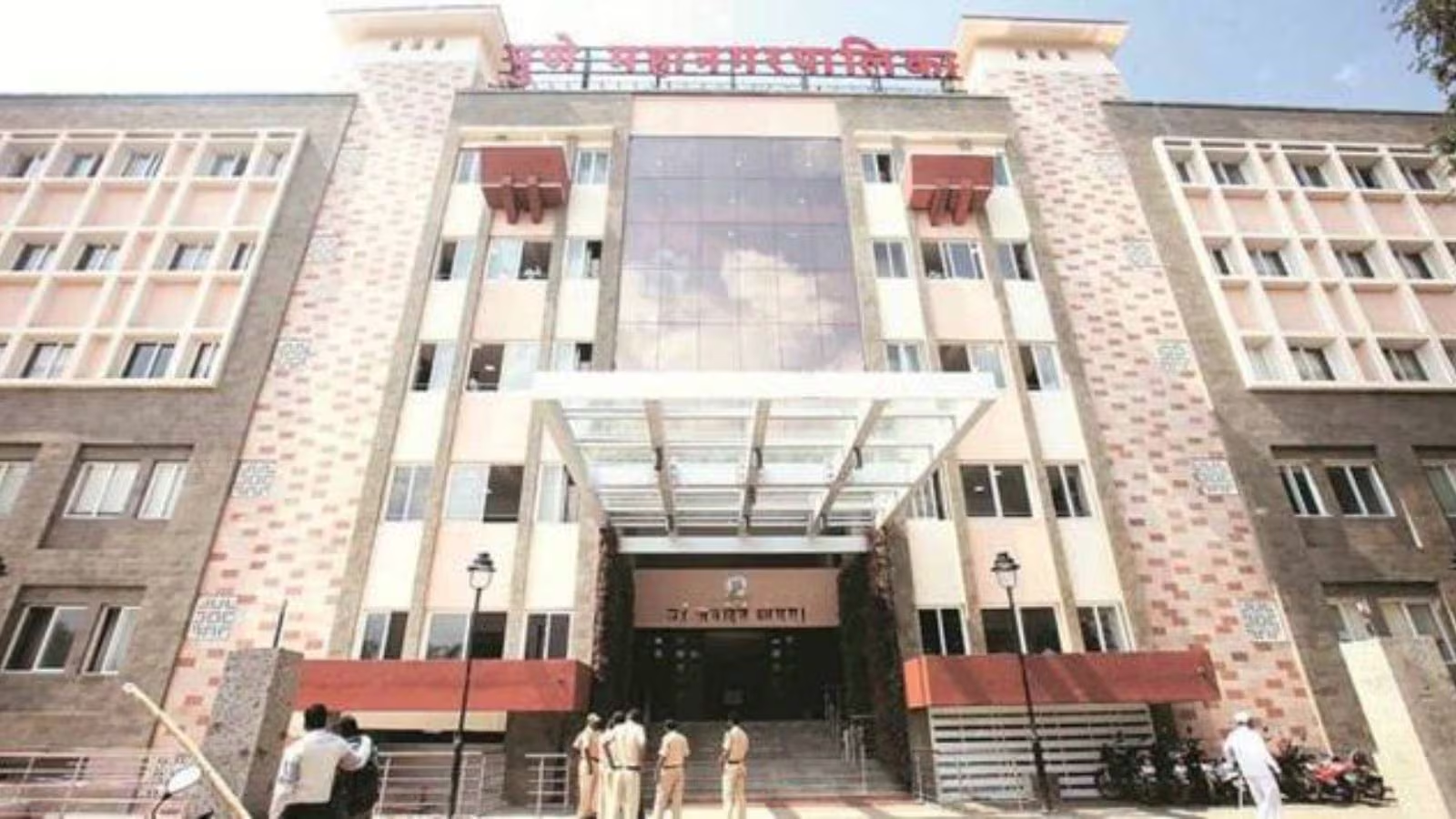
Pune’s municipal administration is weighing a land-use shift that could disrupt a newly operational infectious disease monitoring system, raising concerns over urban health preparedness in one of India’s fastest-growing cities. Plans to relocate the metropolitan surveillance unit (MSU) from its current premises in the city core to accommodate a zonal administrative office have triggered debate within civic and public health circles.
The MSU, conceived as part of a nationwide effort to strengthen early detection of disease outbreaks, became partially operational in late 2025 after years of delays tied to funding and space constraints. Designed to collect and analyse real-time data from hospitals, laboratories and clinics, the facility is intended to flag abnormal trends in infectious diseases—an increasingly critical function in dense urban environments vulnerable to rapid transmission. Officials familiar with the project indicate that the proposed relocation could stall ongoing work and risk lapsing central funds allocated for the initiative. The MSU requires specialised infrastructure, including a biosafety-level laboratory and integrated data systems, which are still under development. Any interruption at this stage could set back the city’s ability to build a robust epidemiological intelligence network.
The Pune MSU decision also reflects a broader governance challenge: competing demands for limited urban space. With ward boundaries recently redrawn, civic authorities argue that new administrative offices are necessary to manage expanding populations and service delivery. However, urban planners caution that prioritising administrative infrastructure over health surveillance could have long-term consequences, particularly in a post-pandemic context where cities are expected to invest in resilience. Public health experts note that metropolitan areas like Pune—characterised by high population density, significant in-migration, and active industrial clusters—require continuous monitoring systems to detect emerging health threats. Past outbreaks of influenza variants and other communicable diseases have underscored the need for early warning mechanisms that can inform targeted interventions without resorting to broad disruptions.
From a planning perspective, the Pune MSU case highlights the importance of integrating health infrastructure into urban development frameworks, rather than treating it as an afterthought. Experts advocate for dedicated, protected spaces for critical public health functions, particularly those linked to national programmes. Such facilities not only support immediate disease control but also contribute to long-term climate resilience, as changing environmental conditions alter disease patterns. Civic authorities maintain that the MSU will not be discontinued and that alternative premises will be identified without compromising technical standards. Yet, timelines remain uncertain, and any delay could weaken the continuity of surveillance efforts already underway.
As Pune continues to expand as an economic and residential hub, decisions around infrastructure allocation will increasingly shape its capacity to respond to future crises. Ensuring that systems like the Pune MSU remain functional and adequately supported may prove as vital as roads or administrative offices in safeguarding the city’s long-term sustainability.
Pune MSU Relocation Raises Public Health Concerns