


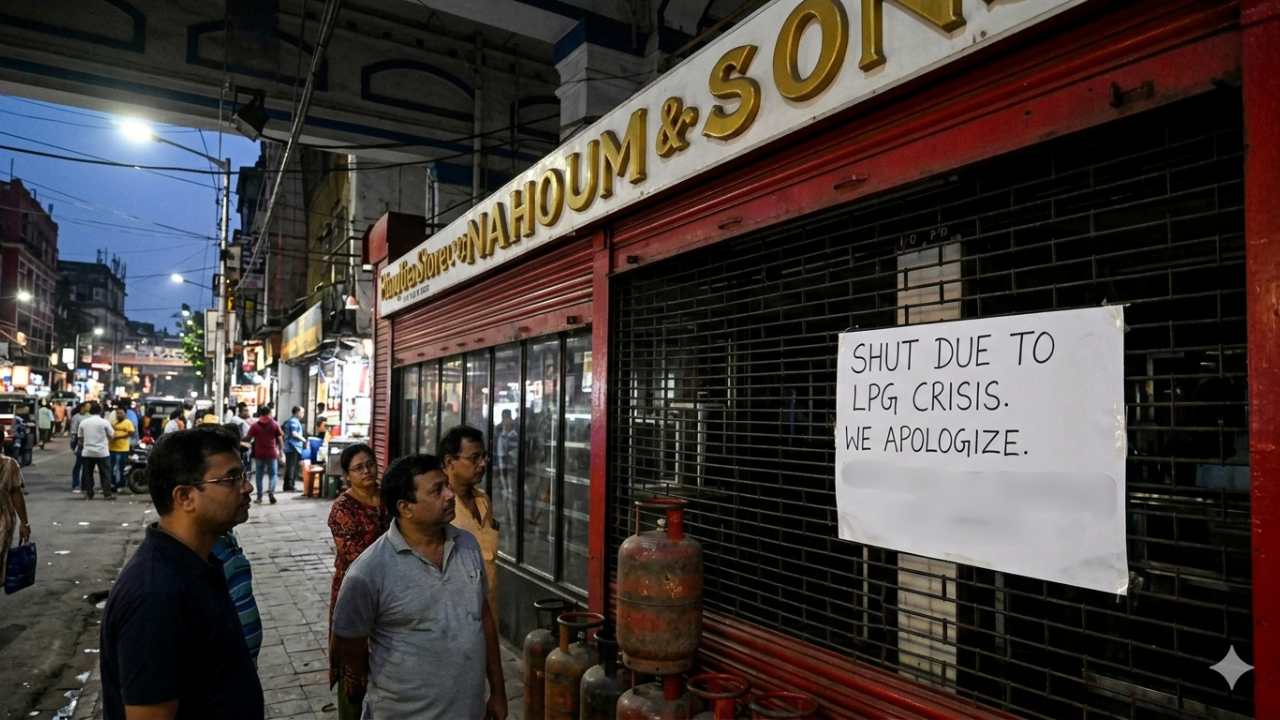
A disruption in cooking gas supply has forced a temporary shutdown at Nahoum and Sons in Kolkata, highlighting the vulnerability of urban food businesses to energy supply shocks.
The Kolkata LPG disruption has brought attention to the dependence of small and legacy establishments on consistent fuel availability, with broader implications for city-level supply chains and economic continuity.Industry observers indicate that interruptions in liquefied petroleum gas (LPG) availability can have immediate operational impacts on food service businesses, many of which rely on gas-based systems for cooking and baking. For heritage establishments in particular, even short-term closures can disrupt customer flows and affect revenue, especially in high-footfall commercial zones.The Kolkata LPG disruption also raises concerns about supply chain resilience in large urban centres. While LPG distribution networks are typically robust, logistical constraints, demand fluctuations, or regulatory bottlenecks can create temporary shortages. Experts note that such disruptions expose gaps in last-mile delivery systems, particularly in densely populated markets.From a business perspective, the incident underscores the risks associated with single-source energy dependence. Restaurants and bakeries that rely exclusively on LPG face operational uncertainty when supply chains are disrupted. As a result, some operators are beginning to explore alternative energy options, including electric cooking systems, though cost and infrastructure constraints remain key barriers.
Urban planners highlight that the Kolkata LPG disruption is part of a broader conversation around energy diversification in cities. Transitioning commercial kitchens to multiple energy sources, including electricity and cleaner fuels, could improve resilience while also supporting long-term decarbonisation goals. However, such transitions require significant upgrades in electrical infrastructure and policy support.The impact extends beyond individual businesses to the local economy. Establishments like Nahoum and Sons contribute to the cultural and commercial fabric of the city, attracting both residents and visitors. Temporary closures can affect surrounding businesses, supply vendors, and employees, illustrating how interconnected urban economies are.Experts also point to the need for improved coordination between distributors, regulators, and commercial users to minimise disruptions. Real-time monitoring of supply levels, streamlined distribution channels, and contingency planning can help mitigate the effects of shortages on critical sectors such as food services.The Kolkata LPG disruption further highlights the importance of integrating energy resilience into urban planning frameworks. As cities grow and consumption patterns evolve, ensuring reliable access to essential resources like cooking fuel becomes a key component of sustainable development.Looking ahead, the incident may accelerate discussions on alternative energy adoption and infrastructure upgrades within the hospitality sector.
While immediate operations are expected to resume once supply stabilises, the episode serves as a reminder of the need for diversified and resilient urban energy systems.For Kolkata, balancing heritage business continuity with modern infrastructure planning will be essential in building a more adaptable and future-ready urban economy.
Also Read:Kolkata Civic Outreach Strategy Focuses On Local Engagement
