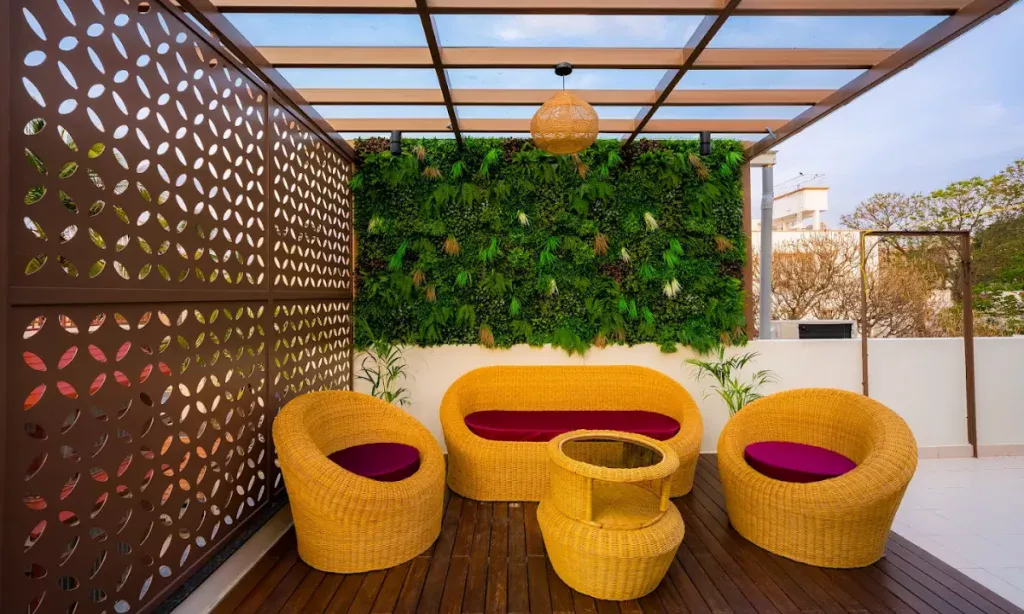
Across major Indian cities, developers are reimagining the top floors of residential towers as high-value, functional living environments, signalling a shift in how premium housing is designed and consumed. What was once leftover space is now being positioned as a central feature of urban luxury, reflecting changing buyer expectations around wellness, privacy and climate-responsive living.
In high-density markets such as Delhi NCR, Mumbai and Bengaluru, rooftop living is emerging as a defining trend in new residential projects. Industry experts say this shift is driven by both market demand and urban constraints. With limited land availability and rising construction costs, developers are optimising vertical space while also responding to buyers seeking quieter, less polluted environments within cities.
Rooftop living spaces now commonly include landscaped gardens, walking tracks, yoga zones and social areas, effectively extending the usable footprint of a building without increasing its ground coverage. Urban planners note that such interventions can contribute to improved microclimates by reducing heat absorption and enhancing green cover, particularly in cities struggling with the urban heat island effect.
In projects across West Delhi and Mumbai’s extended suburbs, elevated community spaces are being designed as multifunctional zones. A senior real estate consultant observed that these spaces are no longer marketed as premium add-ons but are integrated into the core planning of developments. “Buyers are prioritising access to open air, views and low-noise environments. Rooftop living aligns with these preferences while also supporting better utilisation of vertical infrastructure,” the consultant said.
Developments in Bengaluru further illustrate this trend, where rooftop decks are being used to blend work, leisure and fitness functions. With hybrid work models becoming more common, residents increasingly value spaces that allow them to transition seamlessly between professional and personal activities without leaving their residential complex.
From an economic perspective, rooftop living also offers developers a way to differentiate projects in a competitive market. Analysts point out that such amenities can enhance property value and improve absorption rates, especially in the premium segment. However, they caution that long-term success will depend on maintenance standards and equitable access within housing communities.
There are also broader sustainability implications. Experts highlight that well-designed rooftop living areas can support rainwater harvesting, solar installations and biodiversity, contributing to more climate-resilient urban forms. Yet, they emphasise the need for regulatory frameworks to ensure safety, structural integrity and inclusive design, particularly in high-rise developments.
As Indian cities continue to densify, rooftop living is likely to become more mainstream across housing segments, not just luxury. The challenge for policymakers and developers will be to ensure that such innovations remain accessible, environmentally responsible and aligned with the needs of a diverse urban population.