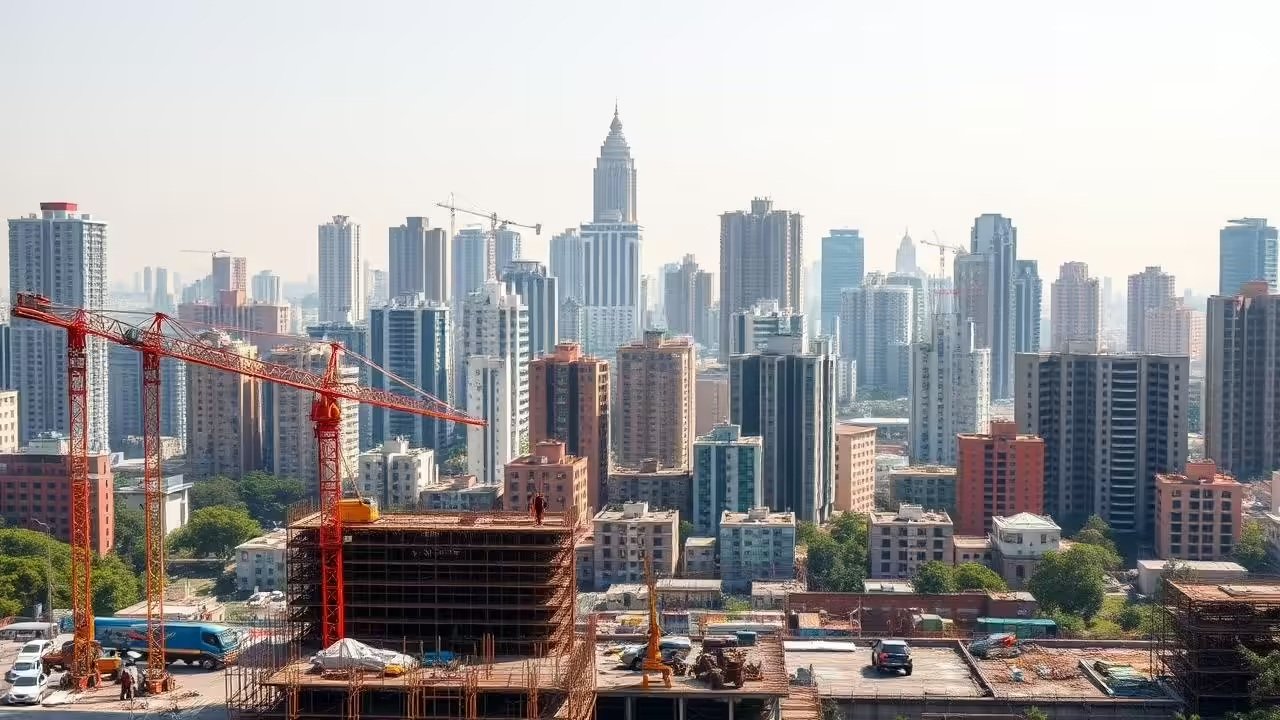
A fresh wave of cost escalation is beginning to ripple through the Mumbai Metropolitan Region (MMR), as global supply disruptions linked to tensions in West Asia push up construction expenses. Early assessments indicate that project costs for high-rise developments have increased by roughly ₹50 per square foot, a shift that could soon influence housing prices across key segments.
Industry analysts tracking MMR real estate prices say the immediate pressure stems from rising input costs and longer supply routes. Core materials such as steel, aluminium and bitumen have all recorded noticeable price increases in recent weeks. These materials are critical to both structural work and infrastructure integration, making them highly sensitive to global trade disruptions. The challenge is not limited to material costs alone. Shipping routes traditionally passing through the Strait of Hormuz are facing disruptions, forcing cargo to take longer alternative paths around Africa. This has extended delivery timelines significantly while pushing up freight charges and fuel costs. As a result, developers are grappling with higher logistics bills alongside procurement uncertainties.
Urban infrastructure agencies in the region are also beginning to factor in these changes. Officials involved in large-scale transport and connectivity projects indicate that contractual cost adjustments may be triggered through standard variation clauses tied to government indices. However, such mechanisms may only partially cushion the impact if volatility persists. For now, many developers appear to be absorbing a portion of the increased costs to maintain sales momentum. But sector observers caution that this strategy may not be sustainable if disruptions continue over the coming months. In particular, the affordable and mid-income housing segments already operating on tighter margins could see sharper price corrections.
The implications extend beyond property buyers. Delays in material supply and cost recalibration may slow construction timelines, affecting project delivery schedules and urban infrastructure rollout. This has broader consequences for a region like MMR, where housing demand, transport expansion and economic activity are deeply interconnected. Urban planners note that such external shocks highlight the vulnerability of India’s construction ecosystem to global supply chains. They also underscore the need for more resilient sourcing strategies, including localised material production and diversified logistics networks. In the longer term, these shifts could align with sustainability goals by reducing dependency on long-distance imports and lowering the carbon footprint of construction.
As the situation evolves, MMR real estate prices are likely to remain sensitive to both geopolitical developments and domestic policy responses. Stakeholders across the housing and infrastructure spectrum will need to balance cost pressures with the imperative to keep urban growth inclusive and projects on schedule.